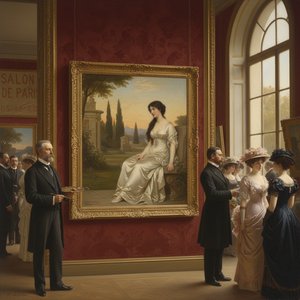
Un sanctuaire de la peinture académique et de la nostalgie parisienne
Pénétrer dans le Musée National Ernest Hébert, c'est s'adonner à un délicat voyage dans le temps, laissant derrière soi l'agitation moderne de Paris pour retrouver l'élégance dorée et feutrée du XIXe siècle. Nichée au cœur de l'historique quartier de Petit-Montmorency, cette institution témoigne avec profondeur de la ferveur artistique et des conventions stylistiques d'une époque définie par la grandeur et le détail méticuleux. Le musée n'est pas un simple dépôt de toiles ; c'est un environnement vivant, où l'histoire cohabite avec une virtuosité visuelle à couper le souffle. Pour l'amateur d'art ou le collectionneur en quête de l'âme de la Belle Époque, le musée offre une rencontre immersive avec l'héritage d'Ernest Hébert, peintre académique de renom dont l'œuvre incarne l'esprit même de son temps.
Le cadre architectural est tout aussi magistral que les peintures qu'il abrite. Le musée réside au sein de l'Hôtel de Montmorency-Bours, un édifice majestueux érigé en 1743 par le comte de Montmorency. Ce bâtiment fut autrefois la demeure et l'atelier de Hébert lui-même, offrant un lien tangible avec la grandeur architecturale de la monarchie bourbonienne. Ce qui distingue ce musée des galeries stériles aux murs blancs de l'ère moderne, c'est sa remarquable stratégie de préservation. Les visiteurs ne se contentent pas d'observer l'art ; ils l'habitent. Les pièces sont restées largement inchangées depuis l'époque de Hébert, meublées d'éléments originaux qui reflètent les goûts opulents et les rituels domestiques de la société parisienne à l'apogée de son art. Pour les décorateurs d'intérieur, ces espaces offrent une étude inégalée de l'harmonie historique, où le mobilier, les objets décoratifs et les souvenirs d'époque s'unissent pour recréer un instantané authentique de la vie au XIXe siècle.
La collection brille tout particulièrement par ses portraits magistraux, qui capturent la profondeur psychologique et les complexités sociales de l'époque. Les œuvres de Hébert se caractérisent par un dévouement au réalisme et une adhésion aux idéaux classiques appris à l'École Supérieure des Beaux-Arts. Parmi les moments les plus captivants figurent ses représentations de personnages célèbres, tels que le critique littéraire Jules Lemaître, et les légendaires grandes horizontales , incluant La Païva et Madame de Loynes . Ces toiles sont bien plus que de simples représentations ; elles sont des fenêtres ouvertes sur un monde de salons aristocratiques et de dynamiques sociales complexes, rendues avec une précision technique qui impose le respect jusqu'aux connaisseurs les plus chevronnés.
Au-delà de ses collections permanentes, le musée est depuis longtemps un lieu de discours intellectuel, accueillant des expositions qui jettent un pont entre tradition et innovation. Des explorations récentes ont approfondi l'influence profonde de la peinture académique sur le mouvement impressionniste, ainsi que les représentations controversées et décadentes de la vie parisienne présentes dans les œuvres de Félicien Rops. Cet engagement à remettre en question les interprétations conventionnelles garantit que l'héritage de Hébert demeure une partie vitale du dialogue artistique contemporain. Bien que le musée traverse une période de transition et de rénovation, son essence demeure une pierre angulaire du patrimoine culturel parisien — un lieu où l'on ne fait pas qu'observer la beauté, mais où on la respire.