

Sommaire
Informations clés
- Alternate names:
- Musée National de Slovénie
- null
- Narodni muzej Slovenije
- NM Slovenije
- Location: Ljubljana, Slovénie
- Featured artists:
- markus pernhart, markus or marko pernat or pernath
- Anton Karinger
- franc linder
- philipp fröhlich
- Amalija Oblak, Amalie Oblak-Hermannsthal, Amalija Hermann Von Hermannsthal, Amalie Oblak
- Works on APS: 14
Quiz d'art
Chaque question ne comporte qu'une seule réponse correcte.
Question 1:
Quel est le domaine scientifique et culturel le plus ancien du pays ?
Question 2:
Quand le musée a-t-il été fondé ?
Question 3:
Quel est le matériau utilisé pour construire le bâtiment principal du musée ?
Question 4:
Qui a conçu les plafonds décorés du musée ?
Question 5:
Quel objet préhistorique remarquable abrite le musée ?
Artistes de la collection

Markus Pernhart
Découvrez Markus Pernhart (Marko Perhnart), peintre austro-viennois pionnier de l’impressionnisme alpin ! Admirez ses paysages emblématiques des lacs et des montagnes carinthiennes : une œuvre artistique majeure.


Anton Karinger
Anton Karinger (1829-1870) : peintre slovène renommé pour ses paysages et vues de la côte adriatique. Son tableau emblématique du Mont Triglav est devenu un symbole de l'identité slovene et est exposé au Musée national slovenie.

franc linder
Explore the works of Franz Linder (1738-1802), a German artist known for portraits. Discover his auctioned pieces, including 'Portrait of a Gentleman' sold for $5,708.
Articles connexes
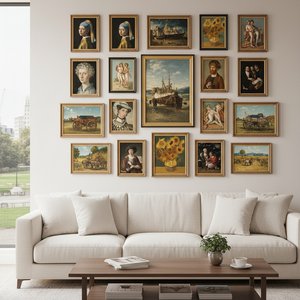
Les 25 Chefs-d'œuvre de la National Gallery : Art, Histoire & Décor d'Intérieur
Plongez au cœur des 25 chefs-d'œuvre de la National Gallery Londres : Van Gogh, Monet, Rembrandt… Découvrez l'histoire fascinante de ces tableaux célèbres et trouvez l'inspiration pour une décoration intérieure raffinée. Reproductions d'art de qualité muséale sur OriginalUniqueArt.com.
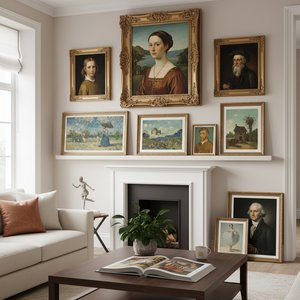
Les 25 Chefs-d'œuvre Incontournables de la National Gallery of Art : Peintures et Décor d'Exception
Plongez au cœur des 25 chefs-d'œuvre de la National Gallery of Art, Washington ! Découvrez l'histoire fascinante de Cézanne, Matisse, Picasso et bien d'autres. Trouvez l'inspiration déco et admirez les reproductions tableaux exceptionnelles sur OriginalUniqueArt.com.
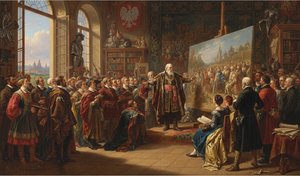
Jan Matejko: Historical Narrative & National Identity in 19th-Century Polish Painting
Explore the powerful historical paintings of Jan Matejko, Poland's national artist. Discover his iconic works & learn how he shaped Polish identity in the 19th century. High-quality reproductions available.
Collection d'œuvres d'art
Aucune œuvre d'art trouvée.


Restez informés de notre actualité
Restez informé(e) des dernières actualités artistiques, des offres exclusives et des idées de décoration.
Recevez 3 suggestions d'œuvres d'art gratuites
Parlez-nous de votre projet et nos experts en art vous proposeront 3 suggestions d'œuvres personnalisées.
Not Sure Where to Start?
Let Us Curate 3 Options Just for You - Free!