

Une vision audacieuse pour l'âme artistique de Groningue
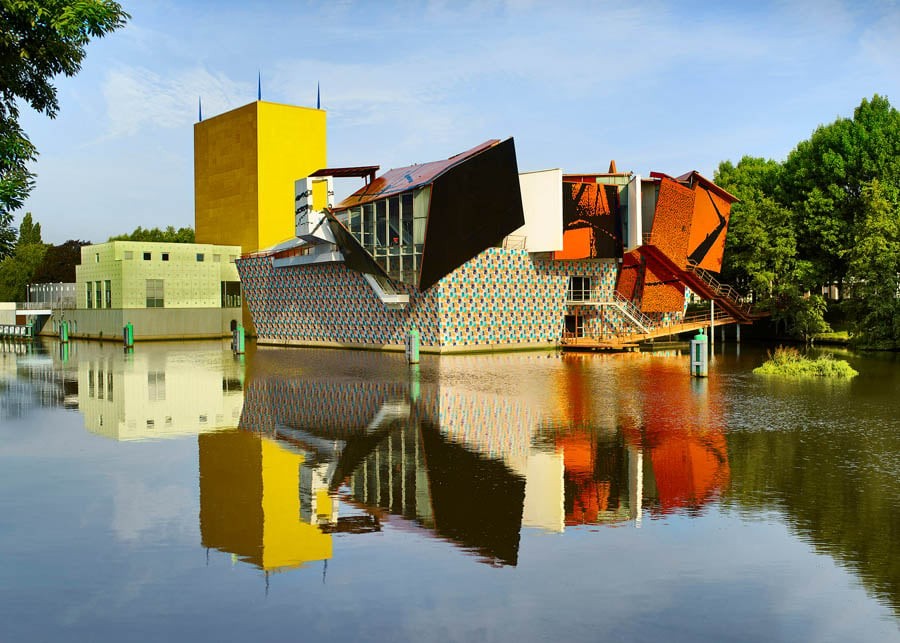
Au cœur des Pays-Bas, là où le pouls de la ville rencontre la contemplation silencieuse de la galerie, s'élève le Musée Groninger — une structure qui est moins un bâtiment qu'une provocation délibérée. Approcher cette institution, c'est faire face à un manifeste architectural qui défie les frontières traditionnelles de la conception muséale. C'est un lieu où les murs eux-mêmes semblent vibrer de l'énergie du postmodernisme, servant de sanctuaire à ceux qui recherchent un art capable de défier, de bousculer et, finalement, de transformer la perception de la réalité chez le spectateur.
La présence physique du musée est un dialogue extraordinaire entre trois voix architecturales distinctes, créant une structure de pavillons tripartites qui s'apparente à une sculpture vivante. L'édifice cylindrique argenté et épuré conçu par Philippe Starck offre un aperçu de l'élégance polie du postmodernisme industriel, sa peau métallique reflétant les nuances changeantes des cieux néerlandais. En contraste frappant et ludique, le pavillon jaune imposant d'Alessandro Mendini s'élève comme un hommage exubérant au Groupe Memphis, débordant de couleurs et d'un esprit rebelle qui rejette les conventions classiques rigides. Pour compléter ce trio d'avant-garde, le pavillon bleu pâle de Coop Himmelb(l)au s'impose comme une leçon magistrale de déconstructivisme, où la fragmentation et l'asymétrie créent un espace de tension intellectuelle et de mouvement. Relié par un pont spectaculaire enjambant la gare de Groningue, le musée ne se contente pas de s'implanter dans la ville ; il respire avec elle, intégrant harmonieusement le paysage urbain à sa mission artistique.
Un kaléidoscope d'expression artistique
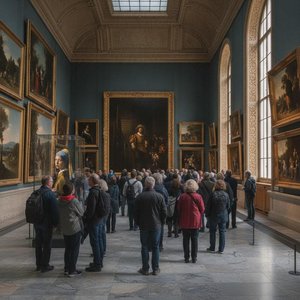
Au-delà de son extérieur saisissant, le Musée Groninger abrite une collection qui agit comme un vibrant kaléidoscope de l'expression moderne et contemporaine. La curation du musée évite le prévisible, privilégiant plutôt une exploration profonde de médiums divers, allant des textures denses des peintures à l'huile monumentales à la nature éphémère de l'art d'installation. Les visiteurs peuvent se retrouver devant les toiles vastes et émouvantes d'Ilya Repin, dont la maîtrise capture l'essence même de l'esprit russe du XIXe siècle, pour ensuite être transportés dans l'héritage électrique de la pop culture de David Bowie grâce à des expositions spécialement conçues qui jettent un pont entre les beaux-arts et l'iconographie culturelle.
Ce qui distingue véritablement cette institution est son engagement indéfectible envers l'unconventionalité. Les expositions temporaires du musée sont renommées pour leur courage, plongeant fréquemment dans les domaines du surréalisme, de l'art conceptuel et des œuvres provocatrices de l'avant-garde contemporaine. C'est une destination où la controverse est accueillie comme un catalyseur de dialogue, et où la sélection d'œuvres cherche à forcer l'observateur à remettre en question les récits établis. Pour l'amateur d'art, il offre un état de découverte constante ; pour le collectionneur et le designer d'intérieur, il constitue une leçon magistrale sur la manière dont une esthétique audacieuse et transformatrice peut redéfinir un espace.
Un héritage d'innovation et d'engagement
L'histoire du Musée Groninger est celle d'une évolution remarquable, retraçant un parcours depuis ses débuts modestes en 1874 jusqu'à son statut actuel de phare international de l'innovation culturelle. Bien que les racines du musée soient ancrées dans la préservation du patrimoine local — comme en témoigne l'inclusion du manoir historique Menkemaborg dans son orbite — son âme est fermement plantée dans le futur. Cette dualité permet au musée d'honorer le poids de l'histoire tout en agissant simultanément comme un laboratoire pour la nouveauté.
Attirant des centaines de milliers de visiteurs chaque année, le musée est devenu bien plus qu'un simple dépôt d'objets ; il est un moteur culturel pour la province et au-delà. Il demeure un lieu où les frontières entre l'architecture, l'art et la vie urbaine se dissolvent, invitant chaque visiteur à participer à une expérience créative continue. Que l'on soit attiré par l'audace architecturale de ses pavillons ou par la profondeur intellectuelle de sa collection permanente, le Musée Groninger s'érige comme un témoignage du pouvoir de l'art pour éveiller la curiosité et favoriser un engagement courageux avec le monde qui nous entoure.