
Sommaire
Informations clés
- Works on APS: 14
- Alternate names:
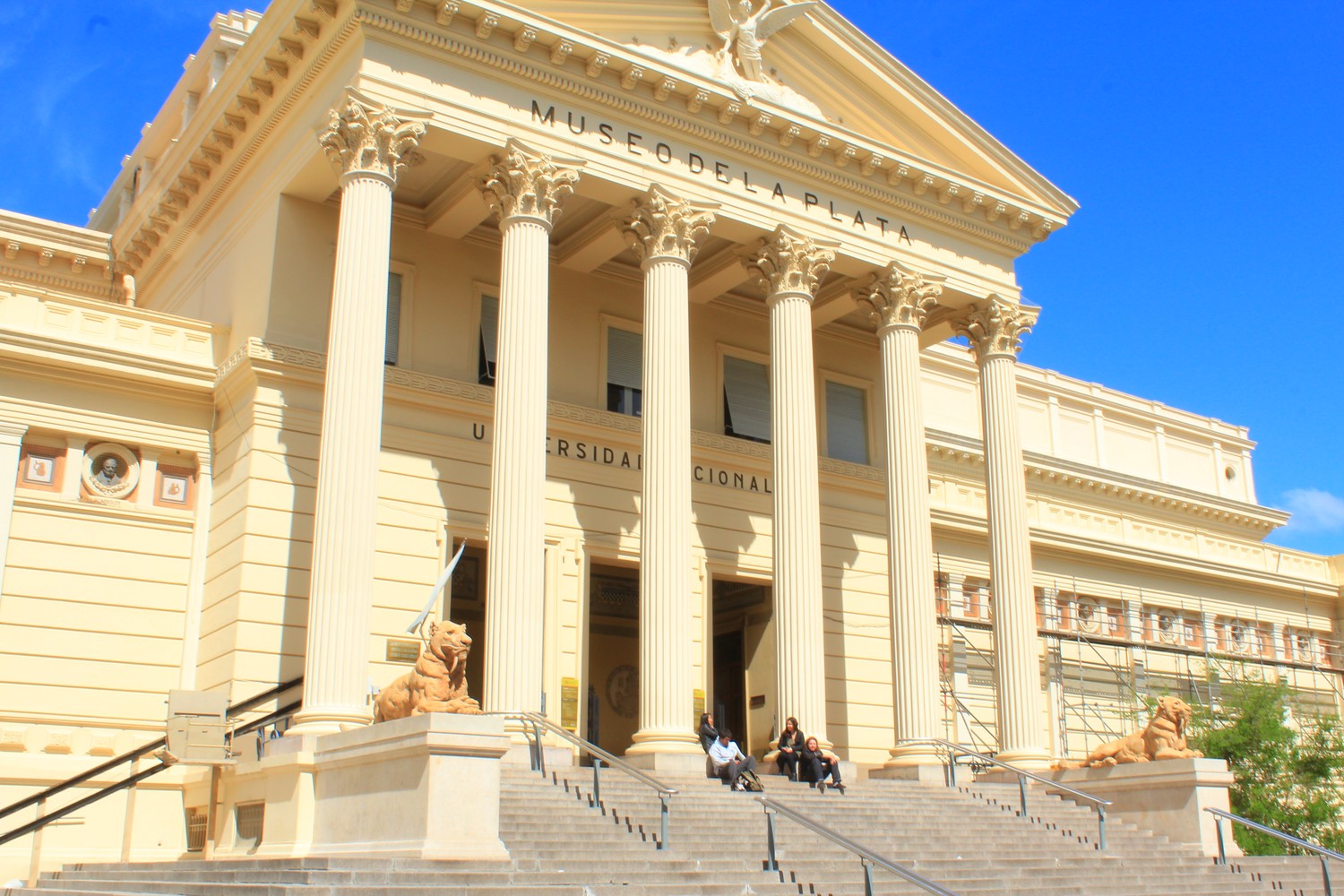
- Musée de La Plata
- Museo de La Plata
- Museo Nacional de Historia Natural La Plata
- La Plata Museum
- Featured artists:
- josefina e. bodnar
- r. fiorella aguilar
- marjorie heintzen
- andrés jäkel
- eduardo torres xol
- Location: La Plata, Argentine
Quiz d'art
Chaque question ne comporte qu'une seule réponse correcte.
Question 1:
Quel est le domaine scientifique principal de la collection paléontologique du Musée de La Plata ?
Question 2:
Quelle période couvre l'exposition archéologique du musée ?', 'choices': ['L’ère victorienne en Angleterre.', 'L’âge moyen caractérisé par les dinosaures.', 'De la période Aceramique à l’empire Inca et à l’arrivée européenne.']
Question 3:
Quel nombre approximatif de fossiles et de reliques sont conservés au Musée de La Plata ?
Question 4:
Le style architectural du bâtiment du musée reflète principalement :
Question 5:
La Fondation Musée de La Plata est associée à :
Artistes de la collection

Josefina E. Bodnar
Joséfinia Bodnar fusionne paléobotanique et art pour ressusciter la flore préhistorique. Ses reconstitutions minutieuses de plantes fossiles, notamment Moltenia wardii, témoignent d'une vision unique et d'un engagement envers la préservation du patrimoine botanique.


Fabricio E. Valdés
Explorez l’art bryologique de r. fiorella aguilar ! Illustrations botaniques captivantes représentant les mousses argentines et leur beauté écologique exceptionnelle. Découvrez une œuvre artistique unique et pleine d'émotion.

Marjorie Heintzen
Découvrez Marjorie Heintzen : actrice et artiste influencée par Van Gogh, Monet et Vermeer. Explorez ses peintures uniques et son héritage de collaboration avec Cornel Wilde.
Articles connexes
The Enduring Legacy of Architecture in Art: A Historical Survey of Representation & Meaning
Explore the rich history of architecture in art, from Renaissance theory to 19th-century reconstructions. Discover key artists & movements shaping visual representation – a guide for discerning collectors.

L'Ombre de la Foi : Exploration de l'Intensité Spirituelle et de l'Innovation Architecturale dans l'Art Gothique
Explorez l'intensité spirituelle et l'innovation architecturale de l'art gothique. Découvrez la Basilique Saint-Denis, les cathédrales emblématiques et le symbolisme fascinant des vitraux. Un voyage au cœur d'un chef-d'œuvre historique.
The Enduring Legacy of Architecture in Art: A Historical Survey of Representation & Aesthetic Influence
Explore the rich history of architecture's influence on art! Discover Renaissance perspective techniques, symbolism, & iconic masterpieces. Enhance your understanding with our expert analysis.
Collection d'œuvres d'art
Aucune œuvre d'art trouvée.


Abonnez-vous à notre newsletter
Restez informé(e) des dernières actualités artistiques, des offres exclusives et des idées de décoration.
Recevez 3 suggestions d'œuvres d'art gratuites
Parlez-nous de votre projet et nos experts en art vous proposeront 3 suggestions d'œuvres personnalisées.
Not Sure Where to Start?
Let Us Curate 3 Options Just for You - Free!