Une Chronique de la Vie : La Tapisserie Vivante de Berlin
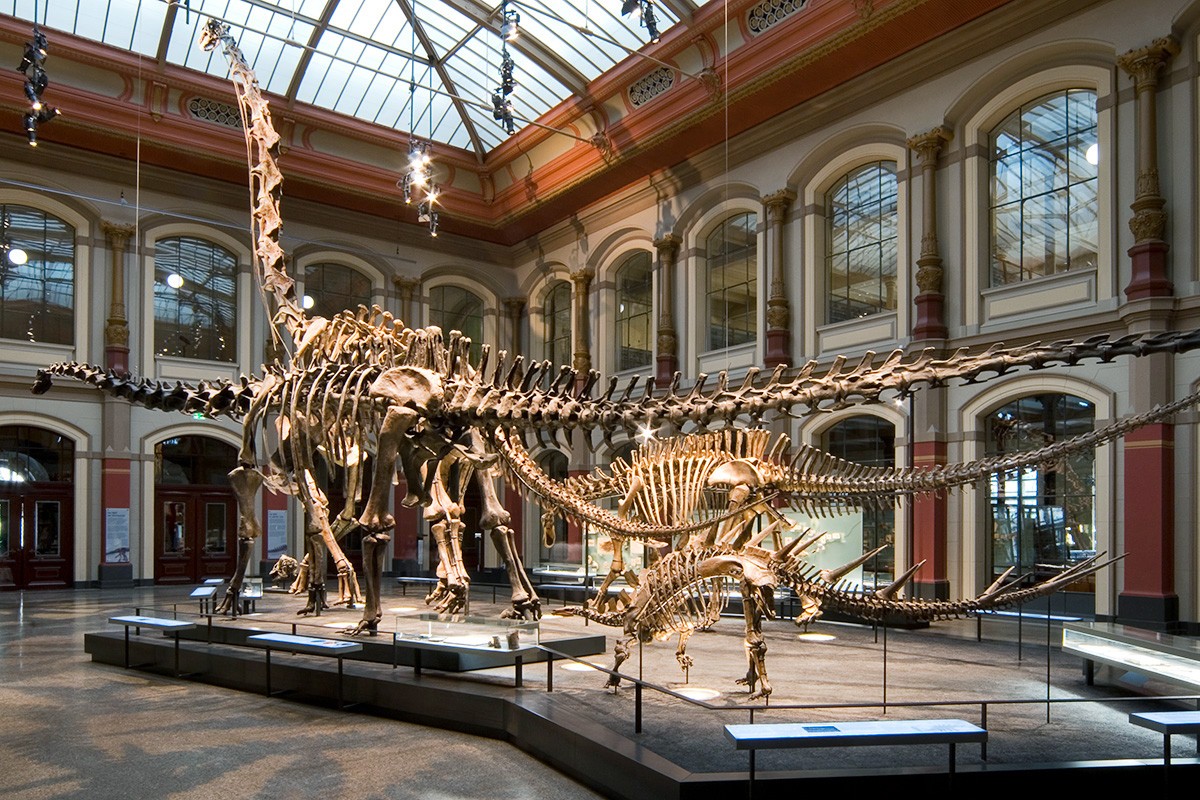
Franchir les portes du Museum für Naturkunde Berlin , c'est s'extraire du rythme effréné de la métropole moderne pour pénétrer dans un témoignage profond et vibrant de l'histoire de la Terre. Cette institution, qui a évolué depuis ses origines sous le nom de « Musée Humboldt », s'impose comme l'un des sanctuaires de recherche les plus prestigieux d'Allemagne. L'architecture elle-même agit comme un narrateur silencieux d'un long voyage ; le bâtiment présente un dialogue magistral entre grandeur classique et raffinement contemporain, particulièrement après les rénovations transformatrices de 2007. Entre ces murs, le poids des temps profonds semble palpable, pourtant l'atmosphère demeure vibrante et accueillante, offrant un espace où les ombres denses de la préhistoire rencontrent la lumière vive et clinique de la découverte scientifique moderne.
La collection du musée est une prouesse monumentale de préservation et de conservation, abritant un nombre stupéfiant de 30 millions de spécimens qui murmurent les secrets d'un passé lointain. Pour ceux que touchent l'échelle et la grandeur, la Salle des Dinosaures offre une rencontre à couper le souffle avec le Giraffatitan brancai , le plus grand squelette de dinosaure monté au monde. Sa forme colossale s'élance vers les plafonds voûtés, évoquant un sentiment d'effroi primordial. À proximité, les fossiles délicats et charnières de l' Archaeopteryx constituent une véritable leçon magistrale sur la transition évolutive, comblant le fossé entre les ancêtres reptiliens et le monde aviaire. Cette collection ne se contente pas d'exposer des ossements ; elle présente un récit soigneusement orchestré de la transformation, où chaque fragment fossilisé agit comme une fenêtre ouverte sur une ère disparue depuis longtemps.
Là où la Science Rencontre la Splendeur Esthétique
Au-delà des géants préhistoriques, le musée se révèle être un sanctuaire pour l'intime et le minuscule, ce qui en fait une source profonde d'inspiration pour les artistes, les collectionneurs et les designers d'intérieur. La Collection de Minéraux s'enorgueillit de posséder près de 75 % de tous les minéraux connus, présentant un éventail éblouissant de structures cristallines et de merveilles géologiques. L'on peut se retrouver captivé par une simple pièce d'ambre, qui renferme de minuscules écosystèmes gelés dans ses profondeurs dorées — un instant littéral du temps suspendu dans la résine. Cette obsession du détail s'étend au Mur de la Biodiversité , une installation visuellement époustouflante comprenant plus de 3 000 spécimens. C'est ici que l'intersection entre science et art devient la plus évidente, car l'agencement méticuleux des formes de vie crée une mosaïque de complexité biologique qui résonne avec la sensibilité esthétique de tout admirateur des merveilles naturelles.
Ce qui distingue véritablement le Museum für Naturkunde est sa double identité, à la fois trésor public et laboratoire vivant. Le musée respire à travers ses chercheurs et praticiens qui élèvent l'art de la préservation vers une excellence sculpturale et réaliste. Les éléments notables de cette vitalité créative incluent :
- L'Art de la Taxidermie : La maîtrise collaborative de Detlev Matke, Robert Stein et Carola Radke, dont le travail transcende la simple représentation pour atteindre une danse délicate entre science biologique et expression sculpturale.
- La Narration Moléculaire : Le travail d'Antje Dittmann, où la spectrométrie de masse fusionne avec le récit visuel pour insuffler la vie à des échos anciens.
- Le Mur de la Biodiversité : Un point fort du musée qui met en scène la richesse des couleurs et la variation des formes à travers des milliers d'espèces.
Pour ceux qui cherchent à comprendre l'équilibre délicat de notre planète, ou pour ceux qui sont émus par la beauté esthétique du monde naturel, le musée offre un voyage inégalé à travers la gloire éternelle de la vie.