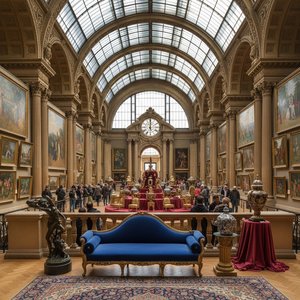
Un voyage à travers des siècles d'expression artistique : À la découverte du Musée Baron Gérard
Niché au cœur de Bayeux, en Normandie, le Musée Baron Gérard s'érige comme un témoignage vibrant du riche patrimoine artistique de la France. Bien plus qu'un simple conservatoire d'œuvres d'art, il propose une expérience immersive au sein d'un palais épiscopal du XIe siècle remarquablement préservé — un édifice lui-même imprégné d'histoire et d'une profonde portée symbolique.
- Les joyaux de la collection : L'impressionnante collection du musée s'étend de la Préhistoire jusqu'au XXe siècle, offrant une vue panoramique sur l'évolution artistique européenne. Parmi les chefs-d'œuvre les plus remarquables figurent les portraits de François Gérard, dont la finesse exquise capture l'essence même de son époque. Aux côtés de ces pièces emblématiques reposent des trésors de l'Impressionnisme et du Romantisme, notamment l'œuvre monumentale d'Eugène Delacroix, « San Miguel vencedor del demonio », qui palpite de couleurs vibrantes et d'une émotion dramatique.
- Une merveille architecturale : Le Palais Épiscopal est, en soi, un monument historique incarnant la prouesse de l'architecture normande. Ancien lieu de résidence des évêques, ses murs ont été les témoins des transformations séculaires de Bayeux, offrant un lien tangible avec le passé de la Normandie. Les visiteurs peuvent y admirer la grandeur de la nef ainsi que les sculptures complexes qui ornent son intérieur.
- Contexte historique : Le récit du Musée Baron Gérard s'entrelace avec l'histoire même de Bayeux. La Tapisserie de Bayeux, inscrite au patrimoine mondial de l'UNESCO — cette toile brodée monumentale illustrant la conquête normande — est inextricablement liée aux origines du musée et offre un aperçu inestimable de la vie et de l'art médiévaux. Sa création reflète le dynamisme culturel de cette période charnière.
- Exploration virtuelle : Pour ceux qui ne peuvent s'y rendre physiquement, le Musée Baron Gérard propose une visite virtuelle captivante, accessible depuis n'importe quel point du globe. Il est possible d'explorer ses collections à son propre rythme et de s'immerger pleinement dans les récits artistiques présentés.
Ce qui distingue le Musée Baron Gérard, c'est sa capacité à transporter les visiteurs dans le temps, pour les confronter à un art qui dialogue par-delà les générations. C'est un lieu où l'histoire respire aux côtés de la beauté, favorisant une appréciation du legs culturel et inspirant une contemplation sur le pouvoir éternel de l'expression créative.
Un héritage de mécénat et de vision artistique
Fondé en 1900 par Henri Alexandre Gérard — diplomate célèbre et collectionneur d'art — la mission du musée a toujours été de sauvegarder et de diffuser les trésors artistiques. Le dévouement inébranlable de Gérard a permis au Palais Épiscopal de devenir un refuge pour des œuvres exceptionnelles, consolidant ainsi la position du Musée Baron Gérard comme l'une des institutions culturelles majeures de Normandie.
Préparer votre visite
Situé à proximité de la cathédrale de Bayeux, dans le centre historique de la ville, le Musée Baron Gérard est facilement accessible en voiture ou en train. Les tarifs d'entrée sont modestes, permettant aux visiteurs de s'immerger pleinement dans les expositions captivantes et la splendeur architecturale du musée. Ne manquez pas l'occasion de découvrir l'histoire fascinante de François Gérard et sa contribution à l'histoire de l'art français.
Pour aller plus loin
- Œuvre recommandée : Prenez le temps d'examiner « Mrs. Catherine Edwards » de William Hogarth — un portrait magistral de la vie domestique qui illustre parfaitement le style distinctif de l'artiste, mêlant influences classiques et commentaire social.