Menu
CONSEIL EN ART GRATUIT

La Forestry Commission

Informations clés

  • Location: Edinburgh, United Kingdom
  • Featured artists: david alison
  • Alternate names:
    • Commission forestière
    • FC
    • Commission des forêts
  • Works on APS: 1

Quiz d'art

Chaque question ne comporte qu'une seule réponse correcte.

Question 1:
Quel était le but initial de la création de La Commission des forêts ?
Question 2:
La Commission des forêts élargit son objectif au fil du temps pour inclure :
Question 3:
Quel médium artistique était particulièrement présent dans la collection de La Commission des forêts ?
Question 4:
Qu'est-ce qui distingue La Commission des forêts parmi les autres musées ?', 'choices': ['Développer de nouvelles stratégies urbaines.', 'Restaurer cet écosystème unique et promouvoir une gestion durable des forêts.', 'Organiser des événements sportifs internationaux.']
Question 5:
La forêt calédonienne est un thème central dans les efforts de La Commission pour :

A Celebration of Scottish Landscape and Legacy: Exploring The Forestry Commission’s Artistic Treasures

The Forestry Commission stands as more than just a repository of forestry knowledge; it's a testament to Scotland’s artistic heritage and its enduring connection with the natural world. Established in 1919 following the devastation of World War I, this institution recognized the vital importance of preserving Britain’s woodlands – not merely for timber resources but also as sources of inspiration and cultural identity. Situated in Edinburgh, its elegant neo-Georgian building houses a remarkable collection that embodies centuries of artistic endeavor shaped by Scotland's dramatic landscapes.

A Historical Perspective: From Timber Reserves to Artistic Inspiration

The Commission’s origins lie in the urgent need to secure a strategic timber reserve for Britain amidst the anxieties of wartime. Recognizing the profound influence of nature on human creativity, its founders envisioned an institution that would foster both scientific understanding and artistic expression. Early initiatives focused on land settlement schemes aimed at revitalizing rural communities alongside ambitious reforestation projects – a commitment that continues to shape the organization’s mission today. The meticulous documentation of forestry practices—from traditional techniques to modern innovations—forms a cornerstone of its historical archive, providing invaluable insights into Scotland's evolving relationship with its forests.

The Caledonian Forest: A Focal Point for Artistic Representation

At its core lies an unwavering dedication to restoring the Caledonian Forest, one of Europe’s last remaining wildernesses. This ancient woodland ecosystem serves as a focal point for ongoing research and conservation efforts, informing artistic representations that strive to capture its majesty and complexity. Artists throughout history have been drawn to the forest's rugged beauty—from Romantic painters like William Turner who sought to convey its sublime grandeur to contemporary sculptors exploring themes of resilience and regeneration. The Commission actively collaborates with artists and designers, fostering innovative projects that celebrate Scottish landscapes and promote sustainable practices.

Notable Artwork Highlights: Visions of Edinburgh and Scotland’s Forests

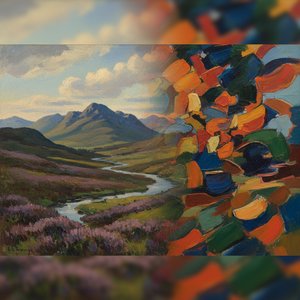
The museum’s collection is remarkably diverse, reflecting centuries of artistic endeavor inspired by Scottish landscapes. Paintings and sketches depict serene vistas of lochs and mountains alongside detailed depictions of forestry operations – showcasing the breadth of artistic interpretation throughout time. Notably, Adolphus Krell's “A Merchantman Preparing To Leave Her Anchorage Amidst Other Shipping Off Leith, With A Panorama Of Edinburgh Beyond” exemplifies Romanticism’s fascination with maritime scenes and Edinburgh’s skyline. Elizabeth Violet Blackadder’s portrait of Lord Provost Eric Milligan showcases meticulous realism and geometric precision – a masterful depiction of civic leadership. Furthermore, the building itself contributes to the museum's unique character, designed in a neo-Georgian style reflecting Edinburgh’s grandeur during the early 20th century. Its spacious halls provide an ideal setting for showcasing artwork and fostering dialogue about conservation and artistic appreciation.

Ongoing Engagement: Bridging Science and Artistic Vision

Beyond its collection and architecture, The Forestry Commission distinguishes itself through its commitment to bridging the gap between science and art. Exhibitions regularly explore connections between ecological understanding and creative expression – prompting visitors to contemplate the profound beauty and importance of Scotland’s forests. Its website ( https://en.wikipedia.org/wiki/Forestry_Commission ) serves as a valuable resource for exploring its history, ongoing initiatives, and captivating artwork collection. The Commission actively encourages artists to engage with conservation challenges—resulting in inspiring projects that elevate awareness and inspire action.