Les Échos Architecturaux de Beauvais
Niché au cœur du centre historique de Beauvais, en France, le Musée Départemental de l’Oise (façonné par la grandeur de l'Hôtel de la Préfecture) offre bien plus qu'une simple expérience de galerie ; c'est un voyage à travers les strates de l'élégance temporelle. Le musée réside dans une structure qui fut autrefois le vénérable Palais Épiscopal et le site de l'ancienne Abbaye Saint-Quentin, fondée dès 1067. Déambuler dans ses couloirs, c'est traverser des siècles de patrimoine français, où la charpente architecturale du bâtiment — vestiges de la dévotion médiévale et de la noblesse du XVIIe siècle — instaure un dialogue profond et silencieux avec l'art qu'il abrite. Pour le visiteur, le musée s'apparente à un sanctuaire où le poids de l'histoire rencontre la légèreté de l'innovation artistique, créant une atmosphère à la fois ancrée et transcendante.
Le cadre lui-même agit comme une véritable leçon de narration architecturale . À mesure que l'on parcourt les espaces préservés, la transition entre les racines ecclésiastiques de l'abbaye et l'élégance administrative solennelle de la préfecture reflète l'évolution plus large de la région de l'Oise. Ce sentiment d'appartenance est essentiel pour l'amateur d'art ou le décorateur en quête d'inspiration ; le musée ne se contente pas d'exposer des objets, il les contextualise au sein d'un paysage de prestige français durable et de continuité culturelle.
Une Symphonie de Lumière et de Paysage
À l'âme même de la collection réside une dévotion époustouflante pour le monde naturel, capturée à travers le prisme de l'
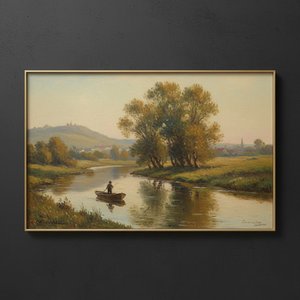
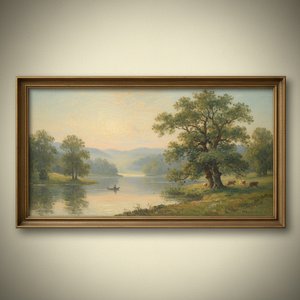
Les paysages présentés ici ne sont pas de simples représentations de la France rurale ; ce sont des études de luminosité et de tranquillité . On peut presque ressentir l'humidité de la rosée matinale ou la chaleur d'un soleil couchant filtrant à travers les arbres. Pour les collectionneurs et les décorateurs, ces œuvres offrent une leçon profonde d'harmonie des couleurs et d'équilibre tonal. Les palettes douces et argentées de Corot ainsi que les touches rythmiques et fragmentées de Sisley proposent une esthétique intemporelle qui transcende les époques, faisant de cette collection un point de repère essentiel pour quiconque est captivé par l'intersection poétique de la nature et de la perception humaine.
L'Élégance Tactile de l'Art Nouveau
Au-delà des royaumes éthérés de la peinture de paysage, le musée propose un changement sensoriel saisissant à travers sa collection exquise de
Ces céramiques, avec leurs teintes orange feu et leurs formes fluides et ondulantes, incarnent la fascination du mouvement pour les rythmes organiques de la vie. L'interaction entre les textures ardentes de l'argile et les formes botaniques délicates crée un drame visuel à la fois sophistiqué et viscéral. Cette collection sert de pont vital entre les traditions classiques du passé et les impulsions décoratives modernes du futur.
Ce qui distingue véritablement le