


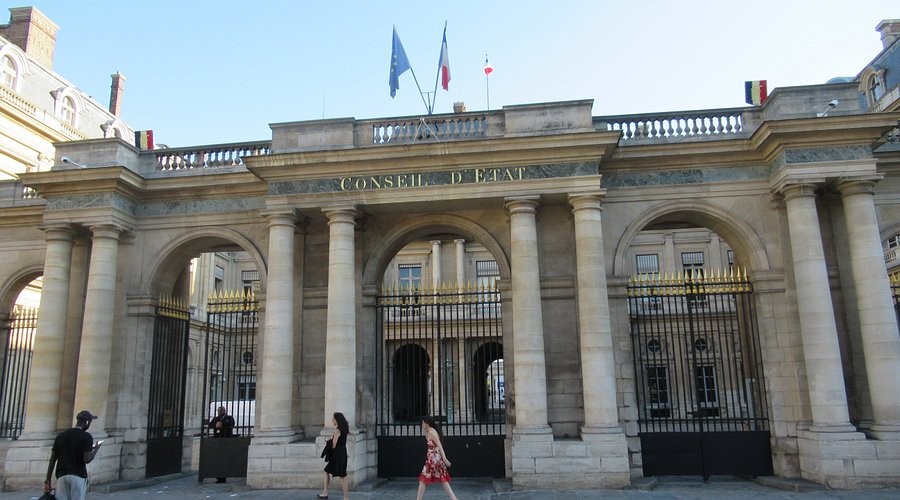
A Seat of Power and Artistic Reflection: Exploring the Conseil D'État and Its Architectural Legacy
The Conseil D’État, France’s venerable administrative court and legal advisor to the government, stands as more than just a judicial institution; it embodies centuries of French history and governance. Situated within the opulent Palais Royal in Paris—a palace that itself has undergone dramatic transformations throughout time—this museum offers a fascinating glimpse into both legal scholarship and artistic patronage. Its significance extends beyond legal precedent, revealing an enduring connection to France’s cultural heritage.Established as early as 1345, the Conseil D’État's current incarnation solidified in 1799 during Napoleon Bonaparte’s reign, marking a pivotal moment in shaping French law and political discourse. Initially conceived for Cardinal Richelieu—a symbol of papal authority—the Palais Royal swiftly transitioned through royal residences before becoming the Conseil D’État’s official home, absorbing influences from Baroque grandeur and Neoclassical elegance.
Visitors can wander through its expansive courtyards adorned with sculptures and fountains, immersing themselves in an atmosphere of regal splendor. The interior spaces showcase intricate plasterwork ceilings and opulent furnishings—reflecting the tastes of successive monarchs who graced its halls. These architectural elements serve as a tangible reminder of France’s illustrious past.
Exploring Legal Precedents: The Heart of Administrative Justice
The Conseil D’État's core mission revolves around safeguarding French constitutional law and upholding principles of administrative justice. Unlike museums dedicated to visual arts, its treasures reside within meticulously preserved legal archives—spanning centuries of judicial decisions and governmental reports. These documents illuminate the evolution of French legislation and provide invaluable insights into the workings of public administration.
Among its most celebrated holdings are transcripts from landmark trials concerning royal prerogatives and constitutional disputes—demonstrating the Conseil D’État's unwavering commitment to upholding fundamental rights and freedoms. Researchers and legal professionals alike benefit from access to these primary sources, fostering a continuous dialogue on legal interpretation and societal progress.
Architectural Grandeur: A Symphony of Styles
The Palais Royal itself is an architectural masterpiece—a testament to the artistic sensibilities of its various patrons throughout history. Initially designed for Cardinal Richelieu—a figure synonymous with papal power—the palace underwent significant renovations during Louis XIV’s reign, adopting a distinctly Baroque style characterized by monumental scale and elaborate ornamentation.
Later additions incorporated Neoclassical influences—emphasizing symmetry and rationality—reflecting the Enlightenment ideals that shaped French intellectual life. The Petit Luxembourg, a stunning chapel commissioned by Louis XVI, exemplifies Beaux-Arts aesthetics—characterized by harmonious proportions and meticulous craftsmanship. Each architectural element contributes to an overall impression of grandeur and sophistication.
Notable Exhibitions: Illuminating Legal History
Throughout its history, the Palais Royal has hosted exhibitions showcasing French art from diverse periods—underscoring its role as a cultural crossroads and intellectual hub. These presentations often explore connections between legal jurisprudence and artistic expression—demonstrating how philosophical debates and societal transformations have shaped both realms.
Displays featuring portraits of influential judges and statesmen alongside masterpieces of painting and sculpture invite visitors to contemplate the interplay between law and art—challenging conventional distinctions and fostering a broader understanding of French cultural heritage. Recurring exhibitions delve into themes such as liberty, equality, fraternity—values enshrined in the Constitution—inspiring contemplation on their enduring significance.
A Unique Institution: Shaping Legal Discourse and Artistic Vision
What distinguishes the Conseil D’État is its dual role – actively advising on legal matters while simultaneously fostering artistic creativity. Unlike conventional museums prioritizing tangible artifacts, it champions the preservation of legal documents and governmental reports—a cornerstone of French constitutional law. This commitment to intellectual heritage ensures that France's legal traditions continue to inspire future generations.
Furthermore, its influence extends beyond the courtroom—inspiring artists to grapple with complex ethical dilemmas and societal challenges. The Conseil D’État serves as a beacon of reasoned deliberation—demonstrating that legal scholarship can enrich artistic endeavors and contribute to shaping a more just and enlightened society.


