Menu
CONSEIL EN ART OFFERT

Commonwealth Fashion Council

Informations clés

  • Featured artists:
    • dato' sri bernard chandran
    • afroditi hera
    • stella nina mccartney cbe
    • rizwan beyg
    • farhanna pura
  • Alternate names:
    • Commonwealth Fashion Council
    • CFC
  • Works on APS: 15
  • Location: Londres, United Kingdom

Quiz d'art

Chaque question ne comporte qu'une seule réponse correcte.

Question 1:
Quel est le principal objectif du Conseil de la Mode du Commonwealth ?
Question 2:
La stratégie CFC Planet People Hope souligne:
Question 3:
Ce qui distingue le CFC des autres institutions muséales ?
Question 4:
Le projet CFC, L’échange de Mode du Commonwealth, vise:
Question 5:
Quel élément contribue à créer une expérience immersive dans les expositions CFC ?

A Tapestry of Cultures: Discovering The Commonwealth Fashion Council

The Commonwealth Fashion Council isn’t merely a repository of artistic treasures; it's an invitation—a journey into the heart of creativity interwoven with ethical considerations and profound cultural resonance. Situated in London, this institution champions the transformative power of art to inspire dialogue and propel positive societal change—a mission reflected not only in its exhibitions but also in its very architectural design and historical legacy.

Celebrating Craftsmanship: The Soul of Textile Artistry

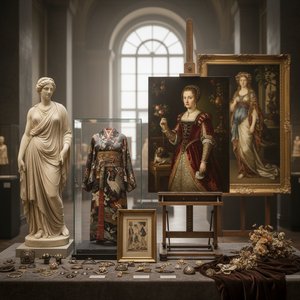
At CFC’s core lies an unwavering devotion to safeguarding traditional textile artistry—a heritage painstakingly preserved across generations. Featured prominently is “Afroditi Hera sewing her dress for The Commonwealth Fashion Exchange,” a captivating depiction capturing the meticulous process of collaborative design, reflecting CFC's commitment to artisan empowerment and cultural exchange. This artwork exemplifies the council’s belief that beauty derives not just from visual splendor but also from honoring the skills and traditions passed down through time—a perspective powerfully conveyed in its selection and presentation. The museum’s curators meticulously document each step of this process, highlighting techniques honed over centuries and celebrating the enduring relevance of artisanal crafts within a globalized world.

A Kaleidoscope of Artistic Expressions

CFC’s collection spans an astonishing breadth—from monumental canvases echoing the grandeur of British Impressionism like Sidney James Barton (1909–1986), Chairman of London County Council (1959–1960) to intimate portraits exploring psychological depth and capturing fleeting moments. These diverse pieces showcase a spectrum of artistic styles, mediums, and perspectives—a deliberate effort to illuminate the multifaceted nature of human experience. The curators’ selections prioritize artworks that provoke contemplation and challenge conventional interpretations, fostering intellectual curiosity alongside aesthetic appreciation. Notably, “The Scream” by Edvard Munch (1863–1944), a seminal expressionist masterpiece symbolizing anxiety and existential dread, stands as a testament to CFC's willingness to confront uncomfortable truths—a bold stance reflecting the council’s conviction that art possesses the capacity to catalyze profound emotional responses.

Architectural Harmony: Spaces for Reflection & Engagement

The CFC’s building itself is a testament to thoughtful design, prioritizing natural light and open spaces—a deliberate choice mirroring the council's ethos of transparency and accessibility. Its airy interiors encourage visitors to immerse themselves in the artworks on display, fostering contemplation and sparking dialogue. The museum’s architects employed innovative construction techniques to maximize daylight penetration, creating an environment conducive to artistic appreciation and promoting a sense of serenity amidst the bustle of London. Furthermore, interactive multimedia presentations illuminate the creative processes behind each garment, while workshops offer hands-on opportunities for visitors to engage directly with artistic techniques—elements that underscore CFC's commitment to fostering holistic learning experiences.

Historical Significance: From Collaborative Projects to Bold Exhibitions

CFC’s history is marked by groundbreaking initiatives like “The Commonwealth Fashion Exchange,” uniting designers from across the region—a bold experiment demonstrating cross-cultural understanding and cooperative artistry. This project exemplifies CFC’s belief that artistic innovation flourishes when fueled by collaboration and informed by diverse perspectives. Furthermore, a retrospective showcasing Francis Bacon's ‘Head-VI,’ a haunting 1949 painting exploring existential angst & trauma through distorted figures, surreal elements, and a screaming face inspired by silent film, captivated audiences and cemented CFC’s reputation for presenting challenging yet rewarding artistic experiences. The curators’ meticulous research into Bacon’s oeuvre underscores CFC’s dedication to promoting intellectual rigor alongside aesthetic beauty—a commitment that extends beyond its exhibitions to encompass its educational programs and outreach activities.

Sustainability & Ethical Values: Art as Catalyst for Change

Underlying every aspect of CFC’s operation is a steadfast dedication to Planet People Hope strategy – prioritizing environmental preservation alongside social responsibility. This ethos permeates the museum's curation and programming, ensuring that art serves as a catalyst for positive societal transformation. The curators actively champion sustainable practices throughout the museum’s operations—from energy conservation measures to responsible sourcing of materials—demonstrating CFC’s conviction that artistic institutions have a crucial role to play in addressing global challenges. This commitment reflects the council's belief that beauty and ethics are inseparable, inspiring visitors to contemplate their own roles in shaping a more equitable and ecologically conscious world.

Collection d'œuvres d'art

Aucune œuvre d'art trouvée.