Un sanctuaire d'ombres et de lumière au cœur de l'Esquilino
Niché dans la tapisserie vibrante et multiculturelle du quartier Esquilino à Rome, la Chiesa di Sant’Eusebio offre une évasion profonde loin du rythme incessant de la ville moderne. C'est un lieu où les strates du temps ne sont pas seulement visibles mais palpables, agissant comme un portail captivant vers l'ère du christianisme primitif. Fondé au IVe siècle après J.-C., sous le règne transformateur de Constantin, cet espace sacré a commencé son existence en tant que modeste basilique dédiée à Saint Eusèbe. Franchir ses portes, c'est entrer dans une chronique vivante de la résilience romaine, où les échos d'une piété antique rencontrent la théâtralité grandiose des siècles ultérieurs. L'église s'érige comme un témoignage de la puissance durable de l'ambition architecturale, ayant été remodelée par des souverains successifs pour créer une expérience esthétique unique en la Ville Éternelle.
Alchimie architecturale et vision baroque
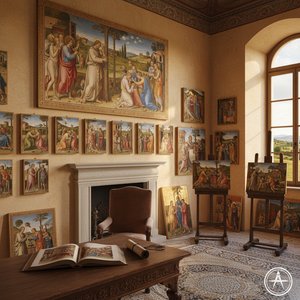
La structure elle-même constitue un fascinant medley architectural, témoignant des nombreuses mains qui ont façonné son destin au cours de près de deux millénaires. Les visiteurs sont accueillis par une façade qui demeure un spécimen magnifiquement préservé de l'architecture ecclésiastique romaine, dont les sculptures complexes invitent à un moment de contemplation silencieuse et transportent l'observateur vers l'Antiquité. À mesure que l'on s'enfonce dans le sanctuaire, l'esthétique glisse de la retenue romane vers la grandeur impétueuse du Baroque. Cette évolution trouve sa réalisation la plus époustouflante dans l'intérieur de l'église, qui abrite une prouesse artistique monumentale : les fresques d' Anton Raphael Mengs . Maître de la période baroque, Mengs utilisait un clair-obscur dramatique et une palette vibrante et émotive pour insuffler la vie aux récits bibliques. Pour l'œil averti — qu'il soit celui d'un historien de l'art ou d'un décorateur d'intérieur en quête d'inspiration pour des espaces spectaculaires et baignés de lumière — ces fresques représentent un sommet de profondeur émotionnelle et de maîtrise technique, où le jeu des ombres et des pigments crée un sentiment de mouvement inégalé.
Un héritage vivant de foi et de découverte
Au-delà de ses murs silencieux, la Chiesa di Sant’Eusebio reste profondément liée au pouls de la vie romaine et aux mystères de la terre. L'église entretient un lien profond avec les trésors archéologiques des Musées Civiques de Pavie, notamment à travers l'étude des monuments funéraires romains mis au jour dans la zone environnante. Ce lien apporte un contexte crucial, nous rappelant que l'église est un dépositaire de la mémoire historique, bâtie sur les fondations mêmes de la vie romaine antique. Pourtant, elle n'est pas seulement un musée du passé ; elle est une participante vibrante du présent. Chaque année, la communauté locale se rassemble pour la chaleureuse cérémonie annuelle de la bénédiction des animaux, une tradition chérie qui infuse l'espace sacré d'un sentiment de chaleur communautaire et de foi durable. C'est cette rare combinaison d' art monumental et de tradition intime qui fait de Sant’Eusebio une destination indispensable pour quiconque cherche à comprendre l'âme véritable et multiforme de Rome.