San Giovanni Baptistery: A Renaissance Treasure in Siena
Nestled within the heart of Siena, Italy, the Baptistery of San Giovanni stands as a testament to Tuscan artistry and religious devotion. More than just a building, it’s a living chronicle of the 15th century, radiating with sculptures and frescoes that define the zenith of the Renaissance period—a period where artistic innovation intertwined seamlessly with spiritual contemplation. Visiting this historic site is akin to stepping back in time, immersing oneself in an atmosphere steeped in tradition and illuminated by masterpieces crafted by some of Italy’s greatest minds.
Renaissance Sculpture: The Baptistery's Focal Point
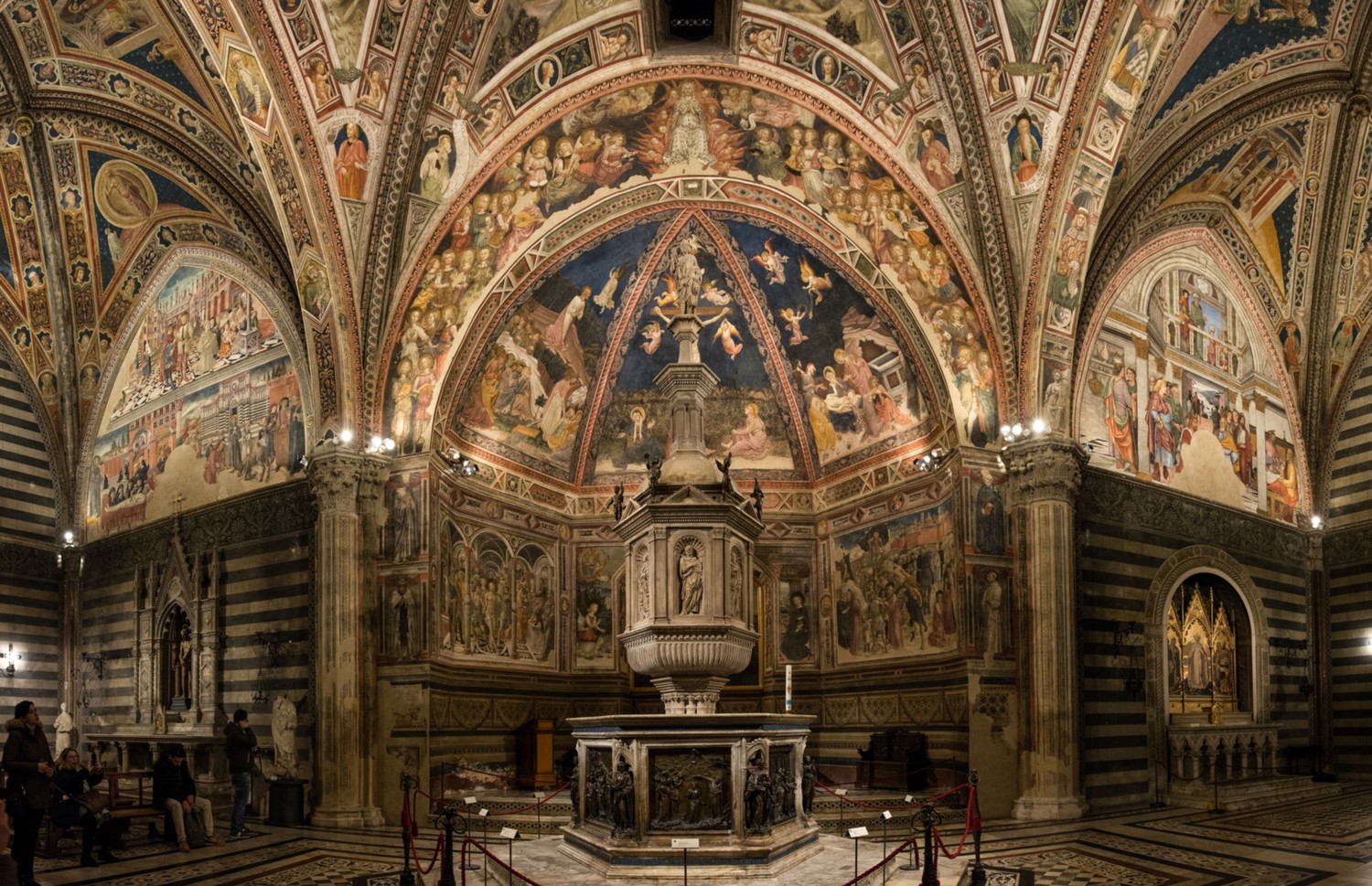
The Baptistery’s fame rests primarily upon its magnificent baptismal font—a collaborative triumph achieved through the combined genius of Jacopo della Quercia and Donatello. These titans of early Renaissance sculpture undertook this ambitious project, resulting in reliefs that depict scenes from John the Baptist’s life with breathtaking intricacy. Each panel is a meticulously rendered narrative, capturing movement and emotion with unparalleled skill. The figures themselves embody humanist ideals—anatomical precision combined with expressive gestures—reflecting the burgeoning interest in classical art and human form during this transformative era. Donatello's masterful depiction of John the Baptist, kneeling in prayer, exemplifies the profound spiritual depth that permeated Florentine sculpture at the time. The meticulous attention to detail—the drapery folds, the musculature, the facial expressions—demonstrates a mastery of technique unparalleled in its time and serves as an enduring inspiration for artists throughout history.
Vecchietta’s Vibrant Frescoes: A Window into Faith
Beyond its sculptural grandeur, the Baptistery is adorned with frescoes by Vecchietta—a name synonymous with Sienese artistic excellence. These vibrant paintings illuminate key moments in religious history with exceptional detail and artistic flair. Vecchietta's cycle of twelve scenes illustrating the Articles of Faith dominates the walls, showcasing a masterful command of color and perspective. The artist’s use of tempera paint—a technique favored for its luminosity and durability—creates an ethereal quality that transports viewers to the heart of medieval piety. Particular attention is paid to *The Prophets*, each figure rendered with meticulous realism and imbued with symbolic significance, reflecting the pervasive influence of humanist thought on artistic expression. The frescoes’ luminous palette—dominated by blues, reds, and golds—captures the grandeur of biblical narratives and underscores the Baptistery's role as a beacon of spiritual enlightenment.
Architecture & Design: Gothic Roots, Renaissance Refinement
The Baptistery’s architectural design represents a fascinating fusion of Gothic and early Renaissance styles—a characteristic feature of Siena during this pivotal period. While definitive records concerning its original construction remain elusive, the building’s soaring nave and ribbed vaulting unmistakably echo the grandeur of Gothic cathedrals—a testament to the enduring legacy of medieval craftsmanship. However, the façade, conceived in the late 13th century, incorporates elements of Renaissance ornamentation—pilasters adorned with Corinthian capitals and decorative sculptures—demonstrating Siena’s artistic evolution under the influence of Florentine innovation. The central space is deliberately designed to draw attention to the baptismal font, creating a sacred sanctuary where liturgical ceremonies unfold amidst breathtaking beauty. This harmonious blend of styles underscores Siena's commitment to preserving its architectural heritage while embracing the intellectual currents of the Renaissance.
A Legacy Enduring Through Centuries
The Baptistery’s history stretches back centuries, inextricably linked to the Opera del Duomo Siena—the institution entrusted with safeguarding Siena’s cathedral complex. Throughout the ages, it served as a vital center for religious life and artistic patronage, attracting artists from across Italy who sought to honor Saint John the Baptist and contribute to Siena’s cultural heritage. Notable exhibitions have periodically showcased the Baptistery's treasures, drawing scholars and enthusiasts alike—further cementing its place as one of Tuscany’s most cherished landmarks. Its enduring appeal lies not only in its artistic achievements but also in its palpable atmosphere of faith and tradition—a testament to Siena’s unwavering commitment to preserving its cultural legacy for generations to come. The Baptistery continues to inspire awe and wonder, reminding visitors of the transformative power of art and the profound beauty of spiritual contemplation.