Menu
CONSEIL EN ART GRATUIT

Archives d'État

Informations clés

  • Works on APS: 1
  • Location: Bologne, Italie
  • Alternate names:
    • Archives dÉtat
    • Archives dÉtat de Bologne
    • Archivio di Stato
    • État Archives
    • Archives dÉtat Bolognesi
  • Featured artists: Francesco di Giorgio Martini

Quiz d'art

Chaque question ne comporte qu'une seule réponse correcte.

Question 1:
Quel est le principal avantage de visiter les Archives d’État de Bologne ?
Question 2:
La caractéristique remarquable de cette archive est sa collection exceptionnelle de:
Question 3:
Pour les chercheurs intéressés par retracer leurs origines familiales dans la région de Bologne, les Archives d’État sont une ressource essentielle contenant:
Question 4:
Quel style architectural domine le bâtiment abritant les Archives d’État ?
Question 5:
Ce qui distingue les Archives d’État des autres musées est leur engagement sans relâche à:

A Window Into Bologna’s Medieval Soul: Exploring the State Archives

The State Archives of Bologna stand as a beacon of scholarly pursuit and artistic heritage—a place where history breathes through meticulously preserved documents and illuminated manuscripts, offering visitors an unparalleled glimpse into the formative years of European civilization. Situated in the heart of Bologna’s historic center, this institution embodies centuries of intellectual curiosity and artistic innovation, inviting exploration beyond mere observation to foster a deeper understanding of Bolognese identity and its contribution to the broader tapestry of Italian culture. Its unassuming façade conceals a treasure trove—a collection that transcends conventional museum displays, captivating researchers, genealogists, and art enthusiasts alike.

Collection Highlights: Illuminating Bologna’s Past

The State Archives' core strength resides in its extraordinary assemblage of medieval documents—legal charters detailing Bolognese governance, ecclesiastical decrees shaping religious life, and administrative records documenting the daily rhythms of urban existence. These primary sources provide invaluable insight into the political landscape and social customs of Bologna during its zenith, allowing historians to reconstruct a vivid portrait of life under papal patronage and amidst burgeoning mercantile activity. However, it is arguably more celebrated for its exceptional manuscript collection, spearheaded by the Liber Paradisus—a masterpiece of XIII century illumination that continues to inspire awe and scholarly debate.

The Liber Paradisus: A Symphony of Color and Geometry

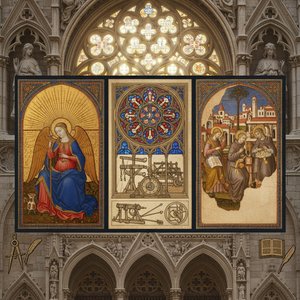
This illuminated manuscript, created by Benedictine monks during a period of fervent theological fervor, exemplifies the artistic brilliance of its time. Each page is a meticulously crafted tableau—a testament to unparalleled skill in illumination technique—characterized by intricate geometric patterns interwoven with vibrant pigments—azure blues and golds—reflecting the symbolic language prevalent in medieval art. The Liber Paradisus’s shimmering surface captures the ethereal beauty of Paradise, portraying biblical scenes with breathtaking precision and conveying profound spiritual contemplation. Its meticulous detail reveals a mastery of pigment blending and gilding that rivals the finest artworks of its era.

Architectural Context: Echoes of Romanesque and Gothic Tradition

The building housing the State Archives reflects Bologna’s architectural evolution—beginning as a monastic complex constructed during the XIII century, it underwent significant renovations throughout subsequent centuries—particularly during the Renaissance—resulting in a harmonious blend of Romanesque and Gothic styles. Careful observation reveals arched windows adorned with floral motifs, ribbed vaults soaring towards the heavens, and decorative sculptures commemorating Bolognese saints—elements that speak to the enduring influence of past eras and underscore the institution’s connection to Bologna’s rich architectural heritage.

Notable Exhibitions: Bringing History to Life

Recent exhibitions have illuminated Bologna’s multifaceted cultural landscape through captivating displays exploring themes ranging from “Bologna Medieval: Art and Society,” showcasing reproductions of iconic artworks alongside detailed historical reconstructions—allowing visitors to immerse themselves in the sights, sounds, and textures of medieval Bolognese life. Another compelling presentation examined "The Legacy of Benedictine Monasteries," illuminating the profound impact of monastic institutions on Bolognese intellectual and artistic traditions—highlighting their role as centers of learning and patronage that fostered innovation across disciplines.

What Sets Bologna’s Archives Apart: A Singular Perspective

Ultimately, what distinguishes the State Archives from other museums is its unwavering commitment to preserving and disseminating knowledge—a mission that extends far beyond mere conservation. Researchers, genealogists, and art historians alike find inspiration within its archives, fueling ongoing scholarship and fostering a deeper appreciation for Bologna’s multifaceted heritage. Visiting this institution isn't simply observing history; it’s actively participating in its unfolding narrative—a journey into the soul of Bolognese identity and an exploration of the enduring legacy of artistic excellence.