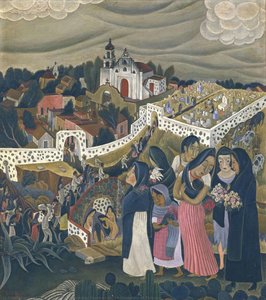
La vision transculturelle de Tamiji Kitagawa
Tamiji Kitagawa (1894–1989) s'érige comme un pont monumental entre les délicates traditions de l'esthétique japonaise et les courants révolutionnaires et audacieux du modernisme occidental. Né à Ushio, dans la préfecture de Shizuoka, ses premières années furent imprégnées de la richesse culturelle du Japon, pourtant son esprit était intrinsèquement mondial. Après avoir affiné son intellect à l'université Waseda, Kitagawa s'est lancé dans un voyage transformateur qui allait modifier à jamais la trajecte de son pinceau. Son odyssée à travers New York, puis le Mexique, lui a permis de tisser ensemble les fils disparates de l'expérience humaine — de la rigueur géométrique du cubisme à la ferveur sociale du muralisme mexicain — pour créer un langage visuel unique et vibrant.
Les années de formation de l'artiste aux États-Unis furent le creuset de son évolution stylistique. Immergé dans le milieu artistique bouillonnant de New York, il étudia à l'Art Students League sous la direction de maîtres tels que John Sloan et George B. Bridgman. C'est là que Kitagawa commença à s'affranchir des limites de la peinture traditionnelle japonaise à l'encre, embrassant le réalisme brut de la vie urbaine et les innovations structurelles de Cézanne. Cette période lui insuffla une compréhension profonde de la manière dont la lumière, la forme et la réalité sociale pouvaient être synthétisées pour créer un art à la fois esthétiquement frappant et socialement résonnant.
Une synthèse du muralisme et de la modernité
Le chapitre le plus déterminant de la vie de Kitagawa commença peut-être en 1921, lorsqu'il arriva au Mexique durant une période d'intenses bouleversements révolutionnaires. Cette rencontre avec le muralisme mexicain allait devenir le cœur battant de son style mature. Influencé par l'approche humaniste d'Alfredo Ramos Martínez et la mission sociale des Écoles d'Art en Plein Air, Kitagawa apprit à utiliser l'art comme un outil de connexion communautaire et d'expression politique. Son œuvre commença à palpiter de l'énergie des masses, mêlant l'échelle monumentale et les thèmes sociaux des maîtres mexicains à une sensibilité typiquement japonaise envers la nature et l'espace.
Sa capacité à naviguer dans ces paysages artistiques si divers lui permit de créer des œuvres simultanément troublantes et sereines. Dans des pièces telles que Criquet et autoportrait de l'ego, on peut témoigner de l'intersection envoûtante du surréalisme et du cubisme, où les lignes audacieuses et les bleus vibrants évoquent une profondeur psychologique. À l'inverse, ses paysages, comme Jardin de thé dans les bois, révèlent un côté plus paisible de son génie, capturant l'essence tranquille de la campagne japonaise à travers un prisme transformé de façon permanente par ses voyages internationaux.
Héritage et importance historique
L'importance historique de Tamiji Kitagawa réside dans son refus d'être confiné par des frontières nationales ou stylistiques. Il était un véritable cosmopolite de la toile, un artiste qui ne voyait aucun conflit entre les traditions ancestrales du Nihonga et les provocations avant-gardistes du XXe siècle. L'œuvre de sa vie sert de témoignage à la puissance des échanges culturels, démontrant comment la fusion de mondes différents peut produire une nouvelle et plus profonde manière de voir.
Tout au long de sa longue carrière, les accomplissements de Kitagawa ont laissé une marque indélébile sur l'histoire de l'art japonais et mexicain. Il demeure une figure pivot pour ceux qui étudient la diffusion mondiale du modernisme, représentant un moment rare de l'histoire où l'Orient et l'Occident ne se sont pas seulement rencontrés, mais ont activement fusionné pour créer quelque chose d'entièrement nouveau. Son héritage continue d'inspirer, invitant les spectateurs à explorer la beauté complexe trouvée à l'intersection de la tradition et de la révolution.