Menu
CONSEIL EN ART OFFERT

Sara Guasteví i Sastre

L'essentiel

  • Copyright status: Under copyright
  • Art period: Contemporain
  • Top-ranked work: Buddhist
  • Nationality: Espagne
  • Afficher plus…
  • Top 3 works:
    • Buddhist
    • Samulnori
    • Interaction
  • Works on APS: 4
  • Born: 1985, Maó, Espagne
  • Museums on APS: Musée de la Musique de Barcelone

Quiz d'art

Chaque question ne comporte qu'une seule bonne réponse.

Question 1:
Quelle est la profession de Sara Guasteví i Sastre en dehors de son travail artistique ?
Question 2:
Où Sara Guasteví i Sastre a-t-elle suivi ses études en sciences bibliographiques ?
Question 3:
Sara Guasteví travaille actuellement comme documentariste et chercheur au :
Question 4:
Dans quelle publication Sara Guasteví a-t-elle contribué son expertise en gestion de l’information ?
Question 5:
À quoi est dédiée la blogue de Sara Guasteví ?

Sara Guasteví i Sastre: Capturing the Soul of Korean Music

Sara Guasteví i Sastre, born in Maó, Spain in 1985, is a multidisciplinary artist whose work delves into the vibrant tapestry of Korean music traditions. Combining her background as a librarian and documentalist with a passion for visual storytelling, she brings a meticulous eye to translating complex musical concepts into striking artistic representations—primarily focused on Samulnori and Pungmulnori. Her dedication to preserving cultural heritage is evident not only in her scholarly pursuits but also in the evocative imagery that characterizes her paintings.

Education & Early Influences

Guasteví’s academic journey began with a degree in Library and Information Science from the University of Barcelona, followed by a specialization in Documentation. This formative experience instilled within her a profound appreciation for research methodologies and meticulous attention to detail—qualities that would subsequently shape her artistic approach. The Museo de la Música in Barcelona became her primary workplace, where she honed her skills as a documentalist and researcher, exploring the intricate relationships between music and visual culture. Simultaneously, she embraced her role as professor at FIMA (Fundació Institut Musica Autònoma), fostering intellectual dialogue and nurturing the creative aspirations of aspiring artists. Early influences included Surrealist painters like René Magritte and Expressionists such as Edvard Munch—artists who championed emotional intensity and symbolic imagery—inspiring Guasteví to infuse her canvases with a similar spirit of artistic exploration.

Artistic Style & Technique

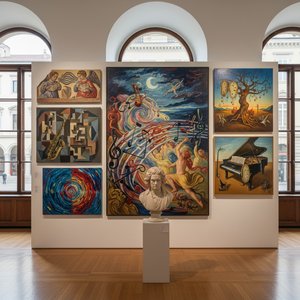
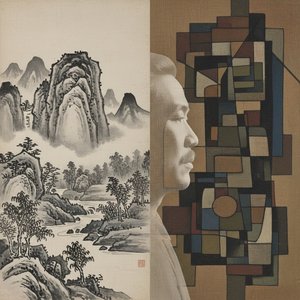
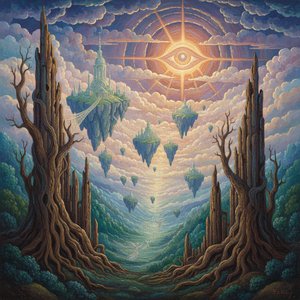
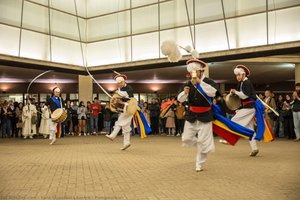
Guasteví’s artistic style distinguishes itself through a deliberate fusion of observation and imagination. She meticulously researches Korean music—particularly Samulnori (drum ensemble music) and Pungmulnori (ritualistic folk music)—analyzing its rhythms, movements, and cultural significance. This rigorous investigation informs her canvases, where she employs bold colors and dynamic compositions to convey the energy and spirit of these performances. Her approach isn’t merely about depicting instruments or musicians; it's about capturing the essence of Korean musical traditions—their connection to ritual, community, and storytelling. She utilizes acrylic paints on canvas, favoring layering techniques that allow her to build up textures and create depth. Her color palettes are often inspired by traditional Korean textiles and ceramics, reflecting a sensitivity to cultural aesthetics. The resulting paintings resonate with influences from Surrealism and Expressionism, evident in her use of symbolic imagery and emotionally charged brushstrokes—a stylistic choice designed to amplify the expressive power of her artistic vision.

Notable Works & Contributions

Sara Guasteví’s artistic output extends beyond individual artworks; she actively engages in disseminating knowledge about Korean music through publications like “Fontes artis musicae” and presentations at conferences. She champions the importance of documenting cultural practices and fostering intercultural understanding—a mission that aligns seamlessly with her creative endeavors. Her blog, Sara Guasteví. Un bloc d’il·lusions, showcases her poetic sensibilities and offers insights into her artistic process. Among her most celebrated pieces are depictions of Samulnori performances, capturing the rhythmic complexity and visual dynamism of these ensembles. These artworks serve as powerful visual narratives, inviting viewers to contemplate the profound connections between sound and image—a testament to Guasteví’s ability to translate intangible musical concepts into tangible artistic representations.

Legacy & Recognition

Sara Guasteví i Sastre's paintings stand apart for their meticulous attention to detail and their evocative portrayal of Korean music traditions. Her work has garnered critical acclaim for its stylistic sophistication and intellectual depth, establishing her as a prominent voice in contemporary visual culture—particularly within the realm of Korean art history. She continues to inspire artists and scholars alike with her unwavering commitment to preserving cultural heritage through artistic expression.