Portrait de Robert Vonnoh

Les 49 peintures les plus célèbres de Robert Vonnoh, une sélection de la galerie

Mis à jour en novembre 2026 · classé selon notre score de popularité (recherches, visites et commandes pour chaque œuvre) · 56 œuvres de Robert Vonnoh dans notre catalogue

En bref

Parmi toutes les œuvres originales laissées par Robert Vonnoh, la plus célèbre est L'Anneau (1892). Juste après, on retrouve La Mère Adèle (Cordon Bleu) (1911) et November (1890). Notre catalogue comprend 56 œuvres de Robert Vonnoh ; la galerie a conservé les 49 que le monde admire le plus, chacune présentée avec sa date, son musée et son histoire.

1858 – 1933, Hartford Impressionism Plus d'œuvres : Pennsylvania Academy of Fine Arts

Les 10 plus belles peintures de Robert Vonnoh : la sélection de la galerie

1
L'Anneau (1892) de Robert Vonnoh

L'Anneau

1892 · Huile sur toile

L'œuvre intitulée L'Anneau de Robert Vonnoh dépeint un groupe de femmes évoluant au cœur d'un champ paisible. À l'arrière-plan, plusieurs arbres s'élèvent majestueusement au-dessus du paysage, encadrant la scène. La composition met en lumière quatre figures féminines principales, chacune absorbée par une activité distincte. Une femme est assise à même le sol, tenant un panier, tandis qu'une autre se tient tout près d'elle. Une troisième femme se trouve à l'abri…

2
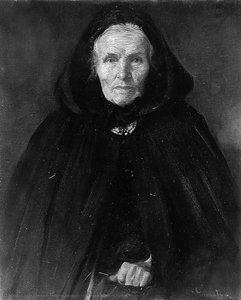
La Mère Adèle (Cordon Bleu) (1911) de Robert Vonnoh

La Mère Adèle (Cordon Bleu)

1911 · Huile sur toile · Metropolitan Museum of Art, New York

Une femme âgée se tient devant nous, sa présence empreinte du poids des années. Elle est enveloppée dans une cape sombre qui retombe sur ses épaules, ses plis profonds créant un sentiment de retraite silencieuse. La lumière caresse doucement son visage, capturant les textures délicates et marquées de sa peau ainsi que les lignes subtiles qui tracent une vie d'expérience. Il émane de son regard une tranquillité profonde, une expression…

3
November (1890) de Robert Vonnoh

November

1890 · Oil On Canvas · Pennsylvania Academy of Fine Arts, Philadelphie

In November by Robert Vonnoh, the landscape settles into a quiet, autumnal stillness. The scene captures a garden or orchard setting where the air feels heavy with the cool, overcast light of the season. A solitary figure, likely a gardener, moves within a fenced area, tending to the earth. This presence introduces a sense of quietude and the cyclical rhythm of the seasons. The composition is structured by the verticality…

4
Edward H. Coates (1893) de Robert Vonnoh

Edward H. Coates

1893 · Oil · Pennsylvania Academy of Fine Arts, Philadelphie

In this portrait of Edward H. Coates, Robert Vonnoh captures a man of significant presence and quiet gravity. Created about 1893, the work presents the subject in a moment of stillness. Edward H. Coates, a prominent American businessman and financier, sits before us with a composed and serious expression. His gaze and posture suggest a life defined by responsibility and the weight of decision-making. The artist focuses on the man…

5
Bessie Potter Vonnoh at Her Dressing Table (1912) de Robert Vonnoh

Bessie Potter Vonnoh at Her Dressing Table

1912 · Oil On Canvas

The oil on canvas painting titled Bessie Potter Vonnoh at Her Dressing Table features Bessie Potter Vonnoh as the subject. Created in 1912, this work depicts the woman in a private, domestic setting. The portrait captures her seated at a dressing table, positioned in profile toward the left side of the frame.

La sélection de Robert Vonnoh se poursuit, de 11 à 49

Les sujets qui ont captivé Robert Vonnoh

Les quatre thèmes qui reviennent le plus souvent dans ces œuvres originales, chacun illustré par son plus bel exemple.

Les musées qui conservent les œuvres originales de Robert Vonnoh

Les 7 musées qui détiennent la plupart des peintures de cette page.

Musées Ville Œuvres de Robert Vonnoh Peintures de cette liste
Pennsylvania Academy of Fine Arts, PhiladelphiePennsylvania Academy of Fine Arts Philadelphie 3 November, Edward H. Coates, Companion of the Studio
Metropolitan Museum of Art, New YorkMetropolitan Museum of Art New York 2 La Mère Adèle (Cordon Bleu), The Bridge at Grez
Indianapolis Museum of Art, IndianapolisIndianapolis Museum of Art Indianapolis 2 Poppies, Poppies
Musée des Beaux-Arts de Boston, BostonMusée des Beaux-Arts de Boston Boston 1 Springtime in France
Art Institute of Chicago, ChicagoArt Institute of Chicago Chicago 1 Spring in France
Minneapolis Institute of Art, MinneapolisMinneapolis Institute of Art Minneapolis 1 Apple Bloom
Butler Institute of American Art, Mahoning CountyButler Institute of American Art Mahoning County 1 In Flanders Field-Where Soldiers Sleep and Poppies Grow, Poppies

Robert Vonnoh décennie par décennie : l'original qui définit chacune d'elles

Œuvres par décennie

Choisissez une décennie pour découvrir l'œuvre originale qui la définit.

Questions des collectionneurs sur les peintures de Robert Vonnoh

Quelle est l'œuvre la plus célèbre de Robert Vonnoh ?Révéler la réponse

L'Anneau (1892). La Mère Adèle (Cordon Bleu) (1911) et November (1890) suivent.

Quel âge avait Robert Vonnoh lors de la création de L'Anneau ?Révéler la réponse

34 ans : L'Anneau date de 1892, et Robert Vonnoh est né(e) en 1858.

Quelles sont les dix peintures les plus célèbres de Robert Vonnoh ?Révéler la réponse

L'Anneau, La Mère Adèle (Cordon Bleu), November, Edward H. Coates, Bessie Potter Vonnoh at Her Dressing Table, The Bridge at Grez, The Mill, Poppies, Springtime in France et Spring in France. Le classement ci-dessus indique l'année et le musée de chacun.

Combien de peintures Robert Vonnoh a-t-il laissées ?Révéler la réponse

Notre catalogue comprend 56 œuvres de Robert Vonnoh, datées de 1884 à 1923.

Dans quels musées sont exposés les chefs-d'œuvre de Robert Vonnoh ?Révéler la réponse

Principalement dans Pennsylvania Academy of Fine Arts (Philadelphie), Metropolitan Museum of Art (New York) et Indianapolis Museum of Art (Indianapolis). Le tableau des musées ci-dessus les répertorie tous.

Dur quelles années Robert Vonnoh a-t-il peint ses œuvres les plus célèbres ?Révéler la réponse

En 1890s : 9 des 49 œuvres de cette page ont été créées à cette époque, dont L'Anneau.

Quelles sont les premières et les dernières œuvres originales célèbres de Robert Vonnoh ?Révéler la réponse

Sur cette page, la plus ancienne date de The Mill (1884) et la plus récente de Leah (1923).

Quels sujets Robert Vonnoh a-t-il le plus souvent choisis ?Révéler la réponse

France (4), Flowers (4) et Autumn (4), à travers les 49 œuvres de cette page.

Quelle technique Robert Vonnoh a-t-il/elle le plus utilisée ?Révéler la réponse

Oil On Canvas, pour 3 des 49 œuvres de cette page.

À quel mouvement artistique appartient Robert Vonnoh ?Révéler la réponse

Impressionism, à en juger par les originaux de cette page.

Quelles œuvres de Robert Vonnoh sont exposées au Pennsylvania Academy of Fine Arts ?Révéler la réponse

November, Edward H. Coates et Companion of the Studio : le Pennsylvania Academy of Fine Arts, Philadelphie détient 3 des œuvres de cette page.

Robert Vonnoh : vie et œuvre

Robert William Vonnoh: Bridging Impressionism and American Realism

Born in Hartford, Connecticut, in 1858, Robert William Vonnoh’s artistic journey was a testament to the evolving landscape of American art at the turn of the century. His early life, marked by a family upheaval following his father's legal troubles, instilled within him a keen observation of human nature and a desire to capture authentic emotion – qualities that would profoundly shape his distinctive style. Initially trained in Boston at the Massachusetts Normal Art School, Vonnoh’s artistic sensibilities were further refined during a pivotal period in Paris, where he immersed himself in the vibrant Impressionist movement. This exposure wasn't merely an aesthetic adoption; it represented a conscious rejection of the rigid academic traditions that still dominated the American art scene.

Vonnoh’s Parisian sojourn proved transformative. He found kinship with artists who prioritized capturing fleeting moments and atmospheric effects, embracing broken brushstrokes and vibrant color palettes – techniques he would later integrate into his own work. Crucially, however, Vonnoh never fully abandoned the more traditional elements of portraiture and landscape painting that had characterized his earlier training. This synthesis—a willingness to experiment with Impressionistic principles while retaining a grounding in classical composition and subject matter—became a hallmark of his artistic identity.

The Grez-sur-Loing Influence

In 1887, Vonnoh embarked on what would become a defining chapter of his career: relocating to Grez-sur-Loing, a small village in the Loire Valley of France. This idyllic setting, already renowned as an artists’ colony, provided Vonnoh with unparalleled opportunities for plein air painting and fostered a deep connection with fellow creatives. The atmosphere of Grez—characterized by its relaxed pace, vibrant social life, and abundance of natural beauty—proved profoundly influential on his artistic development. It was here that he began to loosen the constraints of academic formality, embracing looser brushwork, brighter colors, and a more direct approach to depicting the world around him.

The most iconic testament to this period is undoubtedly *In Flanders Field* (1890), a monumental canvas depicting a vast field of poppies bathed in the golden light of late afternoon. The painting’s dramatic use of cadmium red, combined with Vonnoh's expressive brushstrokes and dynamic composition, immediately garnered critical acclaim. Yet, despite its success at exhibitions and within prominent collections, *In Flanders Field* remained unsold for decades, a poignant reflection of the challenges faced by American artists attempting to gain recognition in the European art world.

A Portraitist and Landscape Painter

While *In Flanders Field* stands as his most celebrated work, Vonnoh’s artistic output encompassed a diverse range of subjects. He excelled equally as a portrait painter and a landscape artist, demonstrating a remarkable versatility in his technique and approach. His portraits—often characterized by their psychological depth and subtle nuances of expression—captured the essence of his sitters with remarkable sensitivity. Simultaneously, his landscapes—ranging from serene rural scenes to dramatic depictions of the French countryside—exhibited a masterful command of light, color, and atmosphere.
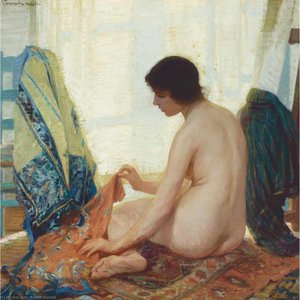
His work in the American East Coast was equally notable. He taught at various institutions including the Massachusetts Normal Art School, Cowles Art School, and the Museum of Fine Arts, Boston, imparting his artistic knowledge to generations of aspiring artists. His influence extended beyond the classroom, as he actively participated in the art community through exhibitions and collaborations.

Legacy and Historical Significance

Robert William Vonnoh’s legacy is one of quiet significance. He wasn't a flamboyant revolutionary or a figurehead of any particular movement, but rather a skilled and observant artist who quietly bridged the gap between Impressionism and American realism. His work reflects the evolving artistic sensibilities of his time—a willingness to embrace new techniques while retaining a deep respect for tradition.

His retrospective exhibitions in Chicago and Youngstown, Ohio, in 2010, brought renewed attention to his oeuvre, revealing the depth and complexity of his artistic vision. Today, Vonnoh’s paintings are housed in prestigious collections across North America and Europe, serving as a testament to his enduring contribution to American art history. *In Flanders Field*, finally finding its permanent home at the Butler Institute of American Art, stands as a powerful symbol of his artistic journey—a vibrant reminder of the beauty and emotional resonance that can be found in the simplest of subjects.