early life and education
Osman Hamdi Bey, a pivotal figure in Turkish art history, was born in Istanbul on December 30, 1842, into a family of considerable influence – his father, Ibrahim Edhem Pasha, served as Grand Vizier during the reign of Sultan Abdul Hamid II. Recognizing his son’s innate talent for artistic pursuits, Edhem Pasha ensured Osman received an education that prioritized both classical studies and visual arts. He enrolled at École Supérieure des Beaux-Arts in Paris in 1860, immersing himself in the vibrant intellectual milieu of the Belle Époque and honing his skills under luminaries like Jean-Léonard Mégevée. This formative period profoundly shaped Hamdi Bey’s artistic sensibilities and established him as a champion of both scholarly rigor and creative innovation.artistic career
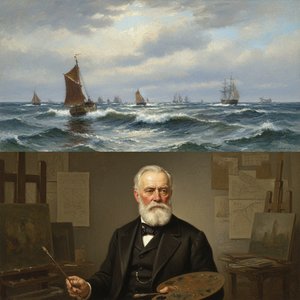
Osman Hamdi Bey's artistic journey transcended mere painting; he became instrumental in establishing Turkey’s institutional framework for art preservation and scholarship. Notably, he founded Istanbul Archaeology Museums, transforming them into repositories of Ottoman heritage and fostering a new paradigm for archaeological research. Simultaneously, he spearheaded the creation of Mimar Sinan Fine Arts University (formerly Istanbul School of Fine Arts), nurturing generations of artists and cementing his legacy as a visionary educator.His artistic output is characterized by a distinctive blend of Orientalist painting—a genre that captured exotic landscapes and cultures—and meticulous portraiture. Among his most celebrated works are “Portrait of Naile Hanım,” a masterful depiction of Ottoman aristocratic elegance, “Kokona Despina,” showcasing Hamdi Bey’s ability to convey nuanced emotion through subtle brushstrokes, and “The Scholar,” which exemplifies his dedication to portraying intellectual pursuits with remarkable accuracy.
style and technique
Hamdi Bey's artistic style is distinguished by a meticulous attention to detail and an unwavering commitment to realism. He employed oil paints on canvas with painstaking precision, layering colors and textures to achieve breathtaking visual effects. His compositions often incorporated elements of Islamic geometric patterns—a hallmark of Ottoman art—reflecting his deep understanding of cultural traditions.legacy and impact
Osman Hamdi Bey’s contributions extended far beyond the realm of artistic creation; he fundamentally reshaped Turkey's intellectual landscape. As the first modern archaeologist in the Ottoman Empire, he championed innovative methodologies for uncovering and interpreting ancient artifacts, laying the groundwork for future archaeological endeavors. His establishment of Mimar Sinan Fine Arts University ensured that Turkish art education would continue to flourish, fostering a tradition of excellence that persists to this day.His enduring influence is palpable in the artistic heritage of Turkey—a testament to his unwavering belief in the transformative power of art and scholarship. Explore more of Osman Hamdi Bey’s artwork on OriginalUniqueArt.com. Discover the Istanbul Archaeology Museums' impressive collection, featuring numerous treasures from across Anatolia and beyond. Learn more about Mimar Sinan Fine Arts University’s pioneering role in shaping Turkish artistic identity on OriginalUniqueArt.com.