Nahum B. Zenil: A Portrait of Mexican Identity
Nahum B. Zenil (b. 1947) stands as a singular figure in contemporary Mexican art, recognized for his deeply personal and symbolically rich self-portraits that grapple with themes of homosexuality, mestizism—the blending of indigenous and European cultures—and the complexities of national identity. Born in Veracruz, Mexico, Zenil’s formative years were marked by a rural upbringing steeped in tradition, shaping his artistic vision and informing his unwavering commitment to exploring marginalized voices within Mexican society.
Early Life & Education: Zenil enrolled at Escuela Nacional de Maestros (National Teachers' School) in Mexico City in 1964, graduating with honors. He subsequently pursued further studies at La Esmeralda National School of Fine Arts, where he honed his artistic skills under the tutelage of Cristobal Torres and Benito Messeguer. This grounding in academic art instilled a meticulous approach to technique and observation that would characterize his oeuvre. His fascination for art began early on, fueled by encounters with influential artists like Rufino Tamayo and José Luis Cuevas—figures who championed experimentation and challenged conventional artistic norms during the era of Neomexicanismo.
The Neomexicanismo Movement: Zenil emerged as a pivotal voice within the Neomexicanismo movement of the 1980s, reacting against prevailing trends in Mexican art with a deliberate return to traditional iconography and stylistic elements drawn from religion and folk art. This movement sought to redefine Mexican identity through a critical engagement with its heritage, rejecting Western influences and reaffirming indigenous roots—a stance that profoundly impacted Zenil’s artistic trajectory. He saw in the Virgin of Guadalupe not merely an image but a symbol of maternal protection and spiritual solace, mirroring his own personal faith and serving as a conduit for broader meditations on morality and social responsibility.
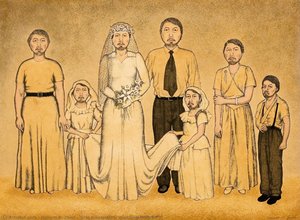
Style & Technique: Zenil's distinctive artistic style is instantly recognizable—primarily ink on paper that subtly yellows over time. He employs a deliberate flatness of perspective, mirroring the stillness of his childhood home and reflecting a profound preoccupation with memory and contemplation. The artist’s meticulous handcraftsmanship contributes to an aura of intimacy and authenticity, inviting viewers into a dialogue about self-perception and cultural heritage. His canvases are characterized by muted colors—primarily ochre and sepia—chosen deliberately to evoke the melancholic beauty of bygone eras and to convey a sense of timelessness. Zenil’s technique is marked by painstaking detail, achieved through layering ink washes and applying subtle textural variations that capture the nuances of light and shadow.
Recurring Themes & Symbolism: Zenil consistently utilizes himself as the central subject in his paintings—often accompanied by his partner Gerardo Vilchis or depicted beneath the Virgin of Guadalupe—a deliberate gesture that underscores his exploration of homosexuality within Mexican culture. The Virgin’s presence symbolizes maternal protection and spiritual solace, mirroring Zenil's personal faith and serving as a conduit for broader meditations on morality and social responsibility. Beyond self-representation, Zenil delves into complex questions surrounding nationalism, family dynamics, and the role of religion in shaping individual identity—themes explored through recurring motifs such as horses, angels, and architectural fragments that resonate with archetypal imagery drawn from Mexican folklore and Christian iconography. His work has been lauded for its unflinching honesty and its courageous confrontation of societal prejudices—a legacy rooted in the quiet contemplation of self and the profound engagement with Mexican history and culture.
Notable Exhibitions & Legacy: Zenil’s artistic achievements have garnered international acclaim, appearing in prestigious museums such as the Metropolitan Museum of Art and featured prominently in exhibitions celebrating Mexican art and culture. His participation in the XXXVI International Cervantino Festival solidified his position as a champion of LGBTQ+ rights and artistic expression—a testament to his unwavering commitment to challenging conventions and advocating for social justice. Today, Nahum B. Zenil continues to inspire artists and scholars alike with his profound understanding of Mexican identity and his masterful manipulation of visual language—a legacy that transcends stylistic boundaries and speaks to the enduring power of art as a vehicle for personal reflection and collective remembrance.