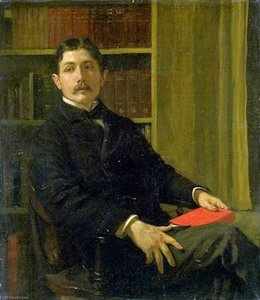
Portrait de Kenyon Cox

Les 71 peintures les plus célèbres de Kenyon Cox, chacune unique en son genre

Mis à jour en novembre 2026 · classé selon notre score de popularité (recherches, visites et commandes pour chaque œuvre) · 76 œuvres de Kenyon Cox dans notre catalogue

En bref

Le Progrès de la Civilisation : La Forge, le Commerce et l'Éducation (étude de fresque, Capitole de l'État, Des Moines, Iowa) (1906) est la peinture de Kenyon Cox qui attire le plus les regards ; l'original appartient au Smithsonian American Art Museum, Washington, D.C.. Ensuite, le regard se porte sur Landscape at Grez (1879) et Henry L. Fry (1883). Parmi les 76 œuvres de Kenyon Cox dans notre catalogue, voici les 71 plus célèbres, chacune étant une œuvre originale unique présentée avec son année, son musée et la raison de sa pérennité.

1856 – 1919, Warren Classical realism Plus d'œuvres : Smithsonian American Art Museum

Les 10 plus belles peintures de Kenyon Cox, selon le regard de la galerie

1
Le Progrès de la Civilisation : La Forge, le Commerce et l'Éducation (étude de fresque, Capitole de l'État, Des Moines, Iowa) (1906) de Kenyon Cox

Le Progrès de la Civilisation : La Forge, le Commerce et l'Éducation (étude de fresque, Capitole de l'État, Des Moines, Iowa)

1906 · Huile sur toile · Smithsonian American Art Museum, Washington, D.C.

Le Progrès de la Civilisation : La Forge, le Commerce et l'Éducation (étude de fresque, Capitole de l'État, Des Moines, Iowa) est une huile sur toile de Kenyon Cox. Créée vers 1905-1906, cette œuvre fait office d'étude préparatoire pour une fresque monumentale destinée au Capitole de l'État à Des Moines, dans l'Iowa. L'artiste, Kenyon Cox, a cherché à capturer le mouvement de l'avancement humain à travers ces scènes spécifiques et…

2
Landscape at Grez (1879) de Kenyon Cox

Landscape at Grez

1879 · Black and White Photography · Cincinnati Art Museum, Cincinnati

In Landscape at Grez, Kenyon Cox organizes a formal indoor setting through a centered composition. The subject, a man seated in a decorative wooden chair, is positioned slightly to the right of the vertical axis. This slight offset breaks the symmetry of the room, providing a sense of depth against the structured background. The perspective is a straight-on eye-level shot, placing the viewer directly in front of the subject within…

3
Henry L. Fry (1883) de Kenyon Cox

Henry L. Fry

1883 · Oil On Canvas · Cincinnati Art Museum, Cincinnati

This oil on canvas portrait by Kenyon Cox depicts Henry L. Fry. Created in 1883, the work presents the subject in a full-length view. The man is positioned slightly off-center against a background of draped fabric. He is shown with a white beard and wears a dark overcoat. The composition is vertical, focusing on the single figure within the frame.

4
The Approach of Love (1890) de Kenyon Cox

The Approach of Love

1890 · Oil · Cincinnati Art Museum, Cincinnati

In "The Approach of Love" by Kenyon Cox, the horizontal plane is anchored by a massive, curved marble bench. This white sarcophagus occupies the center of the scene, acting as a heavy, pale foundation for the figures. On the left, a nude woman with long reddish-brown hair reclines against the stone. A voluminous, golden-yellow fabric spills over the edge of the marble, its bright weight contrasting against the cool, white…

5
Diana (1890) de Kenyon Cox

Diana

1890 · Oil On Canvas · Chazen Museum of Art, Madison

In "Diana" by Kenyon Cox, the Roman goddess Artemis emerges from the shadows of a lush, wooded landscape. Created about 1890, the work places the deity at the center of a quiet, natural world. She is rendered as a full-length nude figure, her form poised against the deep greens and browns of the surrounding foliage. The goddess occupies the heart of the scene, a singular presence amidst the organic textures…

6
The Harp Player (A Solo) (1888) de Kenyon Cox

The Harp Player (A Solo)

1888 · Oil On Canvas · Metropolitan Museum of Art, New York

The Harp Player (A Solo) is an oil painting by the American artist Kenyon Cox. Created about 1888, the work emerged during a period when Cox was establishing his reputation within the academic traditions of the late 19th century. His practice emphasized careful drawing and a commitment to classical ideals, often focusing on genre studies and idealized forms.

7
The Fall (1892) de Kenyon Cox

The Fall

1892 · Oil On Canvas

In this 1892 oil painting, Kenyon Cox captures a moment of profound transition within a lush, wooded landscape. The work, titled The Fall, presents the biblical narrative of Adam and Eve at the precise instant of their temptation. A serpent coils around the trunk of a tree, embodying the presence of evil, while Eve reaches out to offer the fruit to Adam. This central action transforms the garden into a…

8
Head of the Queen of Egypt (1888) de Kenyon Cox

Head of the Queen of Egypt

1888 · Oil · Smithsonian American Art Museum, Washington, D.C.

In this work, titled Head of the Queen of Egypt, the artist Kenyon Cox presents a focused study of a historical figure. The painting depicts the head of Nefertiti, the Egyptian queen who belonged to the Eighteenth Dynasty. It is a quiet, measured representation that captures the likeness of the sculpted bust rather than a living person.

9
Bird Song (1896) de Kenyon Cox

Bird Song

1896 · Oil

In "Bird Song" by Kenyon Cox, a seated female figure occupies the center of the frame. She is positioned vertically, a steady pillar of quietude amidst a soft-focus world. Her white chemise-style top is patterned with small green leaf motifs, a delicate detail against the pale fabric. Below, a heavy, draped skirt of greyish-purple pools around her feet in thick, weighted folds. She holds a long, slender wooden flute in…

10
Christ (1905) de Kenyon Cox

Christ

1905 · Oil On Canvas · Cleveland Museum of Art, Cleveland

In the painting Christ by Kenyon Cox, the composition is centered and symmetrical. The subject is presented in a full-length view, standing as a single male figure against a landscape background. This figure is depicted with long brown hair and a beard. He wears voluminous, flowing red robes that drape heavily around the body. His arms are slightly extended to his sides, with the palms facing upward in a gesture…

Les peintures célèbres de Kenyon Cox, de la n° 11 à la n° 71

11(Iowa State Capitol Rotunda) (Manufactures, study for panel) (1905) de Kenyon Cox(Iowa State Capitol Rotunda) (Manufactures, study for panel)1905 12(Iowa State Capitol Rotunda) (Manufactures, study for panel) (1905) de Kenyon Cox(Iowa State Capitol Rotunda) (Manufactures, study for panel)1905 · Smithsonian American Art Museum 13Maxfield Parrish (1905) de Kenyon CoxMaxfield Parrish1905 14Tradition (1916) de Kenyon CoxTradition1916 · Cleveland Museum of Art 15The Education of Cupid (1917) de Kenyon CoxThe Education of Cupid1917 16Sketch for the Mural at Oberlin College, The Spirit of Self Sacrificing Love (1914) de Kenyon CoxSketch for the Mural at Oberlin College, The Spirit of Self Sacrificing Love1914 · Smithsonian American Art Museum 17Augustus Saint-Gaudens (1908) de Kenyon CoxAugustus Saint-Gaudens1908 · Metropolitan Museum of Art 18(Study for Labor ) (1870) de Kenyon Cox(Study for Labor )1870 19Study for Mosaic, Wisconsin State Capitol, (1912) de Kenyon CoxStudy for Mosaic, Wisconsin State Capitol,1912 · Oklahoma City Museum of Art 20(Untitled) (Greco Roman Discus Thrower) (1873) de Kenyon Cox(Untitled) (Greco Roman Discus Thrower)1873 21(Untitled) (Study of Standing Male Nude) (1876) de Kenyon Cox(Untitled) (Study of Standing Male Nude)1876 22(Untitled) (Studies of Male Nudes) (1876) de Kenyon Cox(Untitled) (Studies of Male Nudes)1876 23Flying Shadows (1883) de Kenyon CoxFlying Shadows1883 24Landscape (1883) de Kenyon CoxLandscape1883 · Metropolitan Museum of Art 25Flying Shadows (1883) de Kenyon CoxFlying Shadows1883 · National Gallery of Art 26A Lady in Black (1880) de Kenyon CoxA Lady in Black1880 · Smithsonian American Art Museum 27Study for Evening (1883) de Kenyon CoxStudy for Evening1883 · Smithsonian American Art Museum 28After Titian's Madonna of the Rabbit (1882) de Kenyon CoxAfter Titian's Madonna of the Rabbit1882 · Smithsonian American Art Museum 29After Boltraffio, Sacra Conversazione (1882) de Kenyon CoxAfter Boltraffio, Sacra Conversazione1882 · Smithsonian American Art Museum 30May (1890) de Kenyon CoxMay1890 31Indian Summer (1887) de Kenyon CoxIndian Summer1887 · Smithsonian American Art Museum 32Louise Howland King (Mrs. Kenyon Cox) (1892) de Kenyon CoxLouise Howland King (Mrs. Kenyon Cox)1892 · Smithsonian American Art Museum 33Study for Drapery of Pursuit of the Ideal (1891) de Kenyon CoxStudy for Drapery of Pursuit of the Ideal1891 · Smithsonian American Art Museum 34Echo (1892) de Kenyon CoxEcho1892 · Smithsonian American Art Museum 35An Eclogue (1890) de Kenyon CoxAn Eclogue1890 · Smithsonian American Art Museum 36Sketches for a Decoration of a Private Library B (1894) de Kenyon CoxSketches for a Decoration of a Private Library B1894 · Smithsonian American Art Museum 37Sketches for the Decoration of a Private Library A (1894) de Kenyon CoxSketches for the Decoration of a Private Library A1894 · Smithsonian American Art Museum 38Portrait of Mr. Wiley (1894) de Kenyon CoxPortrait of Mr. Wiley1894 39Study for Science Instructing Industry (1898) de Kenyon CoxStudy for Science Instructing Industry1898 · Smithsonian American Art Museum 40(Iowa State Capitol Rotunda) (Hunting, study for panel) (1905) de Kenyon Cox(Iowa State Capitol Rotunda) (Hunting, study for panel)1905 41Hope and memory (1900) de Kenyon CoxHope and memory1900 42Study for Mural at Hotel Manhattan, Peace and Plenty (1901) de Kenyon CoxStudy for Mural at Hotel Manhattan, Peace and Plenty1901 · Smithsonian American Art Museum 43Untitled, Portrait of a Young Girl (1900) de Kenyon CoxUntitled, Portrait of a Young Girl1900 44Study for mural, Union Trust Company Building, The Sources of Wealth (1903) de Kenyon CoxStudy for mural, Union Trust Company Building, The Sources of Wealth1903 · Smithsonian American Art Museum 45(Iowa State Capitol Rotunda) (study for Six Lunettes) (1905) de Kenyon Cox(Iowa State Capitol Rotunda) (study for Six Lunettes)1905 46Study for Christ (1905) de Kenyon CoxStudy for Christ1905 · Smithsonian American Art Museum 47Study for Mural for Appellate Court Building, New York Statute Law , Helmet for Figure of Force (1899) de Kenyon CoxStudy for Mural for Appellate Court Building, New York Statute Law , Helmet for Figure of Force1899 · Smithsonian American Art Museum 48Approach of Love de Kenyon CoxApproach of LoveCincinnati Art Museum 49Augustus Saint Gaudens (1908) de Kenyon CoxAugustus Saint Gaudens1908 50Plenty (1910) de Kenyon CoxPlenty1910 · Smithsonian American Art Museum 51The Silver Hand Glass (1907) de Kenyon CoxThe Silver Hand Glass1907 · Smithsonian American Art Museum 52The Progress of Civilization Science and Art (mural study, State Capitol, Des Moines, Iowa) (1906) de Kenyon CoxThe Progress of Civilization Science and Art (mural study, State Capitol, Des Moines, Iowa)1906 · Smithsonian American Art Museum 53The Progress of Civilization Hunting, Herding, Agriculture (mural study, State Capitol, Des Moines, Iowa) (1906) de Kenyon CoxThe Progress of Civilization Hunting, Herding, Agriculture (mural study, State Capitol, Des Moines, Iowa)1906 · Smithsonian American Art Museum 54Study for Mural at U.S. Custom House, Cleveland, OH, Passing Commerce Pays Tribute to the Port of Cleveland (1909) de Kenyon CoxStudy for Mural at U.S. Custom House, Cleveland, OH, Passing Commerce Pays Tribute to the Port of Cleveland1909 · Smithsonian American Art Museum 55Study for Mosaic, Wisconsin State Capital, Legislation (1913) de Kenyon CoxStudy for Mosaic, Wisconsin State Capital, Legislation1913 · Smithsonian American Art Museum 56Book of Pictures (1917) de Kenyon CoxBook of Pictures1917 · Smithsonian American Art Museum 57Study for Mosaic, Wisconsin State Capital, Justice (1913) de Kenyon CoxStudy for Mosaic, Wisconsin State Capital, Justice1913 · Smithsonian American Art Museum 58Study for mosaic in the Wisconsin State Capital Government and Liberty (1912) de Kenyon CoxStudy for mosaic in the Wisconsin State Capital Government and Liberty1912 · Smithsonian American Art Museum 59Sketch for Mosaic, Wisconsin State Capital, Justice (1912) de Kenyon CoxSketch for Mosaic, Wisconsin State Capital, Justice1912 · Smithsonian American Art Museum 60Nude Study for Mosaic, Wisconsin State Capitol, (1912) de Kenyon CoxNude Study for Mosaic, Wisconsin State Capitol,1912 · Oklahoma City Museum of Art 61Nude Study for Mosaic, Wisconsin State Capitol, (1912) de Kenyon CoxNude Study for Mosaic, Wisconsin State Capitol,1912 · Oklahoma City Museum of Art 62Nude Study for Mosaic, Wisconsin State Capitol, (1912) de Kenyon CoxNude Study for Mosaic, Wisconsin State Capitol,1912 · Oklahoma City Museum of Art 63Nude Study for Mosaic, Wisconsin State Capitol, (1912) de Kenyon CoxNude Study for Mosaic, Wisconsin State Capitol,1912 · Oklahoma City Museum of Art 64Study for Mosaic, Wisconsin State Capitol, (1912) de Kenyon CoxStudy for Mosaic, Wisconsin State Capitol,1912 · Oklahoma City Museum of Art 65Study for Mosaic, Wisconsin State Capitol, (1912) de Kenyon CoxStudy for Mosaic, Wisconsin State Capitol,1912 · Oklahoma City Museum of Art 66Nude Study for Mosaic, Wisconsin State Capitol, (1912) de Kenyon CoxNude Study for Mosaic, Wisconsin State Capitol,1912 · Oklahoma City Museum of Art 67Fields (1885) de Kenyon CoxFields1885 68Study for Mosaic, Wisconsin State Capitol, (1912) de Kenyon CoxStudy for Mosaic, Wisconsin State Capitol,1912 · Oklahoma City Museum of Art 69Nude Study for Mosaic, Wisconsin State Capitol, (1912) de Kenyon CoxNude Study for Mosaic, Wisconsin State Capitol,1912 · Oklahoma City Museum of Art 70Cartoon for mural of Minnesota State Capital, Institute of Justice de Kenyon CoxCartoon for mural of Minnesota State Capital, Institute of JusticeSmithsonian American Art Museum 71Lengthening Shadows (1888) de Kenyon CoxLengthening Shadows1888 · Smithsonian American Art Museum

Les sujets qui ont captivé Kenyon Cox

Les quatre thèmes qui reviennent le plus souvent dans ces œuvres originales, chacun illustré par son plus bel exemple.

Les musées qui conservent les œuvres originales de Kenyon Cox

Les 7 musées qui détiennent la plupart des peintures de cette page.

Musées Ville Œuvres de Kenyon Cox Peintures de cette liste
Smithsonian American Art Museum, Washington, D.C.Smithsonian American Art Museum Washington, D.C. 32 Le Progrès de la Civilisation : La Forge, le Commerce et l'Éducation (étude de fresque, Capitole de l'État, Des Moines, Iowa), Head of the Queen of Egypt, (Iowa State Capitol Rotunda) (Manufactures, study for panel)
Oklahoma City Museum of Art, Oklahoma CityOklahoma City Museum of Art Oklahoma City 10 Study for Mosaic, Wisconsin State Capitol,, Nude Study for Mosaic, Wisconsin State Capitol,, Nude Study for Mosaic, Wisconsin State Capitol,
Cincinnati Art Museum, CincinnatiCincinnati Art Museum Cincinnati 4 Landscape at Grez, Henry L. Fry, The Approach of Love
Metropolitan Museum of Art, New YorkMetropolitan Museum of Art New York 3 The Harp Player (A Solo), Augustus Saint-Gaudens, Landscape
Cleveland Museum of Art, ClevelandCleveland Museum of Art Cleveland 2 Christ, Tradition
Chazen Museum of Art, MadisonChazen Museum of Art Madison 1 Diana
National Gallery of Art, WashingtonNational Gallery of Art Washington 1 Flying Shadows

Kenyon Cox à travers les décennies : une œuvre originale unique pour chacune

Œuvres par décennie

Choisissez une décennie pour découvrir l'œuvre originale qui la définit.

Les peintures de Kenyon Cox : questions pour la galerie

Quelle est l'œuvre la plus célèbre de Kenyon Cox ?Révéler la réponse

Le Progrès de la Civilisation : La Forge, le Commerce et l'Éducation (étude de fresque, Capitole de l'État, Des Moines, Iowa) (1906), Smithsonian American Art Museum, Washington, D.C.. Suivus de Landscape at Grez (1879) et Henry L. Fry (1883).

À quel âge Kenyon Cox a-t-il créé Le Progrès de la Civilisation : La Forge, le Commerce et l'Éducation (étude de fresque, Capitole de l'État, Des Moines, Iowa) ?Révéler la réponse

50 ans : Le Progrès de la Civilisation : La Forge, le Commerce et l'Éducation (étude de fresque, Capitole de l'État, Des Moines, Iowa) date de 1906, et Kenyon Cox est né(e) en 1856.

Quelles sont les dix peintures les plus célèbres de Kenyon Cox ?Révéler la réponse

Le Progrès de la Civilisation : La Forge, le Commerce et l'Éducation (étude de fresque, Capitole de l'État, Des Moines, Iowa), Landscape at Grez, Henry L. Fry, The Approach of Love, Diana, The Harp Player (A Solo), The Fall, Head of the Queen of Egypt, Bird Song et Christ. Le classement ci-dessus indique l'année et le musée de chacun.

Combien d'œuvres de Kenyon Cox sont connues ?Révéler la réponse

Notre catalogue comprend 76 œuvres de Kenyon Cox, datées de 1870 à 1917.

Où peut-on voir les originaux les plus célèbres de Kenyon Cox ?Révéler la réponse

Principalement dans Smithsonian American Art Museum (Washington, D.C.), Oklahoma City Museum of Art (Oklahoma City) et Cincinnati Art Museum (Cincinnati). Le tableau des musées ci-dessus les répertorie tous.

Dur quelle période Kenyon Cox a-t-il créé ses peintures les plus célèbres ?Révéler la réponse

En 1910s : 19 des 71 œuvres de cette page ont été créées à cette époque, dont Tradition.

Quelle est la peinture la plus ancienne de Kenyon Cox et laquelle est la plus récente ?Révéler la réponse

Sur cette page, la plus ancienne date de (Study for Labor ) (1870) et la plus récente de The Education of Cupid (1917).

Quels étaient les sujets de prédilection de Kenyon Cox ?Révéler la réponse

Woman (8), Pencil sketch (5) et Man (4), à travers les 71 œuvres de cette page.

Quels matériaux Kenyon Cox a-t-il le plus utilisés pour peindre ?Révéler la réponse

Oil On Canvas, pour 9 des 71 œuvres de cette page.

À quel mouvement appartient l'œuvre de Kenyon Cox ?Révéler la réponse

Classical realism, à en juger par les originaux de cette page.

Quelles œuvres originales de Kenyon Cox puis-je voir au Smithsonian American Art Museum ?Révéler la réponse

Le Progrès de la Civilisation : La Forge, le Commerce et l'Éducation (étude de fresque, Capitole de l'État, Des Moines, Iowa), Head of the Queen of Egypt et (Iowa State Capitol Rotunda) (Manufactures, study for panel) : le Smithsonian American Art Museum, Washington, D.C. détient 32 des œuvres de cette page.

Kenyon Cox : un portrait de l'artiste

Kenyon Cox : Vie et Héritage

Kenyon Cox (1856-1919) était un peintre américain et professeur à l'École des Beaux-Arts de Philadelphie, reconnu pour ses paysages réalistes, ses portraits élégants et surtout pour ses fresques monumentales qui témoignent d’une profonde maîtrise du dessin classique. Il incarnait une voix importante dans le mouvement artistique américain qu’on appelait la Renaissance américaine, une période marquée par un retour aux valeurs esthétiques traditionnelles et une défense de l'apprentissage rigoureux.

Jeunesse et Éducation

Né à Warren, Ohio, le 27 octobre 1856, Kenyon Cox avait une famille cultivée et artistique. Ses parents étaient Jacob Dolson Cox, avocat et homme politique influent, et Helen Finney Cox, une femme passionnée par la littérature et les arts décoratifs. Dès son jeune âge, il fut attiré par l’art et étudia à l'Académie d'Art de Cincinnati où il acquit les bases du dessin et de la peinture classique. Cependant, il ressentait rapidement le besoin d'approfondir ses connaissances et de découvrir les opportunités artistiques offertes par une ville plus dynamique que Warren. Cette sensibilité artistique précoce allait guider toute sa vie professionnelle. Après une visite marquante à l’Exposition Centenaire à Philadelphie où il fut frappé par la diversité des œuvres présentées, Cox prit la décision audacieuse de poursuivre ses études à l'Académie des Beaux-Arts de Philadelphie, espérant ainsi bénéficier d'une formation plus riche et plus stimulante en Europe. Cette aspiration à une éducation artistique supérieure allait devenir un moteur essentiel de son parcours intellectuel et artistique.

Formation Parisienne et Influences

En 1877, Cox franchit la frontière européenne et s’installait à Paris, une ville qu'il considérait comme le cœur battant de l'art occidental. Il rejoignit une communauté d'artistes américains ambitieux qui partageaient son désir de trouver l'inspiration dans les traditions artistiques européennes. Cette expérience parisienne fut déterminante pour la formation artistique de Cox et lui ouvrit les portes d’une esthétique raffinée et pleine de références classiques. Parmi ses professeurs influents, il distingua Carolus-Duran, Jean-Léon Gérôme et Alexandre Cabanel à l'École des Beaux-Arts où il étudia notamment la peinture monumentale et la sculpture classique. Cependant, Cox exprimait une certaine frustration face au style de Duran qu’il jugeait trop lisse et dépourvu de profondeur émotionnelle. Il était particulièrement sensible aux œuvres des peintres italiens du Quattrocento et du Cinquecento, dont les traités sur la beauté idéale avaient profondément marqué sa pensée artistique. Les voyages qu'il entreprit à travers la France et l'Italie lui permirent de rencontrer les grands maîtres de la Renaissance et d’absorber leurs connaissances esthétiques et techniques.

Carrière à New York et Style Artistique

Après avoir acquis une solide maîtrise du dessin classique et une connaissance approfondie des œuvres artistiques européennes, Cox retourna en Amérique en 1882 où il établit sa résidence à New York City. Il y travailla comme peintre et illustrateur pour des magazines prestigieux tels que *Harper’s Bazaar* et *The Century*, élargissant ainsi son public et consolidant sa réputation artistique. Bien qu'il ait privilégié les illustrations au portrait peint, Cox considérait la peinture comme une forme d'expression artistique supérieure et consacra une grande partie de ses efforts à la création de fresques monumentales qui témoignent de sa maîtrise technique et esthétique. Son style artistique était caractérisé par un réalisme élégant et raffiné, où il utilisait des couleurs vives et modulées pour rendre avec précision les effets de lumière et d'atmosphère. Il était particulièrement connu pour ses nues idéalisées et son traitement délicat des détails anatomiques, qui reflétaient une esthétique classique inspirée par les œuvres des peintres italiens du XVIe siècle. Cox avait une passion particulière pour la peinture monumentale et il considérait qu’elle était le moyen ultime d'exprimer la beauté idéale et de célébrer les valeurs morales et intellectuelles. Parmi ses œuvres les plus remarquables, on peut citer les décorations du Walker Art Gallery à Liverpool et les fresques du capitol de Saint Paul où il avait démontré une véritable capacité à maîtriser les techniques artistiques les plus complexes.

Enseignement et Implication Institutionnelle

Kenyon Cox partageait avec enthousiasme sa passion pour l'art et son amour du dessin classique auprès des jeunes générations d’artistes américains. Il enseigna à l’École des Beaux-Arts de Philadelphie puis à la École Nationale Supérieure des Beaux-Arts à Paris où il fut reconnu comme un professeur exigeant mais aussi inspiré qui encourageait ses étudiants à développer leur propre sensibilité artistique et à maîtriser les techniques fondamentales du dessin classique. Il était également membre fondateur de la Société Nationale des Beaux-Arts et il contribua activement à promouvoir l’enseignement artistique et à soutenir les jeunes talents émergents. Son engagement institutionnel témoigne de sa conviction profonde que l'art doit être transmis aux générations futures afin qu'elles puissent continuer à célébrer la beauté idéale et à défendre les valeurs morales et intellectuelles. Il fut élu associé académicien en 1900 puis académicien plein en 1903, une reconnaissance officielle de son statut artistique et intellectuel au sein de l’élite artistique américaine.