La quête obsessionnelle de la vérité tangible
Né en 1955 dans la province de Gyeonggi, en Corée du Sud, Kang Hyung Koo a consacré sa vie à une mission unique et époustouflante : combler le fossé entre la toile et la réalité. Son travail n'est pas un simple exercice de maîtrise technique, mais un engagement philosophique profond envers l'essence même de ses sujets. Contrairement à nombre de ses contemporains qui cherchent refuge dans l'abstrait ou l'expérimental, Kang trouve sa vérité dans le rendu méticuleux du monde tel qu'il apparaît — et tel qu'on le ressent.
Son processus est une épreuve d'extrême patience et d'endurance physique. Pour atteindre ce détail photographique saisissant qui définit son œuvre, Kang emploie une technique consistant à superposer couche après couche de peinture, appliquant parfois des centaines de passages sur une seule surface. Cette méthode laborieuse permet d'obtenir des dégradés subtils de couleur et de texture qui imitent les jeux naturels de l'ombre et de la lumière. À travers cette accumulation de pigments, il crée des œuvres où chaque ride de la peau, chaque mèche de cheveux et chaque infime imperfection d'une surface semble scintiller d'une vitalité presque surnaturelle.
Transcender l'objectif photographique
Bien que beaucoup confondent son travail avec du simple photoréalisme, le talent artistique de Kang réside dans sa capacité à aller au-delà de l'image originale. S'il utilise souvent la photographie comme point de départ fondamental, il possède ce don rare d'insuffler à ces instants capturés une profondeur psychologique qu'un appareil photo ne peut atteindre. Dans certains cas, il peint même à partir de sa pure imagination, recréant les visages de figures historiques pour lesquelles aucune photographie n'existe. Cette distinction est essentielle ; son travail n'est pas une simple reproduction, mais une réinvention.
Cette maîtrise est sans doute plus évidente dans ses portraits célèbres d'icônes mondiales :
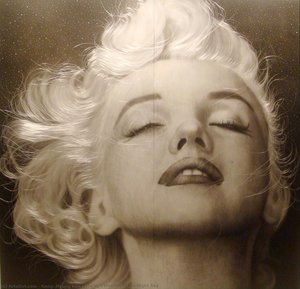
- Marilyn Monroe : Dans des œuvres telles que Marilyn Monroe in the Night Sky, il transporte la légende d'Hollywood dans un paysage onirique céleste, utilisant une palette de roses tendres et de blancs crémeux sur un vide d'obsidienne pour créer un effet de clair-obscur dramatique.
- Abraham Lincoln : Son portrait du président américain utilise une teinte bleue frappante pour capturer un sentiment de poids historique profond et une dignité solennelle.
- Figures historiques : De la présence cinématographique de Clint Eastwood à l'héritage complexe de Joseph Staline, Kang insuffle une vie renouvelée et tangible aux visages qui ont façonné notre mémoire collective.
Un héritage de lumière et de profondeur émotionnelle
L'âme de l'œuvre de Kang est profondément ancrée dans l'intensité émotionnelle des maîtres qui l'ont précédé. Il puise une inspiration significative dans l'Impressionnisme et le Surréalisme, trouvant une âme sœur dans la puissance expressive de Vincent van Gogh. Tout comme Van Gogh, Kang cherche à distiller l'esprit même de ses sujets dans une image unique et saisissante. Il ne veut pas seulement que le spectateur voie le visage ; il veut qu'il ressente le poids de l'histoire et de l'humanité qui se cache derrière les yeux.
En mêlant l'hyperréalisme technique à un sens de l'atmosphère presque surréaliste, Kang Hyung Koo s'est taillé une place unique dans l'art coréen contemporain. Ses peintures servent de fenêtres ouvertes tant sur le monde physique que sur les paysages psychologiques de la condition humaine, laissant le spectateur s'interroger sur le moment où la réalité de la peinture s'efface pour laisser place à la vérité du sujet.
Questions et réponses
Puis-je parcourir les œuvres de Kang Hyung Koo par ambiance ?
Les œuvres de Kang Hyung Koo peuvent être explorées par émotion sur la page L'espace des émotions de l'artiste, qui organise les créations selon l'ambiance qu'elles dégagent.
Où peut-on trouver les œuvres de Kang Hyung Koo regroupées par technique ?
Les œuvres de Kang Hyung Koo peuvent être consultées par technique sur la page Par technique de l'artiste.
Où et en quelle année Kang Hyung Koo est-il né ?
Kang Hyung Koo est né à Gyeonggi en 1955.