Menu
CONSEIL EN ART GRATUIT

Juan O'Gorman

1905 - 1982

Informations clés

  • Lifespan: 77 years
  • Died: 1982
  • Museums on APS:
    • Fundación ICA
    • Fundación ICA
    • Fundación ICA
    • Fundación ICA
    • Fundación ICA
  • Top 3 works: La Ciudad de México
  • Top-ranked work: La Ciudad de México
  • Works on APS: 1
  • Plus…
  • Art period: Moderne
  • Nationality: México
  • Copyright status: Under copyright
  • Also known as: Juan Crawford OGorman
  • Born: 1905, Ciudad de México, México

Quiz d'art

Chaque question ne comporte qu'une seule bonne réponse.

Question 1:
Quel était le métier principal de Juan O'Gorman ?
Question 2:
Quel artiste européen influença considérablement le style artistique précoce d'O'Gorman ?
Question 3:
O'Gorman était associé à Diego Rivera pour réaliser des œuvres murales.
Question 4:
Quel mouvement architectural défendait O'Gorman ?
Question 5:
La bibliothèque centrale de Ciudad Universitaria (UNAM) est remarquable pour :

Juan O'Gorman (1905-1982): Bridging Modernism and Mexican Tradition

Juan O’Gorman was a Mexican painter and architect, born on July 6, 1905, in Coyoacán, Mexico City, Mexico. He stands as a pivotal figure in the evolution of Mexican art and architecture, skillfully blending modernist principles with deeply rooted traditions—a synthesis that continues to inspire artists today. His legacy resides not only in monumental buildings but also in evocative mosaics and paintings that capture the spirit of his era.

Early Life and Artistic Influences

O’Gorman's artistic journey commenced in the 1920s, coinciding with Mexico’s vibrant avant-garde movement. Heavily influenced by European masters like Pablo Picasso and Joan Miró, he initially embraced bold colors and geometric shapes—a stylistic hallmark of his formative years. These early explorations foreshadowed his later penchant for abstraction while simultaneously grounding him in the visual language of Surrealism. Crucially, his father, Cecil Crawford O’Gorman, an Irish painter who had settled in Mexico, instilled a foundational appreciation for artistic expression from a young age. He was raised as an atheist, even though Catholicism was another constant in his early education from his mother and maternal grandmother.

Architectural Vision and Modernist Principles

O’Gorman swiftly transitioned to architecture, graduating from the Academy of San Carlos in 1927. He quickly established himself as a draftsman for prominent architects like Carlos Santacilia and José Villagrán, honing his skills alongside Diego Rivera—a collaboration that would prove transformative. His architectural style championed Functionalism, prioritizing simplicity and efficiency while rejecting ornamentation. Notable projects included the house and studio of Diego Rivera and Frida Kahlo in San Ángel, Mexico City, demonstrating his commitment to innovative design concepts. He designed approximately 30 schools for Mexico City’s Ministry of Public Education, furthering his dedication to social responsibility through architectural endeavors. His efficient construction technique and economical use of materials were planned to benefit the inhabitants.

The Muralist Legacy: Color and Narrative

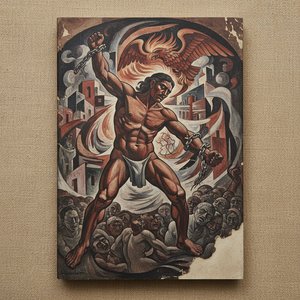
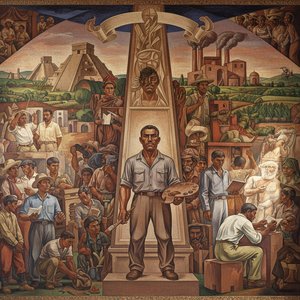
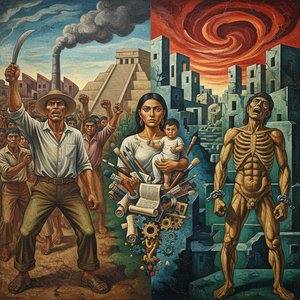
O’Gorman's artistic output extended beyond buildings into monumental murals—a direct response to the Mexican muralism movement’s ambition to disseminate art as a tool for societal advancement. His contributions to Diego Rivera’s Casa Azul (Frida Kahlo House) exemplify his masterful use of color and narrative, reflecting the complex cultural landscape of Mexico during the mid-1930s. He bravely confronted social issues through his artwork, notably advocating for pacifism and criticizing fascism—a stance that cemented his position as a champion of artistic integrity. The Museo Casa Estudio Diego Rivera y Frida Kahlo stands as a testament to this collaborative spirit and O’Gorman's unwavering belief in the transformative power of art. He helped him materialize various creative goals because of his great technical knowledge in engineering and architecture.

Mosaic Artistry: Integrating Tradition and Innovation

Perhaps O’Gorman’s most enduring achievement lies in his pioneering work with mosaics—a technique he skillfully combined with modernist aesthetics and references to pre-Hispanic symbolism. The Central Library at Ciudad Universitaria (UNAM), completed in 1956, embodies this fusion perfectly. Covering an expansive surface area of 4,000 square meters, the library’s façade is adorned with millions of stones—each meticulously selected and arranged to depict a history of Mexican culture—a project that cemented O'Gorman's reputation as one of Mexico’s foremost architects and artists. His unwavering dedication to blending tradition and innovation continues to resonate within the artistic community. ###Concluding Legacy Juan O’Gorman passed away on January 18, 1982, leaving behind a rich artistic heritage—a legacy that extends beyond his buildings and murals into the hearts of those who appreciate the beauty and intellectual depth of his work. His influence can be seen in subsequent generations of Mexican artists and architects, ensuring that his vision—one rooted in both modernist principles and profound respect for Mexico’s cultural heritage—remains vibrant for years to come.