José María Velasco: Bridging Orientalism and Mexican Landscape
José María Tranquilino Francisco de Jesús Velasco Gómez Obregón, generally known as José María Velasco, (1840 – 1912) stands as a pivotal figure in late nineteenth-century Mexican art, embodying the confluence of European artistic trends—particularly Orientalism—with the burgeoning landscape painting movement rooted in Mexican identity. Born in Mexico City, his artistic journey was marked by an unwavering dedication to capturing both exotic vistas and intimate portraits, reflecting the intellectual currents shaping his era.
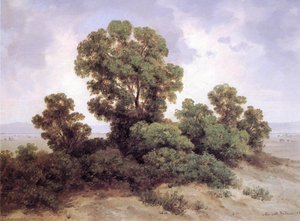
Velasasco’s stylistic evolution began with a formative exposure to academic realism, honing skills that would later inform his distinctive approach. However, it was his fascination with Eastern cultures—particularly Persia—that ignited his creative spirit. This influence is palpable in works like “Estudio de árboles,” where meticulous detail and atmospheric perspective convey the grandeur of mountainous landscapes reminiscent of Persian miniatures. The artist skillfully employs muted palettes and compositional techniques borrowed from Orientalist traditions to evoke a sense of timeless beauty and spiritual contemplation. He meticulously rendered textures—rock faces, foliage, drapery—with painstaking accuracy, mirroring the exacting standards of European academic painting while simultaneously channeling the expressive power of Orientalist visual language.
Beyond stylistic experimentation, Velasco’s artistic vision was profoundly shaped by the socio-political landscape of Mexico during its turbulent transition toward independence. Witnessing firsthand the struggles for liberation—fueled by figures like Juan Vicente Güemes—he internalized the spirit of resistance and national pride. This conviction permeated his oeuvre, subtly conveying themes of resilience and cultural heritage. Notably, he served as a staunch admirer of Alexander von Humboldt, whose scientific explorations championed the interconnectedness of nature and human understanding – an ethos that undoubtedly resonated within Velasco’s artistic sensibilities. Humboldt's belief in observing nature with humility and seeking to comprehend its underlying order profoundly impacted Velasco’s worldview, informing his compositional choices and fostering a deep appreciation for the majesty of Mexican landscapes.
His most celebrated achievement resides in his portraits, notably “La Güera Rodríguez,” a captivating depiction of María Ignacia Javiera Rafaela Agustina Feliciana Rodríguez de Velasco y Osorio Barba Jiménez Bello de Pereyra Hernández de Córdoba Salas Solano Garfias—a woman whose likeness graced the altar of La Profesá church. Sculpted by Manuel Tolosa, this iconic image exemplifies Velasco’s mastery of capturing psychological depth and conveying nuanced emotion through subtle tonal variations and expressive brushstrokes. The artist's ability to imbue his subjects with life and character cemented his reputation as one of Mexico’s foremost portraitists. He achieved remarkable likenesses, capturing not only physical features but also the inner spirit of his sitters—a testament to Velasco’s technical prowess and artistic sensitivity.
Velasasco’s artistic legacy extends beyond individual masterpieces; it resides in his contribution to the broader landscape of Mexican art history. He championed a style that blended European influences with indigenous traditions, fostering a visual language that celebrated both grandeur and intimacy—a testament to Velasco's enduring impact on Mexican artistic expression. His paintings—particularly *El valle de México desde el cerro de Atraeualco*, *Ajusco visto desde el Tepeyac*, *Pirámide del Sol en Teotihuacán*, *Popocatepetl*, *Ixtlaciual*, *Templo de San Bernardo*, *Cascada de Necaxa* and *El Puente de Metlac*—became symbols of Mexican identity, embodying the spirit of a nation striving to define itself amidst global change. They continue to inspire artists and scholars alike, securing Velasco’s place as one of Mexico's most important cultural figures.