Portrait de John de Critz

Les 19 peintures les plus célèbres de John de Critz, une sélection de la galerie

Mis à jour en novembre 2026 · classé selon notre score de popularité (recherches, visites et commandes pour chaque œuvre) · 19 œuvres de John de Critz dans notre catalogue

En bref

Parmi toutes les œuvres originales laissées par John de Critz, la plus célèbre est Henry Wriothesley, 3e comte de Southampton (1573-1624) (1590), conservée dans la collection du Hatchlands Park, à Guilford. Juste après, on retrouve Sir Francis Walsingham (1589) et Jacques VI et Ier (1606). Notre catalogue comprend 19 œuvres de John de Critz ; la galerie a conservé les 19 que le monde admire le plus, chacune présentée avec sa date, son musée et son histoire.

1551 – 1642, Anvers Plus d'œuvres : National Portrait Gallery

Les 10 plus belles peintures de John de Critz : la sélection de la galerie

1
Henry Wriothesley, 3e comte de Southampton (1573-1624) (1590) de John de Critz

Henry Wriothesley, 3e comte de Southampton (1573-1624)

1590 · Huile sur panneau · Hatchlands Park, Guilford

Un jeune homme émerge d'un vide sombre et indistinct. Il s'agit de Henry Wriothesley, 3e comte de Southampton, saisi au début des années 1590. Sa peau possède la qualité pâle et lisse de la porcelaine, captant une lumière douce qui descend du coin supérieur gauche. Cette clarté trace les lignes délicates de son visage et les courbes douces de ses traits. Il porte un vêtement noir pesant qui absorbe la…

2
Sir Francis Walsingham (1589) de John de Critz

Sir Francis Walsingham

1589 · Huile sur toile · National Portrait Gallery, Londres

Vers 1589, John de Critz a réalisé ce portrait de Sir Francis Walsingham. Le sujet est présenté de trois-quarts, une convention classique de la peinture de portrait formelle de l'ère élisabethaine. Cette œuvre magistrale est conservée au Yale Center for British Art, au sein de la collection Paul Mellon, à New Haven.

3
Jacques VI et Ier (1606) de John de Critz

Jacques VI et Ier

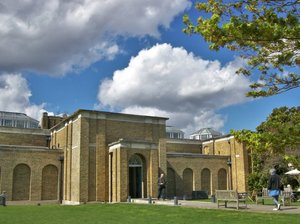
1606 · Huile sur toile · Dulwich Picture Gallery, Londres

Une silhouette solitaire occupe le centre de cet espace vertical, s'appuyant avec une aisance étudiée contre une table drapée. Le roi Jacques VI et Ier croise le regard du spectateur dans une perspective à hauteur d'yeux, sa présence étant ancrée par l'épais tapis à motifs qui s'étend sous ses pieds. L'atmosphère du portrait semble suspendue, figée par le rendu méticuleux de la soie et de la fourrure. La lumière se…

4
Anne de Danemark, 1574 - 1619. Reine consort de Jacques VI et Ier (1605) de John de Critz

Anne de Danemark, 1574 - 1619. Reine consort de Jacques VI et Ier

1605 · Huile sur panneau · Galerie Nationale de Portraits Écossais, Édimbourg

Contempler ce portrait d'Anne de Danemark, c'est se confronter à la gravité feutrée de la cour jacobéenne. Peinte en 1605, l'œuvre présente la reine consort dans une composition en buste, sa présence définie par un calme et une dignité empreints de sérénité. Elle se détache sur un fond brun monochrome et sombre, un choix qui projette sa peau pâle et les textures lumineuses de sa tenue vers le spectateur. Il…

5
Robert Cecil, 1er comte de Salisbury (1602) de John de Critz

Robert Cecil, 1er comte de Salisbury

1602 · Peinture à l'huile

Le regard de Robert Cecil, 1er comte de Salisbury, rencontre le spectateur à travers les siècles. Ce portrait en buste capture l'homme d'État dans un moment de présence calme et digne. John de Critz, l'artiste derrière cette ressemblance, dépeint le sujet avec un réalisme méticuleux qui projette l'homme dans l'espace immédiat de l'observateur. Chaque ligne du visage et chaque pli du vêtement témoignent d'une vie vécue au sein des hautes…

6
Robert Cecil (1563–1612), 1st Earl of Salisbury, Chancellor of the University (1601–1612) (1603) de John de Critz

Robert Cecil (1563–1612), 1st Earl of Salisbury, Chancellor of the University (1601–1612)

1603 · Oil On Canvas · Old Schools, Cambridge

The room feels still, held in a quiet tension as Robert Cecil, 1st Earl of Salisbury, sits before us. He is a man of immense gravity, his presence filling the space with the silent weight of the Jacobean court. A ruffled collar frames a face marked by the burdens of statecraft, while a wig adds a layer of formal dignity to his silhouette. He rests a hand thoughtfully beneath his…

7
James VI and I (1566–1625), King of Scotland (1567–1625), King of England and Ireland (1603–1625) (1604) de John de Critz

James VI and I (1566–1625), King of Scotland (1567–1625), King of England and Ireland (1603–1625)

1604 · Oil On Canvas · Galerie Nationale de Portraits Écossais, Édimbourg

In this portrait from 1604, we encounter a man who carries the heavy mantle of two kingdoms. The sitter, James VI and I, is rendered with a quiet, steady composure that suggests a ruler accustomed to the scrutiny of his subjects. He is depicted with a beard and mustache, his features possessing a certain weathered dignity. He holds a scepter, a direct symbol of his temporal authority, while a crown…

8
Anne of Denmark (1574–1619) (1605) de John de Critz

Anne of Denmark (1574–1619)

1605 · Oil On Panel · Musée National Maritime, Londres

The portrait depicts a woman positioned centrally, looking directly toward the viewer. She is seated in a chair, her blonde hair framed by a crown. Her attire consists of a white gown featuring gold embroidery and a large, translucent lace ruff. The garment is layered with heavy fabrics and adorned with pearls and intricate jewelry. A dark, monochromatic brown background surrounds the figure, which serves to push the pale tones…

9
Anne of Denmark (1610) de John de Critz

Anne of Denmark

1610 · Oil On Panel · National Portrait Gallery, Londres

The portrait of Anne of Denmark by John de Critz depicts the Queen Consort of King James I of England. Dated 1610, the work presents the subject in a seated position. She wears a fancy dress characterized by a ruffled collar. The figure is positioned within a composition that includes an ornate chair located to the left side of the frame. Beneath her feet, a red carpet provides a patch…

10
King James I of England and VI of Scotland (1566–1625) (1609) de John de Critz

King James I of England and VI of Scotland (1566–1625)

1609 · Oil · Collection d’art gouvernementale, Londres

The king gazes out from the canvas, his eyes meeting the viewer with a steady, unyielding composure. He wears a crown that signals his dual authority over Scotland and England, a heavy weight resting upon his brow. A suit and a flowing cape drape over his shoulders, the textures of the fabric rendered with a meticulous precision that suggests the weight and touch of the cloth. His beard and mustache…

La sélection de John de Critz se poursuit, de 11 à 19

Les peintures célèbres de John de Critz, période par période

Les sujets qui ont captivé John de Critz

Les quatre thèmes qui reviennent le plus souvent dans ces œuvres originales, chacun illustré par son plus bel exemple.

Les musées qui conservent les œuvres originales de John de Critz

Les 8 musées qui détiennent la plupart des peintures de cette page.

Musées Ville Œuvres de John de Critz Peintures de cette liste
National Portrait Gallery, LondresNational Portrait Gallery Londres 2 Sir Francis Walsingham, Anne of Denmark
Galerie Nationale de Portraits Écossais, ÉdimbourgGalerie Nationale de Portraits Écossais Édimbourg 2 Anne de Danemark, 1574 - 1619. Reine consort de Jacques VI et Ier, James VI and I (1566–1625), King of Scotland (1567–1625), King of England and Ireland (1603–1625)
Musée National Maritime, LondresMusée National Maritime Londres 2 Anne of Denmark (1574–1619), James I (1566–1625)
Collection d’art gouvernementale, LondresCollection d’art gouvernementale Londres 2 King James I of England and VI of Scotland (1566–1625), King James I of England and VI of Scotland (1566–1625)
Hatchlands Park, GuilfordHatchlands Park Guilford 1 Henry Wriothesley, 3e comte de Southampton (1573-1624)
Dulwich Picture Gallery, LondresDulwich Picture Gallery Londres 1 Jacques VI et Ier
Old Schools, CambridgeOld Schools Cambridge 1 Robert Cecil (1563–1612), 1st Earl of Salisbury, Chancellor of the University (1601–1612)
Bolton Art Gallery, BoltonBolton Art Gallery Bolton 1 Sir Philip Sidney (1554–1586)

John de Critz décennie par décennie : l'original qui définit chacune d'elles

Œuvres par décennie

Choisissez une décennie pour découvrir l'œuvre originale qui la définit.

Questions des collectionneurs sur les peintures de John de Critz

Quelle est l'œuvre la plus célèbre de John de Critz ?Révéler la réponse

Henry Wriothesley, 3e comte de Southampton (1573-1624) (1590), Hatchlands Park, Guilford. Suivus de Sir Francis Walsingham (1589) et Jacques VI et Ier (1606).

Quel âge avait John de Critz lors de la création de Henry Wriothesley, 3e comte de Southampton (1573-1624) ?Révéler la réponse

39 ans : Henry Wriothesley, 3e comte de Southampton (1573-1624) date de 1590, et John de Critz est né(e) en 1551.

Quelles sont les dix peintures les plus célèbres de John de Critz ?Révéler la réponse

Henry Wriothesley, 3e comte de Southampton (1573-1624), Sir Francis Walsingham, Jacques VI et Ier, Anne de Danemark, 1574 - 1619. Reine consort de Jacques VI et Ier, Robert Cecil, 1er comte de Salisbury, Robert Cecil (1563–1612), 1st Earl of Salisbury, Chancellor of the University (1601–1612), James VI and I (1566–1625), King of Scotland (1567–1625), King of England and Ireland (1603–1625), Anne of Denmark (1574–1619), Anne of Denmark et King James I of England and VI of Scotland (1566–1625). Le classement ci-dessus indique l'année et le musée de chacun.

Combien de peintures John de Critz a-t-il laissées ?Révéler la réponse

Notre catalogue comprend 19 œuvres de John de Critz, datées de 1589 à 1620.

Dans quels musées sont exposés les chefs-d'œuvre de John de Critz ?Révéler la réponse

Principalement dans National Portrait Gallery (Londres), Galerie Nationale de Portraits Écossais (Édimbourg) et Musée National Maritime (Londres). Le tableau des musées ci-dessus les répertorie tous.

Dur quelles années John de Critz a-t-il peint ses œuvres les plus célèbres ?Révéler la réponse

En 1600s : 7 des 19 œuvres de cette page ont été créées à cette époque, dont Jacques VI et Ier.

Quelles sont les premières et les dernières œuvres originales célèbres de John de Critz ?Révéler la réponse

Sur cette page, la plus ancienne date de Sir Francis Walsingham (1589) et la plus récente de Sir Philip Sidney (1554–1586) (1620).

Quels sujets John de Critz a-t-il le plus souvent choisis ?Révéler la réponse

Man (4), Crown (4) et Beard (4), à travers les 19 œuvres de cette page.

Quelle technique John de Critz a-t-il/elle le plus utilisée ?Révéler la réponse

Oil On Panel, pour 3 des 19 œuvres de cette page.

Quelles œuvres de John de Critz sont exposées au National Portrait Gallery ?Révéler la réponse

Sir Francis Walsingham et Anne of Denmark : le National Portrait Gallery, Londres détient 2 des œuvres de cette page.

John de Critz : vie et œuvre

A Courtly Hand: The Life and Art of John de Critz the Elder

John de Critz the Elder, a name perhaps less immediately recognizable than his continental contemporaries, nevertheless occupies a pivotal position in the history of English portraiture. Born in 1551, his life unfolded during a period of immense transformation for England – the waning years of the Tudor dynasty and the ascendance of the Stuarts. While details of his early training remain somewhat elusive, it is widely believed he received his formative artistic education in the Netherlands, likely within the vibrant circle of Flemish painters who were profoundly influencing Northern European art at the time. This background would prove crucial to shaping his distinctive style, a meticulous realism tempered by an elegant formality that perfectly suited the tastes of the English court. De Critz wasn’t merely a painter; he was a chronicler of power, capturing the likenesses of those who steered the nation through turbulent times.

From Flemish Roots to Royal Patronage

The artistic landscape de Critz entered upon arriving in England was already rich with talent, but his particular skill set – an ability to render textures with astonishing accuracy and a gift for conveying both status and personality – quickly garnered attention. He became deeply embedded within the orbit of Robert Cecil, 1st Earl of Salisbury, James I’s powerful chief minister. Cecil wasn't simply a patron; he was instrumental in establishing de Critz as *the* premier portraitist of the Jacobean court. De Critz’s workshop flourished, becoming a hub for artistic production and attracting other skilled painters who assisted him with commissions. This collaborative nature of his practice is important to note – while many portraits bear his signature, they often represent the combined efforts of several hands under his direction. His early works demonstrate a clear debt to Flemish masters like Hans Holbein the Younger, particularly in their precise detail and restrained color palettes. However, de Critz gradually developed a more uniquely English sensibility, characterized by a greater emphasis on decorative elements and a subtle psychological depth in his portrayals.

The Art of Representation: Style and Technique

De Critz’s portraits are not simply likenesses; they are statements of authority, wealth, and social standing. He excelled at depicting the opulent fabrics, intricate jewelry, and elaborate costumes that signified a person's position within the hierarchical structure of Jacobean society. His technique was painstaking, built upon layers of carefully applied paint to create a remarkable sense of three-dimensionality. He favored a relatively small scale for his portraits, which contributed to their intimacy and allowed for an exceptional level of detail. The use of light is particularly noteworthy, often directed to illuminate the face and hands, drawing the viewer’s attention to these key features of identity. He wasn't interested in dramatic chiaroscuro or emotional intensity; instead, he sought a calm, dignified representation that emphasized the sitter’s inherent nobility. His portraits are imbued with a sense of quiet confidence, reflecting the stability and order that Cecil and James I aimed to project.

Key Works and Lasting Legacy

Among de Critz's most celebrated works is his portrait of James I, which exists in numerous versions and served as a template for countless copies. These portraits are not merely images of the king; they are carefully constructed symbols of royal power, emphasizing his authority and divine right to rule. His portraits of Robert Cecil himself are equally significant, offering insights into the mind and character of this influential statesman. Beyond these iconic depictions of royalty and nobility, de Critz also painted a number of portraits of lesser-known figures, providing valuable glimpses into the lives of those who inhabited the Jacobean court.
  • His influence extended beyond portraiture
  • He was involved in designing decorative schemes for royal buildings.
  • De Critz’s workshop continued to thrive after his death in 1642

A Chronicler of an Era

John de Critz the Elder died in 1642, leaving behind a substantial body of work that continues to fascinate and inform our understanding of Jacobean England. He wasn’t a revolutionary artist; he didn't seek to break with tradition or explore new artistic frontiers. Instead, he perfected an existing style, adapting it to the specific needs and tastes of his patrons. His lasting significance lies in his ability to capture the essence of a particular moment in English history – a time of political intrigue, religious tension, and burgeoning national identity. He stands as a testament to the power of portraiture not simply as a means of recording likenesses, but as a powerful tool for shaping perceptions and constructing narratives about those who held positions of authority. His portraits remain invaluable historical documents, offering us a glimpse into the world of the Jacobean court and the individuals who shaped its destiny.