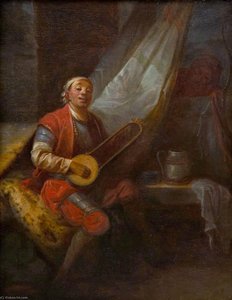
Le Voyage Illustre de Jean-Baptiste Le Prince
Né dans la ville historique de Metz le 17 septembre 1734, Jean-Baptiste Nicolas Le Prince s'est imposé comme une figure essentielle de la tapisserie de l'art français du XVIIIe siècle. Ses premières années furent marquées par un lien profond avec ses racines natales, pourtant son destin artistique était voué à des horizons bien plus vastes. Après avoir perfectionné ses techniques fondamentales de peinture à Metz, le talent du jeune artiste attira l'attention de mécènes influents, le menant à Paris vers 1750. Sous le prestigieux parrainage de Charles Louis Auguste Fouquet de Belle-Isle, Le Prince intégra l'orbite du grand François Boucher. En étudiant auprès d'un tel maître du style Rococo, Le Prince absorba la grâce délicate, les lignes fluides et l'élégance ludique qui définissaient l'époque, une influence qui resterait visible dans la légèreté initiale de ses compositions.
Cependant, Le Prince était bien plus qu'un simple disciple du Rococo ; il était un artiste d'une immense curiosité et d'une envergure géographique remarquable. En 1758, sa carrière prit un tournant transformateur lorsqu'il voyagea en Russie pour servir la cour de Catherine la Grande. Travaillant dans la splendeur du Palais Impérial de Saint-Pétersbourg sous la direction du célèbre architecte Francesco Bartolomeo Rastrelli, Le Prince découvrit un monde de grandeur impériale. Ses voyages durant cette période furent rien moins qu'épiques, s'aventurant à travers la Finlande, la Lituanie et même dans les étendues vastes et mystérieuses de la Sibérie. Ces excursions lui fournirent un réservoir unique d'expériences visuelles, lui permettant de capturer l'essence de cultures et de paysages divers, allant des détails intimes de la vie quotidienne russe à des panoramas plus exotiques et lointains.
Une Maîtrise du Style et du Sujet
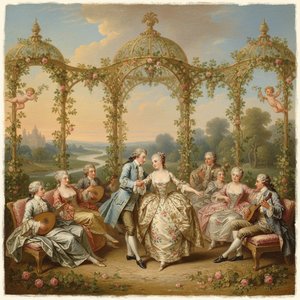
À mesure que sa carrière mûrissait, l'œuvre de Le Prince commença à refléter un mélange sophistiqué entre sa formation Rococo et un intérêt émergent pour des sujets narratifs plus ancrés dans le réel. Il devint un graveur et un peintre hautement qualifié, capable de naviguer entre le fantaisiste et le poignant. Son œuvre se caractérise par une polyvalence remarquable qui lui permet de passer sans transition de la gaieté des scènes pastorales à la profonde gravité des études historiques ou ethnographiques. Dans des œuvres telles que Deux Hommes et une Dame, on peut témoigner de sa capacité à évoquer une atmosphète de beauté idyllique et d'harmonie musicale, utilisant une lumière douce et des textures délicates pour enchanter le spectateur.
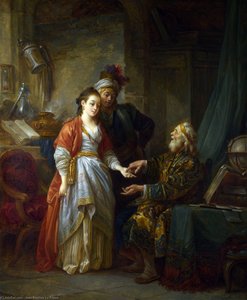
Sa prouesse technique est peut-être plus évidente dans sa capacité à utiliser l'ombre et la lumière pour créer de la profondeur et de l'émotion. Qu'il dépeignait une Scène de la vie quotidienne russe ou le charme rustique du Berceau Russe, Le Prince employait un détail méticuleux et un éclairage émotif pour insuffler la vie à ses sujets. Ses œuvres plus tardives tendirent souvent vers une approche plus structurée, préfigurant le basculement vers le Néoclassicisme qui allait bientôt dominer la scène artistique européenne. Cette transition est magnifiquement capturée dans des pièces comme Visite à un chiromancien, où l'artiste démontre une maîtrise magistrale de la composition sociale et du portrait, faisant preuve d'une attention méticuleuse aux textures des tissus et aux expressions subtiles de ses personnages.
Héritage et Importance Artistique
L'importance historique de Jean-Baptiste Le Prince réside dans son rôle de pont culturel. Il fut un artiste qui connecta les salons raffinés de Paris à la splendeur impériale naissante de la Russie, et l'esthétique délicate de Boucher aux styles plus robustes et observationnels qui allaient suivre. Sa capacité à documenter à la fois l'élégance aristocratique des Lumières et les réalités rudes de territoires lointains fait de son corpus d'œuvres un registre historique inestimable.
Bien que souvent éclipsé par les figures monumentales du mouvement néoclassique qui lui succédèrent, les contributions de Le Prince demeurent indispensables. Son héritage se retrouve dans :
- La polyvalence technique : L'intégration parfaite de la grâce Rococo avec un réalisme naissant et une précision ethnographique.
- <La documentation culturelle : Sa perspective unique d'artiste ayant voyagé de manière extensive à travers l'Empire russe, capturant des scènes qui, autrement, seraient restées inconnues de l'Europe occidentale.
- <L'influence sur la gravure : Son talent de graveur, qui a aidé à diffuser une grande partie de son récit visuel à travers le continent.
Aujourd'hui, les œuvres de Jean-Baptiste Le Prince continuent de captiver collectionneurs et historiens, servant de fenêtre sur une ère transformatrice de l'histoire européenne où l'art, le voyage et l'empire étaient inextricablement liés.