Sommaire


L'essentiel
- Born: 1599, Amsterdam, Pays-Bas
- Also known as:
- Jan Woutersz. Stap
- Jan Woutersen
- Stap Wouters
- Jan Wouters
- Stap Woutersz
- Lifespan: 64 years
- Nationality: Pays-Bas
- Copyright status: Public domain
- Museums on this site:
- Rijksmuseum
- Collections d'État de Peinture de Bavière
Quiz
Chaque question ne comporte qu'une seule bonne réponse.
Question 1:
Dans quelle ville le peintre Jan Woutersz Stap est-il né ?
Question 2:
Quel sujet religieux est présenté dans l'une des œuvres connues de Stap ?
Question 3:
Quelle était la profession du père de Jan Woutersz Stap ?
Question 4:
Vers quelle année l'artiste a-t-il commencé à utiliser le nom de famille 'Stap' ?
Question 5:
Quel musée abrite le tableau « Le Bureau du Notaire » ?
Articles connexes

Peintres néerlandais du 16e siècle
Découvrez Bosch et Bruegel, maîtres de la Renaissance flamande. Explorez les chefs-d'œuvre sur OriginalUniqueArt.com.

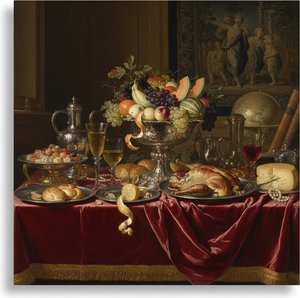
Abraham Hendricksz van Beyeren: Pioneering Dutch Still Life & the Banquet Tradition
Explore the captivating world of Dutch Golden Age still life with Abraham van Beyeren. Discover his innovative techniques, symbolic banquet scenes & lasting influence on art history. Learn about collecting these masterpieces.

Peintres hollandais du XVIIe siècle
Plongez dans l'âge d'or avec Rembrandt et Vermeer. Découvrez ces chefs-d'œuvre sur OriginalUniqueArt.com.


Questions et réponses
L'œuvre de Jan Woutersz Stap est-elle toujours protégée par le droit d'auteur ?
Non, les œuvres de cet artiste sont dans le domaine public.
D'où vient Jan Woutersz Stap ?
Pays-Bas
Où et quand Jan Woutersz Stap est-il/elle né(e) ?
1599, Amsterdam, Pays-Bas
Combien de temps Jan Woutersz Stap a-t-il vécu ?
64 years (1599–1663)
Quelles sont les couleurs typiques dans l'œuvre de Jan Woutersz Stap ?
brun espresso
Quel sujet religieux est présenté dans l'une des œuvres connues de Stap ?
La Déposition
Quelles sont les 3 peintures les mieux classées de Jan Woutersz Stap sur ArtsDot.com ?
Tax collection, Old Man with a Toque, "Office of the Notary (Intendant"s Office, Jan Woutersz Stap, c. 1629
Quel musée abrite le tableau « Le Bureau du Notaire » ?
Rijksmuseum
Dans quelle ville le peintre Jan Woutersz Stap est-il né ?
Amsterdam
Quand Jan Woutersz Stap est-il décédé ?
1663