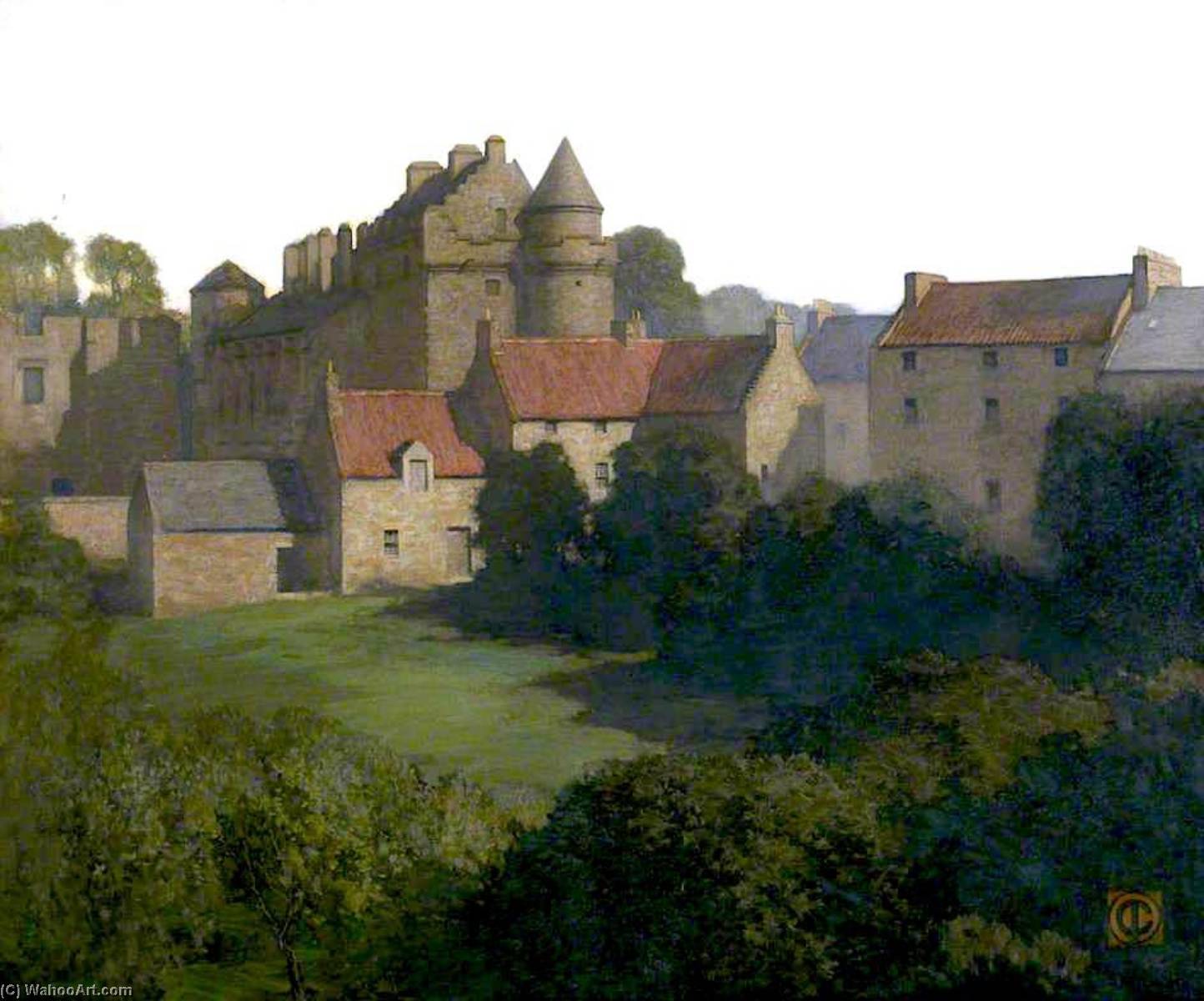
James Cadenhead: A Scottish Master of Light and Landscape
Born in Aberdeen in 1858, James Cadenhead’s artistic journey was one profoundly shaped by the landscapes of Scotland and the legacy of European art. The son of a Procurator Fiscal, he received his initial training in drawing and etching within the city's artistic circles, demonstrating an early aptitude for capturing form and detail. Crucially, his development was nurtured by Dr. John Forbes White, a discerning collector and photographer who recognized Cadenhead’s potential and introduced him to the works of the Old Masters and the Barbizon and modern Dutch schools – movements characterized by their emphasis on atmospheric effects and direct observation of nature. This exposure proved transformative, laying the foundation for his distinctive style.
Cadenhead's formal artistic education took him first to the Royal Scottish Academy Schools in Edinburgh and then, in 1882, to Paris, where he studied under the renowned Carolus-Duran. Parisian training provided a crucial broadening of his technical skills and exposed him to the vibrant Impressionist scene. However, it was Jean-Charles Cazin’s influence that proved particularly resonant; Cazin's ability to capture fleeting light and atmosphere in landscapes deeply resonated with Cadenhead’s own artistic sensibilities. Upon returning to Aberdeen in 1884, he later moved to Edinburgh in 1891, establishing himself as a significant figure within the Scottish art community.
A Portrait of a Painter: Early Works and Influences
Cadenhead's early works reveal a meticulous attention to detail combined with an emerging sensitivity to light and color. His portraits, such as “Lady with Japanese Screen and Goldfish” (1886), showcase a refined technique and a subtle understanding of capturing the subject’s character. This portrait, now held in the City Art Gallery, Edinburgh, exemplifies his ability to imbue a seemingly simple scene with atmosphere and emotion. The influence of the Barbizon School is readily apparent – the loose brushwork, the emphasis on tonal variations, and the desire to capture the essence of nature rather than merely its representation are all hallmarks of this movement.
His landscapes, too, demonstrate a growing mastery of technique and an increasing awareness of atmospheric effects. Works like “Dinnet Moor” (c. 1910) exemplify his ability to translate the rugged beauty of the Scottish Highlands onto canvas. The textured brushwork, the subtle shifts in color, and the sense of depth create a powerfully evocative image that captures the spirit of the moorland landscape. The influence of Dutch Masters is also evident here, particularly in his use of light and shadow to define form and space.
Membership and Recognition: A Scottish Royal Academician
Cadenhead’s contributions to the Scottish art world were widely recognized throughout his career. He was elected a member of the Royal Scottish Society of Painters in Watercolour in 1893, a prestigious honor that signaled his acceptance as a leading figure within the artistic community. Further accolades followed, including an Associate membership of the Royal Scottish Academy (1902) and full membership in 1921 – a testament to his sustained dedication and artistic merit. He also served as Chairman of the Society of Scottish Artists, demonstrating his leadership role within the organization.
Beyond his individual achievements, Cadenhead was an active participant in broader cultural initiatives. He was one of the original committee members of the Scottish Modern Arts Association, reflecting a commitment to fostering artistic innovation and engagement. His involvement with Patrick Geddes’ “Fin de Siècle” movement further cemented his place as a key figure in Edinburgh's intellectual and artistic landscape. He even contributed illustrations to Geddes’ influential series, *The Evergreen*, showcasing his versatility and dedication to the cultural revival of Scotland.
Later Years and Legacy
Cadenhead lived a life deeply intertwined with Edinburgh, residing at 14 Ramsay Gardens (adjacent to Edinburgh Castle) and later at 15 Inverleith Terrace. His home became a hub for artistic gatherings and intellectual discussions. He died in Edinburgh in 1927, leaving behind a substantial body of work that continues to be admired for its beauty, technical skill, and evocative power. His paintings offer a poignant glimpse into the Scottish landscape and the lives of those who inhabited it – a testament to his enduring legacy as one of Scotland’s most accomplished landscape and portrait painters.
Cadenhead's work is held in several prominent collections, including the City Art Gallery, Edinburgh. His letters home from his time in Paris provide valuable insight into his artistic development and personal life, offering a richer understanding of the man behind the paintings. His influence can be seen in subsequent generations of Scottish artists who continued to explore the themes and techniques that defined Cadenhead’s distinctive style.