Portrait de Jacopo Ripanda

Peintures de Jacopo Ripanda : les 2 plus célèbres, selon le regard d'une galerie

Mis à jour en novembre 2026 · classé selon notre score de popularité (recherches, visites et commandes pour chaque œuvre) · 2 œuvres de Jacopo Ripanda dans notre catalogue

En bref

Aux yeux de la galerie, le tableau le plus célèbre de Jacopo Ripanda est Naval Combat, dont l'original est exposé au Musées du Capitole, à Rome. Parmi les 2 œuvres de Jacopo Ripanda présentes dans notre catalogue, la galerie présente ci-dessous les 2 plus célèbres, chacune étant une œuvre originale avec son année, son musée et ce qui la rend unique.

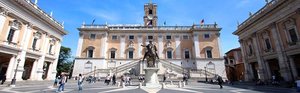
Plus d'œuvres : Musées du Capitole

Les 10 meilleures peintures de Jacopo Ripanda de la galerie

2
Néptune et Amphitrite (1505) de Jacopo Ripanda

Néptune et Amphitrite

1505 · Acrylique sur toile · Palazzo dei Conservatori, Rome

Une Œuvre Énigme : Neptune et Amphitrite de Jacopo Ripanda Jacopo Ripanda demeure une figure fascinante et complexe du Renaissance italien – un artiste dont la véritable personnalité reste enveloppée dans le voile du mystère. Bien que les détails biographiques soient rares, les témoignages survivants révèlent un talent exceptionnel né à Bologne, absorbant les influences des maîtres tels qu'Ercole Grandi et Lorenzo Costa, peintres reconnus pour leur maîtrise de la…

Les musées qui conservent les œuvres originales de Jacopo Ripanda

Les 2 musées qui détiennent la plupart des peintures de cette page.

Musées Ville Œuvres de Jacopo Ripanda Peintures de cette liste
Musées du Capitole, RomeMusées du Capitole Rome 1 Naval Combat
Palazzo dei Conservatori, RomePalazzo dei Conservatori Rome 1 Néptune et Amphitrite

Jacopo Ripanda, les œuvres emblématiques de chaque année

Chaque œuvre originale datée de Jacopo Ripanda sur cette page a été réalisée en 1505 : les voici, en commençant par les plus célèbres.

Œuvres par année

Choisissez une année pour voir les œuvres originales.

Les peintures de Jacopo Ripanda : la galerie répond

Quelle est la peinture la plus célèbre de Jacopo Ripanda ?Révéler la réponse

Naval Combat

Combien d'œuvres Jacopo Ripanda a-t-il créées ?Révéler la réponse

Notre catalogue comprend 2 œuvres de Jacopo Ripanda.

Où sont exposées les œuvres originales les plus célèbres de Jacopo Ripanda ?Révéler la réponse

Principalement dans Musées du Capitole (Rome) et Palazzo dei Conservatori (Rome). Le tableau des musées ci-dessus les répertorie tous.

Jacopo Ripanda : l'artiste

Jacopo Ripanda: The Roman Eye

Jacopo Ripanda (c. 1401 – Rome, c. 1516) remains a figure shrouded in mystery—a Renaissance artist whose brilliance shone primarily through his meticulous observation and unparalleled skill in documenting the grandeur of antiquity. While biographical details are scarce, surviving evidence paints a portrait of an exceptionally gifted Bolognese painter who captivated papal patronage and cemented his place as one of the era’s foremost visual innovators. His legacy resides not merely in the canvases he created but also in the revolutionary device he devised—a simple yet ingenious instrument that fundamentally altered artistic practice and profoundly impacted how Roman monuments were perceived. Early Life & Training: Precise information regarding Ripanda's birthdate and formative years is elusive. He emerged from Bologna’s vibrant artistic milieu, absorbing influences from masters like Ercole Grandi and Lorenzo Costa—artists known for their masterful depictions of classical themes and humanist ideals. However, unlike many Bolognese painters of his time who focused on devotional subjects, Ripanda possessed an unwavering fascination with Roman ruins and the vestiges of imperial grandeur. This passion would become the cornerstone of his artistic endeavors and define his contribution to Renaissance art history. He honed his skills under their tutelage, mastering techniques that prioritized accuracy and detail—a characteristic that would later permeate his groundbreaking work on Trajan’s Column. The Trajan’s Column Apparatus: Ripanda's fame ascended dramatically during Pope Alexander VI’s reign when he constructed a viewing device—a carefully calibrated eyepiece—to aid in the detailed study of Trajan’s Column. This instrument, remarkably accurate for its time, allowed him to resolve distant friezes with unprecedented clarity, capturing minute details previously inaccessible to human vision. The invention sparked considerable debate amongst scholars and artists alike, demonstrating Ripanda's intellectual curiosity and his commitment to advancing scientific observation within the artistic realm. It represented a pivotal moment—a fusion of art and science that challenged conventional methods of representation and elevated the pursuit of visual precision to new heights. Girolamo Muziano published engravings of his Trajan’s Column drawings in 1576, disseminating Ripanda’s innovative approach to visual representation across Europe. Papal Commissions & Frescoes: Alexander VI recognized Ripanda’s exceptional talent and entrusted him with monumental commissions for frescoes in Rome’s Palazzo dei Conservatori—specifically, four rooms dedicated to portraying scenes from classical history. The Sala di Annibale and Sala della Lupa stand as enduring testaments to his artistic prowess, showcasing masterful compositions and vibrant color palettes that embody the humanist spirit of the Renaissance. These paintings continue to inspire admiration for their technical brilliance and expressive power. He meticulously recreated monumental architecture with astonishing accuracy—a feat achieved through painstaking observation and a profound understanding of perspective—establishing himself as one of Rome’s foremost fresco painters during his time. Style & Technique: Ripanda’s style is characterized by a distinctive blend of Emilian tradition and Roman influence—a synthesis reflected in his meticulous attention to detail, masterful use of chiaroscuro (light and shadow), and profound understanding of perspective. He skillfully employed techniques honed through observation of Trajan's Column, translating the precision of scientific inquiry into artistic execution. His works exemplify the humanist ideal of combining erudition with artistic skill—a testament to his intellectual depth and unwavering dedication to mastering the visual arts. As noted by Grove Dictionary of Art, “Ripanda’s style is basically Emilian, influenced by Ercole Grandi and Lorenzo Costa,” highlighting the enduring impact of Bolognese artistic traditions on his oeuvre. Legacy & Influence: Although Ripanda’s later Vatican commissions were cancelled by Pope Julius II—a setback that tragically curtailed his creative output—his groundbreaking invention and enduring frescoes secured his place in art history. Girolamo Muziano published engravings of his Trajan’s Column drawings in 1576, disseminating Ripanda’s innovative approach to visual representation across Europe. Furthermore, he exerted considerable influence on subsequent artists like Baldassare Peruzzi and Michelangelo—artists who adopted Ripanda’s meticulous observational methods and embraced the challenge of accurately depicting monumental architecture. Jacopo Ripanda remains an artist whose genius continues to resonate through centuries of art history—a beacon of intellectual curiosity and artistic innovation within the Renaissance landscape.