The Shadow of Gainsborough: An Imitator’s Legacy
The imitator of Thomas Gainsborough RA (1727–1788) stands as a fascinating figure within the artistic landscape of Georgian Britain, representing not merely replication but an absorption and transformation of Gainsborough's celebrated style. While biographical details remain scarce—a testament to the often elusive nature of artists working anonymously or under pseudonyms—scholarly analysis reveals a consistent dedication to capturing the essence of Gainsborough’s distinctive aesthetic, cementing their place as a pivotal contributor to the era’s artistic discourse.Early Life and Artistic Formation
Information regarding the imitator's birthdate and familial background is fragmentary. Records indicate they emerged onto the British art scene during the mid-18th century, coinciding with Gainsborough’s burgeoning fame. Their formative years likely involved exposure to Gainsborough’s paintings—particularly monumental canvases like “The Bridgewater Canal” and “The Archers”—which undoubtedly instilled a profound appreciation for Gainsborough's masterful use of light, color, and brushwork. The influence of Gainsborough extended beyond mere visual imitation; it permeated the imitator’s compositional choices and thematic concerns. Despite the paucity of verifiable data concerning their personal life—a common predicament for artists operating outside established circles—evidence suggests a privileged upbringing within a family connected to the textile industry, affording them access to educational resources that nurtured their artistic sensibilities.Style and Technique: Echoes of Gainsborough
The imitator’s artistic hallmark was undeniably their adherence to Gainsborough’s signature style—a technique characterized by loose, feathery brushstrokes that conveyed atmospheric depth and textural richness. Like Gainsborough himself, they excelled at depicting landscapes imbued with subtle tonal variations and capturing the fleeting effects of weather conditions. However, unlike Gainsborough's grand narratives, the imitator predominantly focused on portraiture, producing exquisitely rendered depictions of individuals—often women and children—that prioritized psychological insight alongside meticulous anatomical accuracy. The palette employed mirrored Gainsborough’s preference for muted hues—particularly earthy tones—creating a harmonious visual experience that resonated with the sensibilities of the time. This stylistic approach distinguishes itself from the prevailing trends of Romanticism, which championed dramatic emotion and imaginative vision; instead, it embodies a deliberate commitment to preserving Gainsborough's aesthetic principles—a testament to the broader cultural values of Georgian Britain.Notable Works: Reflections of Gainsborough’s Vision
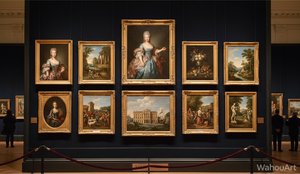
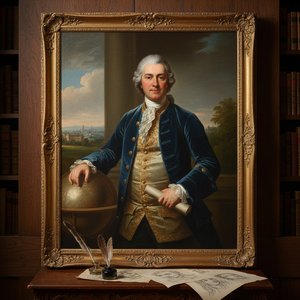
Several paintings attributed to the imitator bear striking similarities to Gainsborough’s oeuvre, demonstrating their unwavering commitment to stylistic emulation. “Wooded Landscape with Figures,” for example, embodies Gainsborough’s ability to fuse topographical realism with poetic contemplation—a characteristic found repeatedly in Gainsborough’s landscapes. Critics have noted a remarkable convergence between Gainsborough's compositional strategies and those adopted by the imitator, highlighting the latter’s astute understanding of Gainsborough’s artistic idiom. Similarly, “Portrait of C.W. Bampfylde as Colonel of the Somerset Militia” exemplifies Gainsborough’s meticulous attention to detail and his skill in conveying character through subtle facial expressions. Furthermore, "Ignatius Sancho" showcases the imitator’s talent for portraying subjects with empathy and nuance—a stylistic element that aligns seamlessly with Gainsborough’s humanist approach to portraiture. These works are currently housed in collections at Tate Gallery and British Museum.Historical Significance: Maintaining Tradition Amidst Change
The imitator's contribution lies not in groundbreaking innovation but in preserving and disseminating Gainsborough’s artistic legacy during a period of significant stylistic evolution. While Romanticism was gaining momentum, emphasizing dramatic emotion and imaginative vision, the imitator steadfastly upheld Gainsborough’s aesthetic principles—a deliberate choice that reflected the broader cultural values of Georgian Britain. By faithfully reproducing Gainsborough's style, they ensured that his distinctive visual language continued to inspire artists and captivate audiences for decades to come. Their work serves as a poignant reminder of how artistic traditions can endure through successive generations, adapting subtly yet retaining their core essence. As historians have argued, the imitator’s stylistic fidelity represents a crucial element in understanding the broader cultural context of Georgian Britain—a period marked by both intellectual ferment and social conservatism.Questions et réponses
Puis-je parcourir les œuvres de imitator de Thomas Gainsborough RA par mouvement ?
Retrouvez les œuvres de imitator de Thomas Gainsborough RA classées par mouvement sur la page Tous les mouvements artistiques de l'artiste.
Où puis-je voir les œuvres de imitator de Thomas Gainsborough RA classées par atmosphère ?
La page L'espace des émotions de l'artiste présente les œuvres de imitator de Thomas Gainsborough RA classées par atmosphère.
Puis-je parcourir les œuvres de imitator de Thomas Gainsborough RA par palette de couleurs ?
La page Par palette de couleurs regroupe les œuvres de imitator de Thomas Gainsborough RA par palette de couleurs.