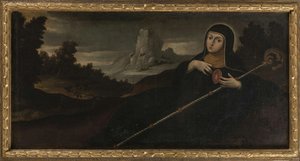
Gregorio Vásquez de Arce y Ceballos (1638-1711): A Life Immersed in Baroque Splendor
Gregorio Vásquez de Arce y Ceballos, born in Bogotá, Colombia, in 1638, stands as a pivotal figure in the artistic landscape of colonial Spanish America. He wasn’t merely a painter; he was an embodiment of the Hispanic American Baroque—a style characterized by its dramatic intensity, opulent detail, and profound spiritual fervor. Vásquez flourished during a period when the Viceroyalty of New Granada pulsed with cultural energy, seeking to express both its loyalty to Spain and its burgeoning identity as a distinct society. His life, though ultimately marked by tragedy, left an indelible mark on Colombian art, establishing a uniquely American interpretation of European Baroque aesthetics. From his early training at St. Bartholomew’s College to his apprenticeship under the esteemed Baltasar Vargas de Figueroa, Vásquez absorbed the foundational principles that would shape his distinctive style. This rigorous education wasn't simply about mastering technique; it was about understanding how art could serve as a powerful instrument for religious instruction and emotional resonance within a colonial context.
Early Life and Artistic Formation
Gregorio Vásquez’s formative years were steeped in the intellectual traditions of Bogotá, Colombia. Born into a family descended from Andalusian immigrants—a common occurrence during the Spanish colonization—he benefited from access to education that was uncommon for his time. His father, Bartolomé Vásquez y de María de Ceballos, held positions within the ecclesiastical hierarchy, fostering an environment conducive to artistic pursuits. Recognizing his innate talent, Vásquez received instruction at St. Bartholomew’s College in Salamanca, Spain—a bastion of humanist scholarship and artistic excellence—where he honed his skills in drawing and painting under the tutelage of prominent Baroque masters. This early exposure to European artistic ideals profoundly influenced his subsequent stylistic choices, shaping him into a painter who would champion both grandeur and emotional depth. His apprenticeship with Baltasar Vargas de Figueroa further solidified these influences, allowing Vásquez to learn from one of Colombia’s most celebrated artists—a figure known for his mastery of composition and color theory. Vargas instilled in Vásquez a disciplined approach to artmaking, emphasizing the importance of anatomical accuracy and expressive gesture.
The Baroque Vision: Faith Illuminated
Vázquez de Arce’s artistic output centered almost exclusively on religious themes—a reflection of the pervasive influence of Catholicism within colonial society. He dedicated his considerable talent to depicting scenes from the lives of Christ, the Virgin Mary, and various saints, imbuing each canvas with a palpable sense of drama and devotion. Unlike many artists of his era who prioritized mere decorative elegance, Vásquez sought to convey profound spiritual truths—to inspire contemplation and reaffirm faith through visual storytelling. His paintings weren’t intended as mere adornments; they were visual sermons, meticulously crafted to communicate theological concepts in an accessible and emotionally resonant manner. Consider
The Annunciation, housed in Bogotá’s Colonial Museum: Vásquez skillfully employs chiaroscuro—the dramatic interplay of light and shadow—to illuminate the ethereal beauty of Mary’s countenance and the radiant glow emanating from Gabriel’s angelic form. This masterful technique underscores the divine nature of the event being depicted, elevating it beyond a simple narrative to a moment of transcendent spiritual significance. Similarly, his depictions of Saint Dominic de Guzmán and Joachim of Fiore—displayed prominently in Bogotá's Colonial Museum—present portraits of Saint Dominic de Guzmán and Saint Francis of Assisi that capture not only their physical likeness but also their inner piety and unwavering commitment to faith. Vásquez’s palette was rich and vibrant, utilizing deep reds, blues, and golds to create a sense of luxurious grandeur—a stylistic choice consistent with the Baroque tradition's desire to evoke awe and reverence.
Notable Works and Artistic Legacy
Gregorio Vásquez de Arce y Ceballos produced an astonishing oeuvre of approximately 150 paintings and drawings—a testament to his prodigious artistic ability and unwavering dedication to his craft. Among his most celebrated works are:
- The Ascension (1673): This monumental canvas depicts the ascension of Christ into heaven, employing a pyramidal composition that emphasizes grandeur and stability. Vásquez’s masterful use of color—particularly gold leaf—creates an aura of divine majesty, reinforcing the theological message of triumph over death.
- Saint Joseph (c. 1680): Vásquez’s depiction of Saint Joseph embodies serene dignity and conveys a profound sense of humility—qualities that were highly valued within the Baroque aesthetic.
- The Visitation (1697): This intimate scene portrays Mary visiting Elizabeth, capturing the tenderness and compassion inherent in their relationship. Vásquez's meticulous attention to detail—particularly in rendering the drapery—demonstrates his mastery of artistic technique.
His influence extended beyond Bogotá, shaping the artistic sensibilities of subsequent generations of Colombian painters. Vásquez’s unwavering commitment to Baroque principles—his embrace of dramatic composition, luminous color palettes, and expressive gesture—established a distinctive American interpretation of European Baroque aesthetics. He remains regarded as Colombia's foremost Baroque artist, and his works continue to inspire admiration for their beauty and spiritual depth.
A Tragic Finale
Despite achieving considerable artistic success during his lifetime, Vásquez de Arce’s later years were marred by misfortune and despair. In 1701, he became embroiled in a scandalous affair—the kidnapping of Doña María Teresa de Orgaz from the Santa Clara Convent—a transgression that resulted in his imprisonment and subsequent impoverishment. This event profoundly impacted Vásquez's mental state, triggering a descent into madness that ultimately precluded any further artistic endeavors. He abandoned painting altogether, retreating into seclusion and succumbing to debilitating illness. Vásquez died in Bogotá in 1711 at the age of 73—leaving behind an unfinished masterpiece and a legacy tinged with sorrow. His final years were marked by profound suffering—a poignant reminder of the fragility of human existence amidst the grandeur of artistic achievement.
## Conclusion
Gregorio Vásquez de Arce y Ceballos’s artistic output stands as a cornerstone of Colombian Baroque art—a testament to his exceptional talent and unwavering devotion to his craft. His paintings continue to captivate viewers today, transporting them back to a bygone era of faith, splendor, and artistic innovation. Vásquez's enduring legacy resides not only in the beauty of his artworks but also in their profound spiritual significance—a reminder that art can transcend temporal boundaries and communicate timeless truths about humanity’s relationship with divinity.