Menu
CONSEIL EN ART GRATUIT

Giovanni Ravenet

Informations clés

  • Top 3 works:
    • Carrier of Manila
    • Man from the Guam island
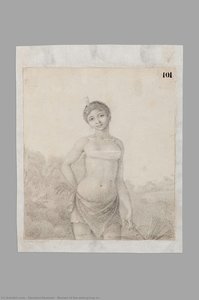
    • Woman of the aeta group or
  • Copyright status: Under copyright
  • Born: 1766, Sala Bolognese, Italie
  • Nationality: Italie
  • Works on APS: 3
  • Plus…
  • Art period: Époque moderne précoce
  • Top-ranked work: Carrier of Manila
  • Also known as: Juan Ravenet
  • Museums on APS:
    • Musée d'Amérique
    • Musée d'Amérique
    • Musée d'Amérique
    • Musée d'Amérique
    • Musée d'Amérique

Quiz d'art

Chaque question ne comporte qu'une seule bonne réponse.

Question 1:
Q1
Question 2:
Q2
Question 3:
Q3
Question 4:
Q4
Question 5:
Q5

Giovanni Ravenet: Chronicler of Mexico’s Enlightenment

Giovanni Ravenet (Juan Ravenet), born in Sala Bolognese, Italy in 1766, stands as a fascinating figure within the artistic landscape of the late Enlightenment. Primarily recognized for his involvement in Alejandro Malaspina's expedition to Mexico between 1791 and 1794—a monumental scientific mission aimed at charting the Pacific Northwest—Ravenet’s legacy extends beyond mere topographical documentation; he captured the essence of Mexican society, portraying its people and customs with remarkable sensitivity. His artistic output reflects a blend of Neoclassical ideals and meticulous observation, cementing his place as an important artist of his time. Early Life & Education: Ravenet’s formative years were spent in Parma, where he honed his skills at the Accademia di Belle Arti, demonstrating exceptional talent as a portraitist. This grounding in classical art principles would profoundly influence his subsequent artistic endeavors. He absorbed the stylistic innovations championed by artists like Antonio Canova and Jacques-Louis David—masters of sculptural elegance and dramatic narrative—establishing a foundation for his own distinctive visual language. The Malaspina Expedition: The expedition to Mexico marked a pivotal moment in Ravenet’s career. Commissioned by Malaspina to document the diverse cultures and landscapes of Nueva España, Ravenet produced an impressive series of engravings and paintings—including “Man from Guam Island,” “Woman of the Aeta Group,” and “Carrier of Manila”—that offer invaluable insights into Mexican life during the colonial era. These works are notable for their detailed realism and nuanced portrayal of human subjects. Ravenet’s meticulous attention to detail—evident in his painstakingly rendered depictions of indigenous attire, weaponry, and ceremonial rituals—demonstrates a commitment to scientific accuracy combined with artistic empathy. His engravings stand as enduring records of a bygone epoch, capturing the spirit of exploration and cultural exchange that characterized Malaspina's ambitious undertaking. Spanish Patronage & Artistic Development: Following Malaspina’s departure, Ravenet secured patronage from the Spanish royal court, continuing to produce drawings and engravings that catered to aristocratic tastes. Despite facing financial difficulties after the Peninsular War due to his French heritage—resulting in exile—Ravenet persevered, securing employment with the Spanish navy and maintaining a productive artistic practice. This resilience underscores his unwavering dedication to his craft and reflects the broader challenges faced by artists during turbulent political times. His style evolved under the influence of Nicolas Antoine Tacquard, embracing a more expressive tonal palette and exploring innovative compositional techniques. Later Years & Legacy: Ravenet’s final years were spent in Madrid, where he succumbed to illness around 1821. Although many of his expeditionary artworks remained unpublished until decades after his death—a testament to the slow pace of scholarly dissemination during the Romantic era—they have since been recognized as masterpieces of Mexican colonial art and a cornerstone of the Macchiaioli movement. His legacy resides in his contribution to documenting Mexico’s cultural heritage and preserving its visual memory for posterity. Ravenet's artistic vision—characterized by precision, subtlety, and an unwavering commitment to observation—continues to inspire artists today. Giovanni Ravenet’s meticulous technique—characterized by precise linework and subtle tonal gradations—demonstrates the influence of Jacques-Louis David and Nicolas Antoine Tacquard, reflecting the broader artistic currents of the period. His engravings serve as invaluable historical records, capturing a vibrant snapshot of daily life and cultural traditions that would otherwise have been lost to time.