Menu
CONSEIL EN ART GRATUIT

Giovanni Nepomuceno della Croce

1736 - 1819

Informations clés

  • Nationality: Autriche
  • Museums on APS:
    • Les Musées Mozart de la Fondation Internationale Mozarteum de Salzbourg
    • Les Musées Mozart de la Fondation Internationale Mozarteum de Salzbourg
    • Les Musées Mozart de la Fondation Internationale Mozarteum de Salzbourg
    • Les Musées Mozart de la Fondation Internationale Mozarteum de Salzbourg
    • Les Musées Mozart de la Fondation Internationale Mozarteum de Salzbourg
  • Copyright status: Public domain
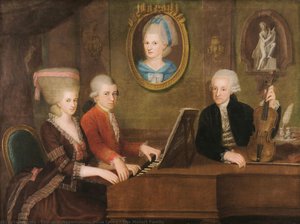
  • Top-ranked work: The Mozart Famliy
  • Works on APS: 1
  • Top 3 works: The Mozart Famliy
  • Plus…
  • Lifespan: 83 years
  • Art period: Époque moderne précoce
  • Died: 1819
  • Born: 1736, Pressano, Autriche
  • Also known as: Johann Nepomuk Della Croc

Quiz d'art

Chaque question ne comporte qu'une seule bonne réponse.

Question 1:
Q1
Question 2:
Q2
Question 3:
Q3

Giovanni Nepomuceno della Croce: A Master of Austrian Baroque Portraiture

Johann Nepomuk della Croce (1736 – 1819) occupies a prominent position in the annals of late Baroque art, primarily recognized for his astonishing output of portraits—estimated at approximately 5000—a feat unmatched by many of his peers. His artistic journey commenced in Pressano, Tyrol, Austria, where he received formative instruction from Lorenzozzi, an Italian artist who instilled within him a bedrock understanding of classical ideals and the principles governing compositional harmony. Subsequent expeditions across Italy, Germany, Hungary, and France broadened his intellectual horizons and honed his technical prowess before he established residency in Burghausen, Bavaria, continuing to produce artwork of exceptional quality.

Early Life & Artistic Foundations

Della Croce’s artistic education began under Lorenzozzi's watchful eye, fostering a deep appreciation for the grandeur and sophistication of Italian Baroque aesthetics. This exposure proved invaluable as he diligently cultivated his craft through independent study alongside practical experience abroad—a crucial step in shaping his distinctive artistic vision. Lorenzozzi’s influence extended beyond mere stylistic imitation; it instilled a profound respect for humanist values and a commitment to portraying human subjects with dignity and nuance, characteristics that would permeate Della Croce's oeuvre throughout his career.

Italian Influences & The Dramatic Chiaroscuro Technique

His time spent in Italy profoundly impacted Della Croce’s artistic style, triggering an assimilation of techniques pioneered by Caravaggio—a revolutionary artist who championed the dramatic chiaroscuro method. This stylistic choice involved exploiting stark contrasts between illumination and darkness to sculpt figures with remarkable realism while simultaneously conveying intense emotion and psychological depth. The chiaroscuro technique wasn't merely a visual device; it represented Della Croce’s belief that art should strive to capture the complexities of human experience, mirroring Caravaggio’s own artistic philosophy.

Notable Commissions & Artistic Achievements

Della Croce swiftly gained renown for his altar-pieces commissioned throughout Bavaria—a testament to his mastery of color palettes and meticulous attention to detail. These monumental canvases showcased Della Croce's ability to synthesize technical skill with artistic sensitivity, elevating religious art to new heights of expressive power. However, his legacy is indelibly etched in history by his portrait of the Mozart family in Salzburg—a masterpiece that encapsulates both familial dignity and artistic brilliance. This evocative depiction captures not only the physical likenesses of Mozart and his relatives but also their inner lives—reflecting Della Croce’s profound understanding of human psychology and his unwavering dedication to portraying subjects with authenticity.

A Legacy Enduring Through Time

Felix Joseph von Lipowsky's astute assessment of Della Croce’s prolific output underscores the sheer magnitude of his artistic legacy – a remarkable testament to his tireless devotion and unparalleled talent. His son, Clemente della Croce (1783–1823), followed in his father’s footsteps as a painter, perpetuating the Della Croce artistic tradition and ensuring that Giovanni Nepomuceno della Croce's influence would continue to resonate across generations. Today, Della Croce’s artwork stands as an enduring symbol of Austrian Baroque artistry—a beacon of technical excellence and emotional resonance that continues to captivate audiences worldwide.