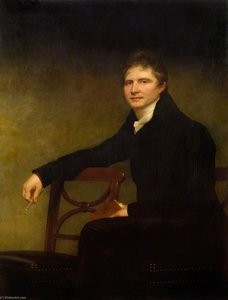
Portrait de George Watson

Les 33 peintures les plus célèbres de George Watson, une sélection de la galerie

Mis à jour en novembre 2026 · classé selon notre score de popularité (recherches, visites et commandes pour chaque œuvre) · 33 œuvres de George Watson dans notre catalogue

En bref

Parmi toutes les œuvres originales laissées par George Watson, la plus célèbre est Gregor MacGregor (1786–1845), Aventurier (1804), conservée dans la collection du Galerie Nationale de Portraits Écossais, à Édimbourg. Juste après, on retrouve Général John Reid (1721–1807) (1806) et Archibald Maclean (1733–1812), pasteur baptiste (1810). Notre catalogue comprend 33 œuvres de George Watson ; la galerie a conservé les 33 que le monde admire le plus, chacune présentée avec sa date, son musée et son histoire.

1767 – 1837, Berwickshire Neoclassicism Plus d'œuvres : Galerie Nationale de Portraits Écossais

Les 10 plus belles peintures de George Watson : la sélection de la galerie

1
Gregor MacGregor (1786–1845), Aventurier (1804) de George Watson

Gregor MacGregor (1786–1845), Aventurier

1804 · Huile sur toile · Galerie Nationale de Portraits Écossais, Édimbourg

Dans ce portrait de 1804, nous rencontrons Gregor MacGregor dans un moment de profonde quiétude, bien avant que son nom ne devienne synonyme de l'audacieuse tromperie du projet Poyais. Il est présenté comme un jeune homme, sa présence définie par une certaine intensité tranquille qui semble anticiper les complexités de sa vie future. Il porte l'uniforme du 57e régiment de marche, une tunique rouge rehaussée de galons dorés qui accrochent…

2
Général John Reid (1721–1807) (1806) de George Watson

Général John Reid (1721–1807)

1806 · Peinture à l'huile

Un homme âgé, identifié comme le Général John Reid, est présenté dans un portrait à l'huile traditionnel datant de 1806. Il est placé dans une composition centrée, observé depuis une perspective légèrement surélevée qui surplombe le haut de son corps. Sa tenue reflète la précision militaire de la fin du XVIIIe siècle, avec le tissu lourd de son uniforme rendu par une superposition méticuleuse de peinture à l'huile. Une lumière…

3
Archibald Maclean (1733–1812), pasteur baptiste (1810) de George Watson

Archibald Maclean (1733–1812), pasteur baptiste

1810 · Huile sur toile · Galerie Nationale de Portraits Écossais, Édimbourg

Dans ce portrait, nous rencontrons Archibald Maclean, un homme dont la présence est définie par un profond sentiment de gravité. Peinte en 1810, l'œuvre capture le vieux pasteur baptiste dans un moment d'immobilité, ses traits marqués par les sillons d'une vie passée dans la contemplation. La lumière est délibérée, projetant une lueur intense sur son visage et le haut de son corps, tout en laissant le reste de la composition…

4
Zoe de Bellecourt (1825) de George Watson

Zoe de Bellecourt

1825 · Oil On Canvas · Scottish National Gallery, Édimbourg

In this portrait from 1825, we find ourselves seated in a pastoral setting, observing a young woman named Zoe de Bellecourt. She is positioned centrally, framed by the soft architecture of trees and a delicate birdcage. There is a certain stillness to the composition, a sense of a life paused in a moment of serene contemplation. She wears a bright yellow dress that catches the diffused light, contrasted by white…

La sélection de George Watson se poursuit, de 11 à 33

11The Sisters (Georgina and Elizabeth Reay) (1810) de George WatsonThe Sisters (Georgina and Elizabeth Reay)1810 · John et Mable Ringling Museum d'Art 12Thomas Wood (1754 –1817 ), FRCSEd (1775), PRCSEd (1792–1794) (1810) de George WatsonThomas Wood (1754 –1817 ), FRCSEd (1775), PRCSEd (1792–1794)1810 · The Royal College of Surgeons of Edinburgh 13Archibald Skirving (1749–1819), Artist (1810) de George WatsonArchibald Skirving (1749–1819), Artist1810 · Galerie Nationale de Portraits Écossais 14Bishop George Hay (1729–1811) (1808) de George WatsonBishop George Hay (1729–1811)1808 15William Metcalfe (1821) de George WatsonWilliam Metcalfe1821 · Le Musée et Galerie d’Art Hunterian 16Sir Benjamin West (1738–1820) (1815) de George WatsonSir Benjamin West (1738–1820)1815 · Scottish National Gallery 17George Watson (1767–1837), Artist and First President of the Scottish Academy (Self Portrait) (1816) de George WatsonGeorge Watson (1767–1837), Artist and First President of the Scottish Academy (Self Portrait)1816 · Galerie Nationale de Portraits Écossais 18George Wood de George WatsonGeorge WoodIndianapolis Museum of Art 19General Don (1756–1832) de George WatsonGeneral Don (1756–1832) 20Robert Stocks de George WatsonRobert Stocks 21Sergeant Major Patrick Gould, Royal Regiment, Edinburgh Volunteers, 1794 de George WatsonSergeant Major Patrick Gould, Royal Regiment, Edinburgh Volunteers, 1794 22Archibald Skirving (1749–1819) de George WatsonArchibald Skirving (1749–1819)John Muir House 23Sir John Pringle Dalrymple, Bt de George WatsonSir John Pringle Dalrymple, BtThe National Trust For Scotland 24Thomas Brown (1778–1820) (after Henry Raeburn) de George WatsonThomas Brown (1778–1820) (after Henry Raeburn) 25Captain William Clark (1755–1801), RN, of HMS 'Victorious' de George WatsonCaptain William Clark (1755–1801), RN, of HMS 'Victorious'Académie Royale Écossaise des Beaux-Arts - Architecture 26James Durham of Largo de George WatsonJames Durham of Largo 27Self Portrait de George WatsonSelf PortraitScottish National Gallery 28The Singing Children de George WatsonThe Singing ChildrenAcadémie Royale Écossaise des Beaux-Arts - Architecture 29Andrew Bell (1726–1809), Engraver and Publisher de George WatsonAndrew Bell (1726–1809), Engraver and PublisherGalerie Nationale de Portraits Écossais 30Mary Augusta Riddell, Later Mrs Cunliffe (1823–1879) de George WatsonMary Augusta Riddell, Later Mrs Cunliffe (1823–1879)Scottish National Gallery 31Anne Rutherford (c.1739–1819), Mrs Walter Scott, Mother of Sir Walter Scott de George WatsonAnne Rutherford (c.1739–1819), Mrs Walter Scott, Mother of Sir Walter ScottGalerie Nationale de Portraits Écossais 32The Artist's Wife, Rebecca Smellie de George WatsonThe Artist's Wife, Rebecca SmellieScottish National Gallery 33Portrait of a Man (possibly Robert Burns, 1759–1796, poet) de George WatsonPortrait of a Man (possibly Robert Burns, 1759–1796, poet)Collection d’art gouvernementale

Les peintures célèbres de George Watson, période par période

Les sujets qui ont captivé George Watson

Les quatre thèmes qui reviennent le plus souvent dans ces œuvres originales, chacun illustré par son plus bel exemple.

Les musées qui conservent les œuvres originales de George Watson

Les 8 musées qui détiennent la plupart des peintures de cette page.

Musées Ville Œuvres de George Watson Peintures de cette liste
Galerie Nationale de Portraits Écossais, ÉdimbourgGalerie Nationale de Portraits Écossais Édimbourg 8 Gregor MacGregor (1786–1845), Aventurier, Archibald Maclean (1733–1812), pasteur baptiste, William Smellie (1740–1795), Printer, Naturalist and Antiquary
Scottish National Gallery, ÉdimbourgScottish National Gallery Édimbourg 5 Zoe de Bellecourt, Sir Benjamin West (1738–1820), Self Portrait
The Royal College of Surgeons of Edinburgh, ÉdimbourgThe Royal College of Surgeons of Edinburgh Édimbourg 2 Alexander Wood (1725–1807), FRCSEd (1756), PRCSEd (1762–1764), Thomas Wood (1754 –1817 ), FRCSEd (1775), PRCSEd (1792–1794)
Académie Royale Écossaise des Beaux-Arts - Architecture, ÉdimbourgAcadémie Royale Écossaise des Beaux-Arts - Architecture Édimbourg 2 Captain William Clark (1755–1801), RN, of HMS 'Victorious', The Singing Children
Musée et de la Chambre Obscure de Dumfries, DumfriesMusée et de la Chambre Obscure de Dumfries Dumfries 1 Andrew Copland (d.1807)
John et Mable Ringling Museum d'Art, SarasotaJohn et Mable Ringling Museum d'Art Sarasota 1 The Sisters (Georgina and Elizabeth Reay)
Le Musée et Galerie d’Art Hunterian, GlasgowLe Musée et Galerie d’Art Hunterian Glasgow 1 William Metcalfe
Indianapolis Museum of Art, IndianapolisIndianapolis Museum of Art Indianapolis 1 George Wood

George Watson décennie par décennie : l'original qui définit chacune d'elles

Œuvres par décennie

Choisissez une décennie pour découvrir l'œuvre originale qui la définit.

Questions des collectionneurs sur les peintures de George Watson

Quelle est l'œuvre la plus célèbre de George Watson ?Révéler la réponse

Gregor MacGregor (1786–1845), Aventurier (1804), Galerie Nationale de Portraits Écossais, Édimbourg. Suivus de Général John Reid (1721–1807) (1806) et Archibald Maclean (1733–1812), pasteur baptiste (1810).

Quel âge avait George Watson lors de la création de Gregor MacGregor (1786–1845), Aventurier ?Révéler la réponse

37 ans : Gregor MacGregor (1786–1845), Aventurier date de 1804, et George Watson est né(e) en 1767.

Quelles sont les dix peintures les plus célèbres de George Watson ?Révéler la réponse

Gregor MacGregor (1786–1845), Aventurier, Général John Reid (1721–1807), Archibald Maclean (1733–1812), pasteur baptiste, Zoe de Bellecourt, William Smellie (1740–1795), Printer, Naturalist and Antiquary, John James Ruskin (1785–1864), Alexander Wood (1725–1807), FRCSEd (1756), PRCSEd (1762–1764), Robert Jameson (1774–1854), Mineralogist, Mrs Peat (b.1748), and Her Daughters (Janet, b.1788, and Anne, c.1790–1885) et Andrew Copland (d.1807). Le classement ci-dessus indique l'année et le musée de chacun.

Combien de peintures George Watson a-t-il laissées ?Révéler la réponse

Notre catalogue comprend 33 œuvres de George Watson, datées de 1793 à 1825.

Dans quels musées sont exposés les chefs-d'œuvre de George Watson ?Révéler la réponse

Principalement dans Galerie Nationale de Portraits Écossais (Édimbourg), Scottish National Gallery (Édimbourg) et The Royal College of Surgeons of Edinburgh (Édimbourg). Le tableau des musées ci-dessus les répertorie tous.

Dur quelles années George Watson a-t-il peint ses œuvres les plus célèbres ?Révéler la réponse

En 1800s : 7 des 33 œuvres de cette page ont été créées à cette époque, dont Gregor MacGregor (1786–1845), Aventurier.

Quelles sont les premières et les dernières œuvres originales célèbres de George Watson ?Révéler la réponse

Sur cette page, la plus ancienne date de William Smellie (1740–1795), Printer, Naturalist and Antiquary (1793) et la plus récente de Zoe de Bellecourt (1825).

Quels sujets George Watson a-t-il le plus souvent choisis ?Révéler la réponse

Portraiture (3), Peinture à l'huile (2) et Portrait (2), à travers les 33 œuvres de cette page.

Quelle technique George Watson a-t-il/elle le plus utilisée ?Révéler la réponse

Huile sur toile, pour 2 des 33 œuvres de cette page.

À quel mouvement artistique appartient George Watson ?Révéler la réponse

Neoclassicism, à en juger par les originaux de cette page.

Quelles œuvres de George Watson sont exposées au Galerie Nationale de Portraits Écossais ?Révéler la réponse

Gregor MacGregor (1786–1845), Aventurier, Archibald Maclean (1733–1812), pasteur baptiste et William Smellie (1740–1795), Printer, Naturalist and Antiquary : le Galerie Nationale de Portraits Écossais, Édimbourg détient 8 des œuvres de cette page.

George Watson : vie et œuvre

A Pioneer of Scottish Portraiture: The Life and Legacy of George Watson

In the vibrant artistic landscape of late Georgian and early Victorian Scotland, few names commanded as much respect for their precision and psychological depth as George Watson. Born in Edinburgh around 1767, Watson emerged as a pivotal figure whose career spanned over seven decades, bridging the gap between the refined traditions of the eighteenth century and the burgeoning realism of the nineteenth. He possessed an innate, almost intuitive talent for capturing the human likeness with a remarkable degree of accuracy and subtlety, a gift that allowed him to ascend quickly within the competitive Scottish art scene. His work was not merely about the surface of a face; it was about the quiet dignity and the internal character of his subjects, rendered through a lens of profound technical mastery.

Watson’s artistic journey began under the mentorship of John Ramsay, a celebrated landscape painter whose influence left an indelible mark on Watson’s approach to the canvas. From Ramsay, Watson inherited a deep appreciation for tonal harmony and the delicate use of atmospheric perspective. While Watson would eventually focus his energies on portraiture, this early training in landscape allowed him to bring a unique sense of depth and environmental nuance to his human subjects. To further refine his craft, he sought the broader horizons offered by the Royal Academy in London, where he was exposed to the sweeping stylistic innovations flowing from across Europe. This blend of Scottish sensibility and international academic rigor formed the foundation of a style that was both classically grounded and strikingly modern for its era.

Mastery of Tone and the Art of Subtlety

What truly distinguished Watson from his contemporaries was his sophisticated commitment to tonal gradation. In an age where many artists sought impact through vibrant, often jarring palettes, Watson embraced a more restrained and elegant aesthetic. He favored a palette of muted hues—rich browns, soft greys, and warm ochres—which allowed him to create illusions of immense volume and three-dimensional presence within his portraits. Through the meticulous application of glazing techniques, he layered thin, translucent washes of color to build a luminous skin tone that seemed to glow from within, capturing the very essence of life.

His technical prowess extended beyond mere color to the painstaking rendering of texture. A viewer might find themselves lost in the heavy weave of a military uniform or the delicate sheen of silk, as Watson applied his brush with a precision that bordered on the scientific. This dedication to detail served a higher purpose: it anchored his subjects in a tangible reality, making their presence feel immediate and enduring. His ability to balance this meticulous realism with an understated elegance ensured that his portraits never felt cluttered, but rather possessed a solemn, dignified grace that perfectly complemented the social standing of his patrons.

Historical Significance and Lasting Influence

The historical importance of George Watson extends far beyond his individual canvases. As a prominent member of the artistic community in Edinburgh, he played a vital role in the institutional development of Scottish art. His career was marked by significant professional milestones that solidified his status as a leader of his generation:

  • Foundational Role: He served as a cornerstone of the burgeoning Scottish art scene, helping to establish Edinburgh as a center for high-quality portraiture.
  • Institutional Leadership: His influence was felt deeply within the Royal Scottish Academy, where his standards of excellence helped shape the direction of local artistic practice.
  • Mentorship and Legacy: Through his work and his position in society, he influenced subsequent generations of painters, including figures like William Smellie Watson, who carried forward the tradition of meticulous Scottish portraiture.

Today, the works of George Watson stand as windows into a bygone era of British history. Whether depicting the stern resolve of military leaders like General John Reid or the quiet intensity of his own self-portraits, his paintings capture the social and psychological complexities of the late Georgian period. He remains a master of the understated, an artist who understood that true greatness in portraiture lies not in the loudness of color, but in the profound truth of the human spirit captured through light, shadow, and an unwavering devotion to detail.