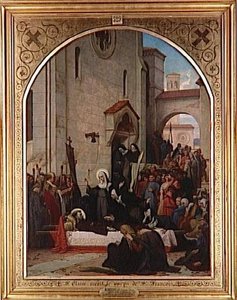
François Léon Benouville : Un pionnier du romantisme néoclassique
François Léon Benouville (1821 – 1859) s'impose comme une figure majeure de l'histoire de l'art français, jetant un pont entre l'idéalisme néoclassique et l'esprit romantique alors en pleine effervescence. Né à Paris de Jean-Achille Benouville, lui-même sculpteur, il a hérité d'une lignée artistique imprégnée de tradition, tout en possédant un talent remarquable pour capturer à la fois la grandeur et l'intimité — une dualité qui caractérise toute son œuvre. Sa formation initiale sous l'égide de François-Édouard Picot lui a inculqué une compréhension fondamentale des principes classiques, tandis que ses études simultanées avec son frère ont consolidé leur esprit de collaboration et élargi leurs horizons artistiques.
Jeunesse et éducation : Les années formatrices de Benouville furent marquées par une exposition à des sculpteurs influents tels que Jean-Achille Benouville et François-Édouard Picot, façonnant sa sensibilité esthétique dès son plus jeune âge. L'obtention du prestigieux Prix de Rome en 1845 s'est révélée déterminante, le propulsant vers Rome où il s'est immergé dans la ferveur artistique de l'époque et a puisé son inspiration dans l'Antiquité.
Influences romaines : Son séjour à Rome a profondément marqué la vision artistique de Benouville. À l'instar de son frère Jean-Achiente, il s'est approprié l'iconographie chrétienne et a exploré des thèmes ancrés dans la mythologie classique — un mélange stylistique qui allait définir une grande partie de ses travaux ultérieurs. La Villa Médicis a servi de creuset à l'expérimentation et à l'engagement intellectuel, favorisant des liens avec d'autres artistes de renom comme Alexandre Cabanel.
Style et technique : Conjuguer la grandeur néoclassique et l'émotion romantique
Le style artistique de Benouville se caractérise par une attention méticuleuse aux détails alliée à une touche expressive — marque de fabrique de la tradition néoclassique tempérée par des sensibilités romantiques. Travaillant principalement l'huile, l'encre et la craie, il excellait dans la représentation de récits bibliques et de scènes mythologiques avec une précision remarquable et une profondeur émotionnelle saisissante. Ses compositions mettaient souvent en scène des figures monumentales aux formes idéalisées, reflétant l'influence de David et d'Ingres, tout en étant imprégnées d'un sentiment palpable transmis par des jeux d'ombres nuancés et un éclairage dramatique — des techniques qui le distinguaient nettement de ses contemporains.
Racines néoclassiques : L'adhésion de Benouville aux idéaux néoclassiques est manifeste dans des œuvres telles que « Jésus au Prétoire », où il recrée méticuleusement des scènes bibliques avec des proportions classiques et une musculature idéalisée.
Expression romantique : Simultanément, il a su capturer l'essence émotionnelle de ses sujets, comme en témoignent « La Colère d'Achille » et « Les Martyrs chrétiens entrant dans l'amphithéâtre », où des coups de pinceau dynamiques expriment l'urgence et le pathos.
Œuvres notables et accomplissements
La production artistique de Benouville englobe une gamme diversifiée de sujets, témoignant de sa polyvalence et de son ambition. Parmi ses peintures les plus célèbres figurent « Jésus au Prétoire », « Sainte Claire recevant le corps de Saint François d'Assise » et « Les Deux Pigeons ». Ces pièces illustrent sa maîtrise technique et sa capacité à susciter des réponses émotionnelles profondes chez le spectateur. Son portrait de Paul Baudry, un confrère peintre, démontre son talent pour saisir la nuance psychologique — un véritable témoignage de sa sensibilité artistique.
Reconnaissance par le Prix des Beaux-Arts : Il a partagé le prix des Beaux-Arts avec Alexandre Cabanel en 1845 pour « Jésus au Prétoire », marquant une réussite significative qui l'a établi comme l'un des artistes français de premier plan de son époque.
Héritage et importance historique
La contribution de François Léon Benouville à l'art français dépasse les simples chefs-d'œuvre individuels ; il représente un lien crucial entre deux mouvements artistiques — le néoclassicisme et le romantisme. Son œuvre incarne les idéaux d'ordre, de raison et de beauté prônés par le néoclassicisme, tout en embrassant simultanément la puissance expressive et l'intensité émotionnelle caractéristiques du romantisme. Il demeure un artiste dont l'imagerie évocatrice continue de résonner auprès du public aujourd'hui, assurant sa place de figure pivot dans le paysage artistique du milieu du XIXe siècle. Son exploration des thèmes orientalistes a, par ailleurs, élargi l'influence de l'art français à l'échelle internationale.
Par la rédaction de OriginalUniqueArt.com
Quiz d'art
Chaque question ne comporte qu'une seule bonne réponse.
Question 1:
Quel mouvement artistique est principalement associé à François Léon Benouville ?
Question 2:
En quelle année Benouville reçut-il la bourse du Prix de Rome ?
Question 3:
Avec qui Benouville collabora sur un projet pictural notable, « Jésus au Prétoire » ?
Question 4:
Avec quel artiste Benouville étudiait-il conjointement dans le studio de Jean-Achille Benouville ?
Question 5:
Quel était un sujet abordé avec succès par François Léon Benouville ?
Discover the captivating realist paintings of Léon Augustin L'Hermitte, masterfully depicting French rural life. Explore his technique, influences & legacy – a cornerstone of 19th-century art.
Explore the captivating world of Jean-Léon Gérôme, a master of 19th-century academic painting & orientalism. Discover his historical works, artistic techniques, and lasting influence on art history.
Explore the captivating works of François Flameng, a celebrated French painter bridging academic tradition & Impressionistic sensibilities. Discover his portraits, landscapes, and poignant WWI art with insights from OriginalUniqueArt.
OAssistant du studioEn ligne · répond en une minute
Bonjour ! Je peux vous aider à choisir une œuvre d'art, à suivre une commande ou à répondre à vos questions sur la garantie. Comment puis-je vous aider ?