Menu
CONSEIL EN ART GRATUIT

Felix Stone Moscheles

1833 - 1917

Informations clés

  • Top 3 works:
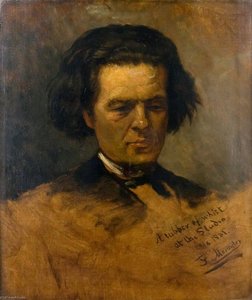
    • 'A rubber of whist at the studio' (Anton Rubinstein, 1829–1894)
    • Sir George Henschel (1850–1934)
    • Eliza Crawshay, née Yeates, with Her Son Edwin
  • Museums on APS:
    • Conservatoire Royal de Musique
    • Conservatoire Royal de Musique
    • Mary Ward Centre
    • Mary Ward Centre
    • Mary Ward Centre
  • Lifespan: 84 years
  • Works on APS: 8
  • Born: 1833, Angleterre
  • Plus…

Quiz d'art

Chaque question ne comporte qu'une seule bonne réponse.

Question 1:
Quel était le père de Felix Moscheles connu pour ?
Question 2:
Où Felix Moscheles suivait-il ses études ?
Question 3:
Quel rôle Felix Moscheles jouait-il dans la promotion de la paix ?
Question 4:
Felix Moscheles défendait quelle langue pour la communication internationale ?
Question 5:
Dans quelle ville est né Felix Moscheles ?

Felix Stone Moscheles: A Painter of Peace and Impressionistic Portraits

Felix Stone Moscheles (1833–1917) stands as a fascinating figure in Victorian art, blending artistic talent with unwavering advocacy for peace and international cooperation. Born in London to the renowned pianist Ignaz Moscheles and Margaret Moscheles—a fellow artist—his upbringing instilled within him a deep appreciation for both musical creativity and visual expression. His godfather, composer Felix Mendelssohn, further cemented his connection to the artistic world, shaping his formative years and fostering an enduring passion for art. Moscheles’ formal education began at St. Thomas School before progressing to studies at Slade School of Fine Art in London, where he honed his skills under influential instructors like Frederic Leighton. This training allowed him to develop a distinctive style characterized by meticulous realism combined with the expressive brushwork emblematic of Impressionism. He excelled particularly in genre scenes depicting everyday life and portraits capturing nuanced psychological characterizations—subjects that resonated deeply with Victorian sensibilities. Rubinstein’s influence on Moscheles’ technique is palpable, evident in works like “A Rubber of Whist at the Studio,” where vibrant color palettes convey a sense of leisure and artistic contemplation. His artistic output spanned across Europe, including exhibitions in Paris, Antwerp, and London, showcasing his ability to convey emotion and atmosphere through color and texture. Moscheles’ paintings often explored themes of domestic tranquility and familial affection, reflecting the values prevalent during his era. He meticulously captured moments of intimacy and connection—a hallmark of Impressionistic portraiture—demonstrating a profound understanding of human psychology. Beyond his artistic pursuits, Moscheles was deeply committed to humanitarian causes. Recognizing the urgent need for global understanding and conflict resolution, he became one of the founding members of the London Esperanto Club in 1903, championing the idealistic vision of a universal language fostering intercultural dialogue. He firmly believed that Esperanto could serve as a catalyst for peaceful communication between nations—a conviction rooted in his lifelong dedication to arbitration and diplomacy. Furthermore, Moscheles served as president of the International Peace Bureau in Bern, actively participating in discussions on conflict prevention and advocating for collaborative solutions. His involvement extended to The Hague Peace Conferences where he championed the establishment of an international court—a testament to his unwavering commitment to upholding justice and safeguarding human rights. His legacy extends beyond individual artworks; Moscheles’ dedication to peace activism cemented his place as a significant voice during the Progressive Era. Collaborating with Henry Mayers Hyndman, a socialist leader, he contributed to shaping discussions on international relations and advocating for social justice. Finally, exploring Musée Félix Ziem in Martigues offers insight into the broader artistic landscape of Provence—a celebration of Fauvist art alongside Ziem’s own oeuvre—providing visitors with a richer understanding of Moscheles' time and context. Visiting San Felice, Florence – Italy’s Renaissance treasure! Admire Giotto frescoes & Dominican history near Pitti Palace. Immerse yourself in authentic Florentine art & culture.