
1


Mis à jour en novembre 2026 · classé selon notre score de popularité (recherches, visites et commandes pour chaque œuvre) · 2 œuvres de Eduard Daege dans notre catalogue
En bref
The invention of painting (1832) est la peinture de Eduard Daege qui attire le plus les regards ; l'original appartient au Alte Nationalgalerie, Berlin. Parmi les 2 œuvres de Eduard Daege dans notre catalogue, voici les 1 plus célèbres, chacune étant une œuvre originale unique présentée avec son année, son musée et la raison de sa pérennité.
Le musée qui détient le plus grand nombre de peintures figurant sur cette page.
| Musées | Ville | Œuvres de Eduard Daege | Peintures de cette liste |
|---|---|---|---|
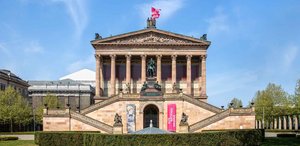 Alte Nationalgalerie |
Berlin | 1 | The invention of painting |
Tous les originaux datés de Eduard Daege présentés ici appartiennent à une seule et même année, 1832 : ils sont classés par ordre de notoriété.
Choisissez une année pour voir les œuvres originales.
The invention of painting (1832)
27 ans : The invention of painting date de 1832, et Eduard Daege est né(e) en 1805.
Notre catalogue comprend 2 œuvres de Eduard Daege.
Principalement dans Alte Nationalgalerie (Berlin). Le tableau des musées ci-dessus les répertorie tous.
In the heart of nineteenth-century Berlin, a period defined by burgeoning national identity and architectural splendor, lived Eduard Wilhelm Daege. Born in 1805, Daege was not merely a painter but a central figure in the institutional fabric of German art. His life unfolded within the prestigious halls of the Prussian Academy of Art, an institution where he would eventually leave an indelible mark as both a student and a master. From his early years, Daege demonstrated a profound connection to the classical traditions that anchored the era, studying under the esteemed Johann Gottfried Niedlich and later the court painter Karl Wilhelm Wach. This rigorous academic foundation allowed him to navigate the delicate balance between the strictures of tradition and the evolving romantic sensibilities of his time.
Daege’s artistic journey was marked by a deep engagement with the physical spaces of his era. His hands were involved in the very skin of Berlin's most iconic landmarks; he may have contributed to the breathtaking frescoes of Karl Friedrich Schinkel’s Schauspielhaus at the Gendarmenmarkt, an achievement that placed him at the intersection of fine art and monumental architecture. This period of his life was characterized by a pursuit of light and narrative, a passion that led him on a transformative study trip to Rome and Naples alongside Karl Eduard Biermann between 1832 and 1833. The warmth of the Italian sun and the weight of classical antiquity undoubtedly enriched his palette and deepened his understanding of allegorical storytelling.
As his career matured, Daege transitioned from a rising talent to a pillar of the artistic establishment. His technical prowess was most visible in his large-scale commissions, where he utilized oil on canvas to breathe life into sacred and historical narratives. His work at the Stadtschlosses, particularly the Nativity and the Adoration of the Shepherds, showcased a mastery of religious iconography that resonated with the spiritual zeitgeist of mid-century Prussia. Furthermore, his allegorical murals in the north dome-hall of the Neues Museum—depicting Rome, Jerusalem, Constantinople, and Aachen—served as a visual testament to the historical continuity and cultural aspirations of the German people.
Beyond the canvas, Daege’s influence was institutional and far-reaching. His ascent through the ranks of the Prussian Academy was nothing short of meteoric:
When Daege passed away in Berlin in 1883, he left behind a landscape forever altered by his stewardship. He was an artist who understood that art does not exist in a vacuum but is woven into the very architecture and governance of a nation. Through his murals, his teaching, and his administrative vision, Eduard Daege ensured that the grandeur of the Prussian tradition would be preserved for posterity, cementing his place as a true custodian of German cultural heritage.