


1


Mis à jour en novembre 2026 · classé selon notre score de popularité (recherches, visites et commandes pour chaque œuvre) · 4 œuvres de Ditlev Martens dans notre catalogue
En bref
Pave Leo Xll aflægger besøg i Thorvaldsens værksteder ved Piazza Barberini, 18. oktober 1826 (1828) est la peinture de Ditlev Martens qui attire le plus les regards ; l'original appartient au Statens Museum for Kunst, Copenhague. Ensuite, le regard se porte sur Det indre af Roskilde Domkirke (1824) et Christiansborg Slots vestibule (1829). Parmi les 4 œuvres de Ditlev Martens dans notre catalogue, voici les 4 plus célèbres, chacune étant une œuvre originale unique présentée avec son année, son musée et la raison de sa pérennité.


Les 2 musées qui détiennent la plupart des peintures de cette page.
| Musées | Ville | Œuvres de Ditlev Martens | Peintures de cette liste |
|---|---|---|---|
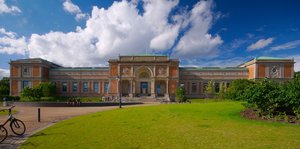 Statens Museum for Kunst |
Copenhague | 3 | Pave Leo Xll aflægger besøg i Thorvaldsens værksteder ved Piazza Barberini, 18. oktober 1826, Det indre af Roskilde Domkirke, Christiansborg Slots vestibule |
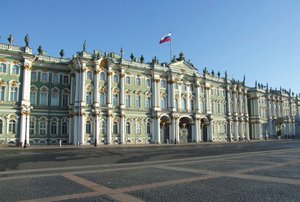 Musée de l'Ermitage |
Saint-Pétersbourg | 1 | The Great Fire of Hamburg on May 5, 1842 |
Une longue carrière de 19 ans, de 1824 à 1842 : les œuvres originales les plus célèbres de Ditlev Martens, présentées année après année.
Choisissez une année pour voir les œuvres originales.
Pave Leo Xll aflægger besøg i Thorvaldsens værksteder ved Piazza Barberini, 18. oktober 1826 (1828), Statens Museum for Kunst, Copenhague. Suivus de Det indre af Roskilde Domkirke (1824) et Christiansborg Slots vestibule (1829).
33 ans : Pave Leo Xll aflægger besøg i Thorvaldsens værksteder ved Piazza Barberini, 18. oktober 1826 date de 1828, et Ditlev Martens est né(e) en 1795.
Notre catalogue comprend 4 œuvres de Ditlev Martens, datées de 1824 à 1842.
Principalement dans Statens Museum for Kunst (Copenhague) et Musée de l'Ermitage (Saint-Pétersbourg). Le tableau des musées ci-dessus les répertorie tous.
Sur cette page, la plus ancienne date de Det indre af Roskilde Domkirke (1824) et la plus récente de The Great Fire of Hamburg on May 5, 1842 (1842).
Pave Leo Xll aflægger besøg i Thorvaldsens værksteder ved Piazza Barberini, 18. oktober 1826, Det indre af Roskilde Domkirke et Christiansborg Slots vestibule : le Statens Museum for Kunst, Copenhague détient 3 des œuvres de cette page.
In the grand tapestry of nineteenth-century European art, few threads are as poignant and bittersweet as that of Hans Ditlev Christian Martens. A Danish-German painter whose life spanned the turbulent decades from 1795 to 1864, Martens embodied the romantic spirit of a traveler, capturing the quiet majesty of sacred spaces and the sun-drenched stillness of Italian vistas. Born in Kiel, his early artistic identity was forged through rigorous training, moving from the foundational lessons in his hometown to the prestigious halls of the Copenhagen Academy of Fine Arts. There, under the watchful eye of the legendary C.W. Eckersberg, Martens absorbed the principles of precision and light that would become the hallmark of his vision.
The true metamorphosis of his style occurred when he ventured toward the warmth of the Mediterranean. Arriving in Rome in late 1825, Martens found himself a stranger in a magnificent land, initially lacking the financial means to sustain his artistic pursuits. Yet, it was precisely this vulnerability that led to one of the most significant encounters of his career: his connection with the great sculptor Bertel Thorvaldsen. This mentorship provided more than just survival; it offered Martens a window into the heart of Roman antiquity. His early sketches of Thorvaldsen’s studio, documenting the momentous visit of the Pope, serve as a testament to his ability to weave historical gravity with intimate, observational detail.
Martens possessed a singular gift for vedute—the art of topographical painting—and an even deeper fascination with the architectural soul of Rome. He did not merely paint buildings; he painted the atmosphere contained within them. His canvases often focused on the profound stillness found in the interiors of Roman churches and monasteries, where light filters through ancient stone to create a sense of divine presence. Whether capturing the Kreuzgang von S. Giovanni in Laterano or the solemnity of the Church of Santa Maria in Ara Coeli, his work reflects a meticulous devotion to the interplay of shadow and illumination.
His technical development was characterized by a seamless blend of German precision and Danish clarity, influenced heavily by the academic rigor of his training. His repertoire expanded beyond architectural studies to include evocative portraits and landscapes that breathed with life. During his prolific period in Hamburg between 1837 and 1842, Martens achieved a level of commercial success that brought him significant wealth, allowing him to flourish as a sought-after painter of the era. His ability to translate the grandeur of classical spaces into the intimate language of oil on canvas allowed him to capture the very essence of the Grand Tour experience for his contemporaries.
The trajectory of Martens’ life, much like the dramatic lighting in his paintings, was marked by sudden shifts and profound shadows. The devastating fire of Hamburg in 1842, which destroyed his home and much of his accumulated wealth, served as a tragic turning point. This loss forced a retreat toward Copenhagen, where he sought refuge in the company of fellow artists like N.P. Holbech. While he continued to work, decorating interiors and maintaining his artistic output, the vibrant prosperity of his Hamburg years had faded into a more somber reality.
In his final years, Martens returned to his roots in Kiel, where he eventually passed away in 1864. Though he left the world in poverty, his legacy remains etched in the silent corridors of the museums that house his work today. His historical significance lies in his role as a bridge between the disciplined academicism of the early nineteenth century and the more emotive, atmospheric sensibilities of the later Romantic period. Through his eyes, we continue to witness the enduring majesty of Rome and the quiet, sacred beauty of the spaces that time has touched.