L'Héritage Lumineux de Corrado Giaquinto
Dans la grande tapisserie de l'art européen du XVIIIe siècle, peu de fils brillent avec autant de grâce et de lumière éthérée que ceux tissés par Corrado Giaquinto. Véritable maître de l'ère Rococo, Giaquinto possédait une capacité rare à jeter un pont entre les ombres lourdes et dramatiques du Baroque napolitain et l'élégance aérienne et pastel qui allait définir l'esthétique du milieu du siècle. Né à Molfetta, en Italie, en 1703, son parcours, d'apprenti provincial à l'un des peintres les plus convoités d'Europe, témoigne d'un talent capable d'harmoniser le monumental et le délicat.
L'ADN artistique de Giaquinto s'est formé au sein des prestigieux ateliers de Naples, où il apprit d'abord la rigueur de l'artisanat sous la direction de Saverio Porta. Cependant, c'est son immersion dans l'atelier de Francesco Solimena qui lui apporta une maîtrise fondamentale de la grandeur théâtrale et du réalisme méticuleux. Sous l'œil attentif de Solimena, Giaquinto absorba la gravité de la tradition baroque, apprenant à commander l'espace et à utiliser la lumière pour évoquer une profonde dévotion religieuse. Pourtant, le jeune artiste ne se contenta jamais de rester dans l'ombre de son mentor ; il possédait une soif d'ailleurs innée qui le poussa vers de nouveaux horizons.
Le mouvement de son âme vers Rome en 1723 marqua une ère transformative dans son développement. Dans la scène artistique romaine si vibrante, Giaquinto rencontra l'influence fougueuse de Luca Giordano et l'élégance raffinée de Sebastiano Conca. Tandis que Solimena lui avait enseigné la structure et le poids, Giordano lui offrit une vision de dynamisme expressif et d'intensité émotionnelle. Cette rencontre permit à Giaquinto d'adoucir sa palette, introduisant une qualité lumineuse, presque translucide, à son coup de pinceau qui deviendrait sa signature. Il commença à s'éloigner des tons sombres du siècle précédent, adoptant une approche de la composition plus lumineuse et rythmique, insufflant la vie à chaque toile.
Une Carrière de Grandeur et de Dévotion
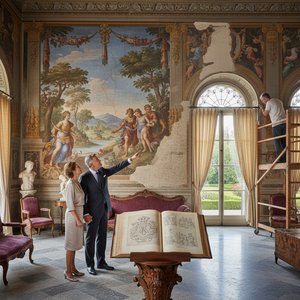
À mesure que sa réputation s'élevait, l'œuvre de Giaquinto transcenda les frontières, l'amenant à entreprendre certaines des commandes les plus prestigieuses de son époque. Son talent de décorateur et de conteur s'est réalisé avec le plus de force dans ses fresques monumentales, où il transforma des espaces architecturaux en visions célestes. Les œuvres époustouflantes qui ornent San Lorenzo in Damaso et Santa Croce in Gerusalemme témoignent de sa capacité à manipuler l'échelle et la lumière, créant des environnements immersifs qui élèvent le spectateur vers le divin.
Ses accomplissements ne se limitèrent pas à la péninsule italienne ; son art résonna profondément dans les cours d'Europe. L'un de ses triomphes les plus célèbres fut la création du retable de Saint Jean Nepomucène pour la basilique Sainte-Marie-Majeure à Prague. Cette œuvre, ainsi que ses divers engagements internationaux, a consolidé son statut de figure paneuropéenne capable de parler le langage universel de la beauté et de la foi. Par son pinceau, les textures lourdes du Baroque furent transmuées en traits légers et dansants du Rococo, laissant derrière lui un héritage qui continue d'enchanter ceux qui cherchent le sublime dans l'art.
L'importance historique de Corrado Giaquinto réside dans son rôle de pont stylistique. Il ne s'est pas contenté de suivre les tendances ; il les a synthétisées. En fusionnant les éléments suivants, il a créé un langage esthétique unique :
- Le Fondement de Solimena : L'intégrité structurelle et le poids dramatique de la tradition napolitaine.
- La Vitalité de Giordano : Une infusion de mouvement, de rapidité et de spontanéité émotionnelle.
- La Luminosité Rococo : Une utilisation sophistiquée de la lumière et des tons pastels capturant l'élégance du XVIIIe siècle.