Menu

Charles François Lacroix de Marseille

1700 - 1782

En bref

  • Topics explored: scenes
  • Died: 1782
  • Copyright status: Public domain
  • Works on APS: 22
  • Top-ranked work: Portrait of Hannibal Camoux
  • Museums on APS: The National Trust For Scotland
  • En savoir plus…
  • Top 3 works:
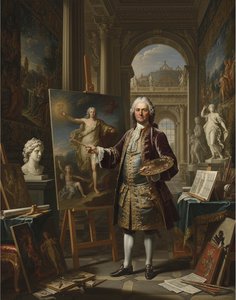
    • Portrait of Hannibal Camoux
    • A Wreck on a Rocky Coast
    • Marine, effet nocturne
  • Nationality: France
  • Art period: L'époque moderne
  • Born: 1700, France
  • Lifespan: 82 years

Early Life and Training

Charles François Lacroix de Marseille, a painter hailing from France, lived from 1700 to 1782, leaving behind an enigmatic legacy that sparks curiosity among art enthusiasts. Despite the scarcity of information regarding his formative years, his existence undeniably contributes to the rich tapestry of French artistic history. Precise details concerning his birth place and family background remain elusive, fueling speculation amongst historians. However, it is known that Lacroix’s artistic inclinations blossomed during his youth in Marseille, where he received an initial education focused on classical studies—a cornerstone for aspiring artists of the era. His training likely encompassed drawing techniques and anatomical observation, equipping him with foundational skills crucial for mastering the art of representation.

Artistic Style and Notable Works

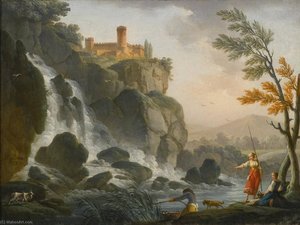
Unfortunately, due to the limited availability of Lacroix’s oeuvre, his artistic style is not comprehensively documented. Nevertheless, scholars infer that he was profoundly influenced by the prevailing artistic movements of 18th-century France—primarily Rococo and Neoclassicism—resulting in a distinctive visual language characterized by elegance, ornamentation, and meticulous attention to detail. Lacroix's paintings predominantly depict maritime scenes imbued with atmospheric effects—particularly nocturnes—capturing the drama of storms and the serene beauty of moonlit waters. His compositions often incorporate fantastical architectural elements alongside realistic depictions of ships and figures, reflecting a fascination with imaginative storytelling and artistic innovation. Among his most celebrated works are “Marine, effet nocturne,” a breathtaking panorama illuminated by moonlight, and “A Wreck on a Rocky Coast,” showcasing Lacroix’s masterful command of tonal gradation and textural rendering—demonstrating his commitment to capturing the essence of nature's grandeur.

Influences and Artistic Connections

Lacroix’s artistic trajectory was significantly shaped by collaborations with fellow artists who championed similar stylistic approaches. Notably, he engaged in close mentorship with Joseph Vernet, whose pioneering seascapes served as a guiding inspiration for Lacroix’s own artistic endeavors—establishing a lasting bond between two prominent figures of the French marine art tradition. Furthermore, Lacroix's formative years coincided with the ascendancy of Claude-Joseph Vernet, who instilled in him an unwavering dedication to portraying natural landscapes with unparalleled accuracy and emotional resonance. His stylistic choices mirrored those of Marco Ricci and Francesco Zuccarelli—artists whose imaginative architectural renderings and dramatic depictions of mythological subjects resonated deeply within Lacroix’s artistic sensibilities.

Major Achievements and Legacy

Lacroix de Marseille achieved considerable renown during his lifetime, securing commissions from aristocratic patrons and garnering acclaim for his captivating maritime paintings—solidifying his position as a leading artist of the Rococo period. His works were reproduced extensively in engravings by Jean Jacques Le Veau and Noël Le Mire, disseminating his artistic vision across France and beyond—contributing to the enduring legacy of Lacroix’s oeuvre. Today, Lacroix’s paintings reside in prestigious museums worldwide—including the Toledo Museum of Art and the National Museum, Stockholm—serving as tangible reminders of his contribution to French art history. His ability to convey both visual splendor and psychological depth distinguishes him as a pivotal artist whose stylistic innovations continue to inspire admiration and scholarly inquiry.

Historical Significance

Charles François Lacroix de Marseille stands as an emblem of artistic dynamism during the Enlightenment—a period marked by intellectual ferment and aesthetic experimentation. His embrace of Rococo’s decorative exuberance alongside Vernet's influence underscores the multifaceted currents shaping French art in the mid-18th century—reflecting a broader cultural preoccupation with grandeur, imagination, and the sublime beauty of nature. Lacroix’s artistic legacy persists as an exemplar of stylistic refinement and technical virtuosity—affirming his enduring significance within the annals of French art history.

Quiz d'art

Chaque question ne comporte qu'une seule bonne réponse.

Question 1:
Q1
Question 2:
Q2
Question 3:
Q3
Question 4:
Q4
Question 5:
Q5