Menu
CONSEIL EN ART GRATUIT

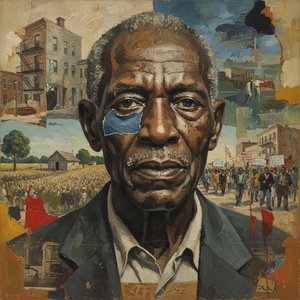
Carter G. Woodson

1875 - 1950

Informations clés

  • Lifespan: 75 years
  • Died: 1950
  • Works on APS: 1
  • Copyright status: Public domain
  • Born: 1875, États-Unis
  • Plus…
  • Art period: Moderne
  • Museums on APS:
    • Musée de l’histoire afro-américaine
    • Musée de l’histoire afro-américaine
    • Musée de l’histoire afro-américaine
    • Musée de l’histoire afro-américaine
    • Musée de l’histoire afro-américaine
  • Nationality: États-Unis
  • Top 3 works: Excerpt, The Negro History Bulletin, Vol. 1, No. 1
  • Top-ranked work: Excerpt, The Negro History Bulletin, Vol. 1, No. 1

Quiz d'art

Chaque question ne comporte qu'une seule bonne réponse.

Question 1:
Quel était le surnom attribué à Carter G. Woodson ?
Question 2:
Où Carter G. Woodson a-t-il obtenu son diplôme de doctorat ?
Question 3:
Quelle était la principale contribution de Carter G. Woodson au domaine de l'histoire ?
Question 4:
Dans quel état est né Carter G. Woodson ?
Question 5:
Quel rôle Carter G. Woodson jouait-il dans l'établissement de Black History Month ?

Carter G. Woodson: The Architect of Black History

Carter Godwin Woodson (December 19, 1875 – April 3, 1950) stands as a monumental figure in American intellectual history—recognized universally as “The Father of Black History.” His unwavering dedication to documenting and disseminating African American experiences fundamentally reshaped the understanding of U.S. history and cemented his place among the pioneers of civil rights advocacy. Born in Virginia’s New Canton, Woodson’s formative years were marked by hardship – his parents had been enslaved—yet he possessed an innate thirst for knowledge that propelled him toward extraordinary accomplishments despite considerable obstacles.

Early Life & Education: A Struggle For Knowledge

Carter Godwin Woodson's journey began amidst the realities of post-Reconstruction Virginia. Forced to interrupt his formal schooling due to labor demands in coal mines, he persevered through adversity, securing a diploma from Berea College—an institution founded by Quakers committed to educating African Americans—before embarking on his collegiate pursuits at the University of Chicago. This early experience instilled within him a profound appreciation for education and fueled his determination to overcome societal barriers that impeded Black advancement. He demonstrated exceptional aptitude in academics, completing his four-year course of study in less than two years, largely due to self-taught skills in reading, writing, and arithmetic—a testament to his unwavering resolve. Berea College’s Quaker ethos profoundly influenced Woodson's worldview, emphasizing moral responsibility and fostering a spirit of intellectual inquiry.

Academic Career & Doctorate: Breaking Barriers at Harvard

Woodson’s brilliance shone brightly during his time at Chicago, culminating in the attainment of a Ph.D. degree in 1912—a landmark achievement considering the pervasive discrimination faced by Black scholars at that era. This accomplishment underscored his commitment to rigorous scholarship and established him as one of the first African Americans to earn this prestigious credential from Harvard University—a feat that defied prevailing prejudices and symbolized triumph over systemic injustice. His dissertation, “The Disruption of Virginia,” meticulously examined the economic and constitutional history of Virginia from its founding as a colony to its dissolution in 1861, demonstrating his meticulous attention to detail and intellectual rigor. He was recognized by his professors for his honorable career and unwavering dedication to advancing knowledge—a beacon of inspiration for aspiring Black scholars.

The Birth of Negro History Week: Championing Recognition

Recognizing a critical void in American education—the systematic exclusion of Black history from curricula—Woodson spearheaded an initiative that would transform the landscape of historical awareness. In 1926, he initiated “Negro History Week,” which swiftly evolved into Black History Month, establishing February as a dedicated period for commemorating African American contributions to U.S. culture and society. Woodson’s vision was rooted in the belief that acknowledging Black history wasn't merely an act of remembrance but rather a crucial step toward fostering understanding and promoting social justice—a conviction that drove him to tirelessly advocate for educational reform. He meticulously selected February, honoring the birth months of Frederick Douglass and Abraham Lincoln—figures who championed racial equality and challenged societal prejudices—to maximize visibility and impact.

Legacy & Influence: Shaping American Consciousness

Carter G. Woodson’s influence extended far beyond his scholarly pursuits; he established *The Journal of Negro History* (now *The Journal of African American History*) in 1916—a pioneering publication that championed Black voices and perspectives—and created *The Negro History Bulletin* in 1937—further disseminating knowledge about Black heritage. He tirelessly worked to combat misinformation and prejudice, fostering a more inclusive understanding of American history. Woodson’s unwavering commitment to intellectual engagement with Black experience inspired generations of scholars and activists—solidifying his place as “The Father of Black History” and shaping the trajectory of civil rights advocacy for decades to come. His work continues to resonate today, reminding us of the importance of confronting injustice and celebrating diversity—a legacy that transcends time and embodies the transformative power of knowledge.