L'Architecte des Idéaux du Bauhaus : La Vie et l'Héritage de Carl Fieger
Dans la grande tapisserie du modernisme du début du XXe siècle, peu de figures incarnent l'intersection entre précision structurelle et vision sociale avec autant d'élégance que Carl Fieger. Né à Mayence, en Allemagne, en 1893, Fieger a émergé d'une période de profonde transformation artistique. Son voyage a débuté à l'École d'art et professionnelle de Mayence, une institution où il fut confronté pour la première fois aux courants florissants de l'Impressionnisme et du Jugendstil. Ces premières expositions aux formes organiques et aux palettes de couleurs expressives lui ont doté d'un socle esthétique sensible, pourtant, c'est son immersion ultérieure dans le monde rigoureux et fonctionnaliste du Bauhaus qui allait finalement définir sa portée historique.
La trajectoire de la carrière de Fieger fut irrévocablement transformée lorsqu'il entra dans l'orbite de Walter Gropius. Commençant son apprentissage en tant que dessinateur en 1912, Fieger devint une partie intégrante de l'atmosphère révolutionnaire de l'école du Bauhaus à Weimar. Sous le mentorat de Gropius, il s'éloigna des fioritures décoratives du passé pour se tourner vers un avenir défini par l'abstraction géométrique, l'expérimentation des matériaux et la conviction radicale que l'art devait servir une fonction utilitaire dans la vie quotidienne. Cette période ne fut pas seulement un terrain de formation professionnelle, mais un véritable éveil philosophique, où Fieger apprit à percevoir l'architecture comme un outil de progrès social.
Maîtrise de la Forme et Vision Fonctionnaliste
L'œuvre de Fieger se caractérise par une capacité extraordinaire à traduire des théories architecturales complexes en conceptions tangibles, centrées sur l'humain. Ses collaborations avec Gropius sur des projets monumentaux — tels que la Usine Fagus et l'emblématique Bâtiment du Bauhaus à Dessau — démontrent sa maîtrise des techniques de construction modernes, notamment l'utilisation innovante de l'acier tubulaire et du verre. À travers ces œuvres, Fieger a aidé à faire émerger un langage visuel qui célébrait la beauté des matériaux industriels et l'efficacité de l'ingénierie moderne.
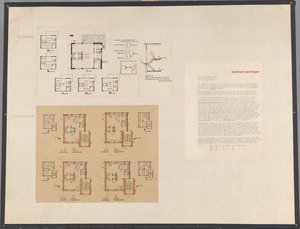
Au-delà des structures industrielles à grande échelle, le véritable génie de Fieger résidait souvent dans son approche intime de la domesticité. Il s'est profondément investi dans le concept d'Existenzminimum — l'idée de concevoir des espaces de vie minimaux et hautement efficaces qui ne sacrifiaient ni la dignité ni le confort. Ses projets notables incluent :
- Le Petit Appartement Idéal : Un concept architectural visionnaire développé pour l'Exposition allemande du bâtiment (Deutsche Bauausstellung) de 1931 à Berlin, qui mettait l'accent sur une circulation logique entre les pièces essentielles telles que la cuisine, le salon et la chambre.
- Plans d'étage adaptatifs : Des agencements détaillés utilisant des montages textuels et des éléments photographiques pour démontrer comment le mobilier et l'organisation spatiale pouvaient maximiser l'utilité au sein de surfaces urbaines limitées.
Une Empreinte Durable sur le Design Moderne
L'importance historique de Carl Fieger réside dans son rôle de pont entre l'expérimentation artistique de la fin du XIXe siècle et le fonctionnalisme discipliné de l'ère moderne. Son travail n'a jamais été uniquement question d'esthétique architecturale ; il s'agissait de l'expérience vécue à l'intérieur même du bâti. En privilégiant l'efficacité, la lumière et le mouvement, il a contribué à façonner le plan directeur de l'habitat urbain contemporain. Même lorsque les styles architecturaux ont évolué tout au long du milieu du XXe siècle, les principes de clarté et de finalité défendus par Fieger sont restés fondamentaux.
Bien que sa vie se soit achevée en 1960, les échos de son apprentissage au Bauhaus continuent de résonner dans les annales de l'histoire de l'architecture. À travers ses dessins méticuleux et ses concepts d'habitat révolutionnaires, Fieger demeure une figure essentielle pour quiconque cherche à comprendre comment le mariage de l'art et de l'artisanat peut fondamentalement remodeler le monde que nous habitons.
Questions et réponses
Comment trouver des œuvres de Carl Fieger par thème ?
Explorez les œuvres de Carl Fieger par mot-clé sur la page Par mots-clés de l'artiste. Chaque mot-clé regroupe les œuvres associées.
Où et en quelle année Carl Fieger est-il né ?
Carl Fieger est né à Mainz en 1893.
Combien d'œuvres de Carl Fieger sont disponibles à la consultation ?
Vous pouvez parcourir 20 œuvres œuvres de Carl Fieger sur la page Toutes les œuvres d'art.