Bartolomeo di Fruosino (1366 - 1441) : Un maître florentin de l'ombre et de la lumière
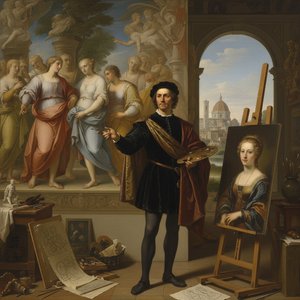
Bartolomeo di Fruosino, né à Florence vers 1366, s'impose comme une figure charnière de la scène artistique de la Renaissance florentine. Peintre dont le savoir-faire méticuleux et la compréhension profonde des idéaux humanistes ont scellé sa place parmi les artistes les plus célébrés de son époque, il laisse derrière lui une œuvre d'une rare intensité. Bien que les détails biographiques définitifs demeurent insaisissables en raison de récits divergents sur son âge (les estimations varient entre 61 et 64 ans), son dévouement inébranlable à l'excellence artistique est indéniable, façonnant un héritage qui continue d'inspirer l'admiration des siècles plus tard. Son frère, Giovanni Fruosino, était tout aussi accompli en tant que sculpteur, suggérant une tradition familiale de l'effort artistique au sein de l'influente guilde florentine de Saint-Luc.- Jeunesse et appartenance à la guilde : La formation formelle de Bartolomeo débuta en 1394 lorsqu'il rejoignit la guilde de Saint-Luc — institution fondamentale favorisant l'innovation artistique et le mécénat — sous la tutelle d'Agnolo Gaddi, un sculpteur renommé et membre de la même confrérie. Cette association lui offrit un accès inestimable au savoir artistique et établit des liens précieux au sein du paysage culturel vibrant de Florence.
- Œuvres commandées : La production prolifique de Fruosino est attestée par de nombreuses commandes entreprises au cours de sa vie, notamment sa participation au projet ambitieux de conception de la Cappella del Sacro Cingolo — la chapelle de la Sainte Ceinture — au sein de la cathédrale de Prato. Cette entreprise exigeait une compétence exceptionnelle et un effort collaboratif, illustrant la capacité de Fruosino à contribuer à des projets artistiques monumentaux.
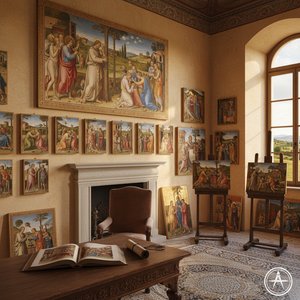
- L'Hôpital de Sainte-Marie : Entre 1402 et 1438, Bartolomeo bénéficia d'un mécénat substantiel de l'Hospitale Maggiore di San Marco — le plus grand hôpital de Florence — ce qui aboutit à une série de fresques éblouissantes ornant ses murs. Ces peintures illustrent la maîtrise de Fruosino en matière de perspective et de théorie des couleurs, reflétant la préoccupation humaniste pour le naturalisme tout en véhiculant de profonds thèmes spirituels.
Influences et style artistique
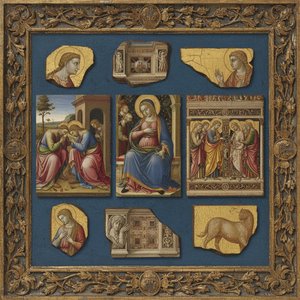
La vision artistique de Fruosino fut indéniablement façonnée par Lorenzo Monaco, un peintre humaniste florentin qui défendait les idéaux classiques et prônait une esthétique sobre, caractérisée par la clarté des formes et des palettes de couleurs lumineuses. Cette influence est particulièrement manifeste dans le travail d'enluminure de Fruosino, notamment dans le Missel de San Giorgio de 1421, où il employa avec brio des techniques rappelant le style de Monaco, privilégiant les subtiles gradations de tons et la contemplation spirituelle plutôt qu'une ornementation élaborée. Son attention méticuleuse aux détails et sa manipulation magistrale des pigments témoignent d'une profonde appréciation de la tradition artistique tout en repoussant simultanément les limites vers une expression innovante.Réalisations notables
La renommée durable de Bartolomeo di Fruosino repose sur sa contribution à l'histoire de l'art florentin, principalement à travers ses fresques monumentales au sein de l'Hôpital de Sainte-Marie, qui s'érigent comme des témoignages de l'excellence artistique de la Renaissance. De plus, son travail d'enluminure — en particulier le Missel de San Giorgio — représente un sommet de la peinture de manuscrit médiéval, affichant une virtuosité inégalée et transmettant une profonde signification spirituelle. Ses œuvres sont conservées dans des institutions prestigieuses telles que le Metropolitan Museum of Art, la Galleria dell’Accademia et la cathédrale San Marco, garantissant que l'héritage artistique de Fruosino continue de captiver les publics du monde entier.Héritage
L'influence de Bartolomeo di Fruosino s'étend bien au-delà de ses créations individuelles ; il fut un mentor et une source d'inspiration pour les générations suivantes d'artistes florentins. Son engagement indéfectible envers les principes humanistes, exprimé à travers son art, a contribué de manière significative à l'épanouissement de l'environnement intellectuel et artistique de la Renaissance, consolidant sa position parmi les plus grands maîtres de Florence et assurant sa place dans les annales de l'histoire de l'art occidental.Questions et réponses
Sous quels autres noms ou pseudonymes Bartolomeo di Fruosino est-il connu ?
Bartolomeo di Fruosino est également connu sous le nom de Bartolommeo di Fruosini.
Puis-je parcourir les œuvres de Bartolomeo di Fruosino par technique ?
Pour retrouver toutes les œuvres de Bartolomeo di Fruosino par technique, rendez-vous sur la page Par technique de l'artiste.
Combien d'œuvres de Bartolomeo di Fruosino sont disponibles à la consultation ?
Vous pouvez parcourir 6 œuvres œuvres de Bartolomeo di Fruosino sur la page Toutes les œuvres d'art.