Early Life and Training
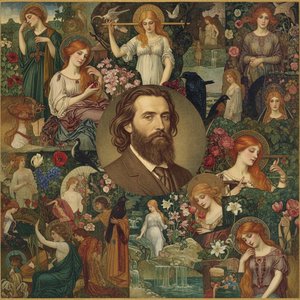
Arthur Hughes, born January 27, 1832, in Pimlico, London, embarked on his artistic journey at a young age. He enrolled at Somerset House Art School in 1846, where Alfred Stevens served as his initial mentor, shaping his foundational understanding of painting techniques. Subsequently, he pursued further studies at the Royal Academy Schools, forging connections with fellow artists John Everett Millais and Holman Hunt—individuals who would become pivotal figures in establishing the Pre-Raphaelite Brotherhood. This influential group championed a return to artistic ideals considered pure and truthful by their predecessors, rejecting academic conventions. Hughes’s early talent was evident from his debut painting, “Musidora,” which garnered acclaim at the Royal Academy when he was merely seventeen.Notable Works and Style
Hughes continued to exhibit regularly at the Royal Academy and Grosvenor Gallery throughout his career, consistently producing works that captivated audiences with their ethereal beauty. Among his most celebrated creations are "April Love" (1855) and “The Long Engagement” (1862), masterpieces that delve into themes of romantic longing and fleeting moments of joy—inspired directly by Millais’s earlier depiction of a couple. Hughes' artistic style was characterized by a distinctive blend of magical coloration and meticulous draughtsmanship, reflecting the Pre-Raphaelite ethos. He drew inspiration from writers like George Macdonald, illustrating several books for him, and produced prolific illustrations for Norman MacLeod’s “Good Words” magazine.Personal Life
In 1855, Hughes married Tryphena Foord, who served as his muse for "April Love." Their life together was marked by the birth of a daughter, Emily, whose untimely death in 1921 necessitated the heartbreaking disposal of Hughes’s preparatory sketches and private papers due to space constraints.Legacy and Artistic Output
Arthur Hughes left behind an impressive artistic legacy—approximately 700 paintings and drawings—a testament to his unwavering dedication to his craft. His works are housed in prominent museums worldwide, including Toledo Museum of Art (where “Ophelia” resides) and Victoria & Albert Museum. Hughes’s enduring influence can be seen in the stylistic innovations of subsequent artists and continues to inspire admiration for its evocative imagery and masterful execution.Further Exploration
To gain a deeper understanding of Hughes' artistic context, consider examining the timeline of art movements—specifically, Pre-Raphaelitism—which shaped his creative vision and established him as one of Britain’s foremost Romantic painters.Questions et réponses
Où puis-je trouver des statistiques sur les œuvres de Arthur Hughes ?
La page Statistiques de Arthur Hughes présente des statistiques calculées à partir des œuvres de l'artiste répertoriées sur ce site web.
Puis-je parcourir les œuvres de Arthur Hughes par mouvement ?
La page Tous les mouvements regroupe les œuvres de Arthur Hughes par mouvement artistique.
Comment puis-je trouver des œuvres de Arthur Hughes dans une palette spécifique ?
La page Par palettes regroupe les œuvres de Arthur Hughes par leurs palettes de couleurs.