Portrait de Anthon van Rappard

Peintures de Anthon van Rappard : les 10 plus célèbres, selon le regard d'une galerie

Mis à jour en novembre 2026 · classé selon notre score de popularité (recherches, visites et commandes pour chaque œuvre) · 10 œuvres de Anthon van Rappard dans notre catalogue

En bref

Aux yeux de la galerie, le tableau le plus célèbre de Anthon van Rappard est Weaver (1884), dont l'original est exposé au Musée Van Gogh, à Amsterdam. Portrait of a Girl (1884) et Woman at the Spinning Wheel (1891) complètent ce trio que tout le monde reconnaît. Parmi les 10 œuvres de Anthon van Rappard présentes dans notre catalogue, la galerie présente ci-dessous les 10 plus célèbres, chacune étant une œuvre originale avec son année, son musée et ce qui la rend unique.

1858 – 1892, Zeist Plus d'œuvres : Musée Boijmans Van Beuningen

Les 10 meilleures peintures de Anthon van Rappard de la galerie

1
Weaver (1884) de Anthon van Rappard

Weaver

1884 · Oil On Canvas · Musée Van Gogh, Amsterdam

In 1884, Anthon van Rappard turned his gaze toward the quiet, heavy shadows of Drenthe. The painting, Weaver, captures a man caught in the rhythmic, solitary labor of his craft. He sits within a small, dark house, dwarfed by the imposing wooden structure of a loom. The space is cramped and dim, a setting where the air feels thick with the dust of industry and the weight of poverty. It…

4
Vieille femme de Drenthe de Anthon van Rappard

Vieille femme de Drenthe

Peinture à l'huile · Musée Van Gogh, Amsterdam

Anthon van Rappard, né à Zeist aux Pays-Bas, a su capturer la quiétude d'une vie vécue dans l'observation. Dans son œuvre Vieille femme de Drenthe, l'artiste tourne son regard vers la réalité marquée par le temps de la forme humaine. Ce portrait à l'huile se concentre sur un sujet âgé, présentant un visage sculpté par le passage des années. Le sujet est figé dans un moment d'immobilité, sa présence ancrée…

Les musées qui conservent les œuvres originales de Anthon van Rappard

Les 3 musées qui détiennent la plupart des peintures de cette page.

Musées Ville Œuvres de Anthon van Rappard Peintures de cette liste
Musée Boijmans Van Beuningen, RotterdamMusée Boijmans Van Beuningen Rotterdam 5 Portrait of a Girl, Woman at the Spinning Wheel, Landing-stage with boats
Centraal Museum, UtrechtCentraal Museum Utrecht 3 Two Female Workers, Tile Painters, Washing strands of Cotton
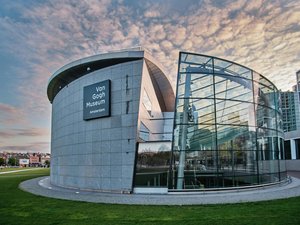
Musée Van Gogh, AmsterdamMusée Van Gogh Amsterdam 2 Weaver, Vieille femme de Drenthe

Anthon van Rappard, les œuvres emblématiques de chaque année

Une décennie, de 1882 à 1891, a suffi à Anthon van Rappard : la galerie les parcourt année après année, un chef-d'œuvre original après l'autre.

Œuvres par année

Choisissez une année pour voir les œuvres originales.

Les peintures de Anthon van Rappard : la galerie répond

Quelle est la peinture la plus célèbre de Anthon van Rappard ?Révéler la réponse

Weaver (1884), Musée Van Gogh, Amsterdam. Suivus de Portrait of a Girl (1884) et Woman at the Spinning Wheel (1891).

Quel âge avait Anthon van Rappard lors de la création de Weaver ?Révéler la réponse

26 ans : Weaver date de 1884, et Anthon van Rappard est né(e) en 1858.

Quelles sont les 10 plus grands tableaux de Anthon van Rappard ?Révéler la réponse

Weaver, Portrait of a Girl, Woman at the Spinning Wheel, Vieille femme de Drenthe, Two Female Workers, Tile Painters, Landing-stage with boats, Laborer in a brickworks, Cotton Weaver near his Machine et Washing strands of Cotton. Le classement ci-dessus indique l'année et le musée de chacun.

Combien d'œuvres Anthon van Rappard a-t-il créées ?Révéler la réponse

Notre catalogue comprend 10 œuvres de Anthon van Rappard, datées de 1882 à 1891.

Où sont exposées les œuvres originales les plus célèbres de Anthon van Rappard ?Révéler la réponse

Principalement dans Musée Boijmans Van Beuningen (Rotterdam), Centraal Museum (Utrecht) et Musée Van Gogh (Amsterdam). Le tableau des musées ci-dessus les répertorie tous.

Quand Anthon van Rappard a-t-il créé ses peintures les plus célèbres ?Révéler la réponse

En 1884 : 3 des 10 œuvres de cette page ont été créées à cette époque, dont Weaver.

Quelles sont les premières et les dernières œuvres célèbres de Anthon van Rappard ?Révéler la réponse

Sur cette page, la plus ancienne date de Tile Painters (1882) et la plus récente de Woman at the Spinning Wheel (1891).

Quelles œuvres originales de Anthon van Rappard le Musée Boijmans Van Beuningen détient-il ?Révéler la réponse

Portrait of a Girl, Woman at the Spinning Wheel et Landing-stage with boats : le Musée Boijmans Van Beuningen, Rotterdam détient 5 des œuvres de cette page.

Anthon van Rappard : l'artiste

A Life Near Utrecht

Anthon van Rappard lived through a period of quiet observation in the Netherlands. His life was closely tied to the city of Utrecht, where he found moments of deep connection with his surroundings. During the first half of the 1880s, he maintained a friendship and an exchange of letters with Vincent van Gogh. This connection placed him within a circle of individuals who were deeply engaged with the realities of their time.

His work often turned toward the lived experiences of those in his community. He spent time sketching at the Institute for the Blind in Utrecht, a place dedicated to teaching people how to earn a living through manual labor. In the autumn of 1882 and again around 1890, he returned to this setting to capture the steady rhythm of daily tasks.

The Art of Observation

Van Rappard had a way of looking at the small, focused movements of people at work. In his 1891 pastel, he documented three men engaged in the delicate process of making brushes. He watched as they fitted plant fibers into wooden handles with precise care. The scene included the simple tools of their trade, such as hammers and rolls of metal wire, laid out on a table.

There was a specific stillness in how he approached his subjects. In the same work, he depicted a bookkeeper at a tall desk, turned away from the craftsmen. This figure, wearing a faded black frock coat and spectacles, provided a quiet contrast to the physical labor occurring nearby. Through these sketches, Van Rappard recorded the atmosphere of an institution where people worked to find their place in society.