Le Corsaire de la Toile : La Vie et l'Héritage d'Ambroise Louis Garneray
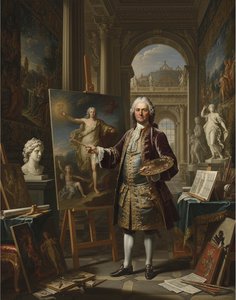
Ambroise Louis Garneray (1783–1857) était bien plus qu'un simple observateur de la mer ; il était un homme dont l'âme même fut forgée dans les embruns salés et la fumée des canons de l'ère napoléonienne. Né à Paris au sein d'une lignée artistique qui le liait, par son père, au prestigieux atelier de Jacques-Louis David, le destin de Garneray fut détourné des ateliers paisibles de France vers les horizons turbulents de la haute mer. Entré au service de la marine dès l'âge tendre de treize ans, ses premières années furent marquées par une immersion profonde dans la réalité maritime. Il n'était pas cet artiste qui étudiait les vagues depuis un rivage lointain ; il les vivait, naviguant entre les courants traîtres des guerres navales et les vastes étendues imprévisibles des océans du monde.
Sa vie fut une tapisserie d'aventures, de périls et d'une résilience inattendue. Jeune homme servant sous les ordres de commandants illustres tels que Sercey, Garneray fut le témoin de la mécanique brute du combat maritime et de la grandeur époustouflante des paysages océaniques. Cependant, son voyage fut également jalonné de profondes épreuves. Durant les guerres napoléoniennes, il subit des années d'emprisonnement à bord de hulques de prison de la Royal Navy. C'est au sein de ces espaces sombres et confinés que son esprit artistique connut une transformation remarquable. Plutôt que de succomber au désespoir, Garneray utilisa son enfermement comme un creuset pour sa créativité, affinant une technique qui allait finalement combler le fossé entre la documentation historique et l'expression romantique.
Un Maître du Romantisme Maritime
L'art de Garneray se caractérise par une capacité inégalée à capturer la double nature de l'océan : sa violence terrifiante et sa beauté sereine et sublime. Il s'imposa comme un pionnier de la peinture marine française, s'éloignant des compositions rigides et structurées du néoclassicisme pour tendre vers un style plus émotif et dynamique. Ses œuvres présentent souvent :
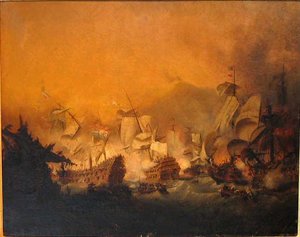
- Le drame du combat naval : Dans des chefs-d'œuvre tels que ses représentations de la bataille de Navarin, Garneray utilise des compositions chaotiques, des volutes de fumée et des éclairages dramatiques pour transmettre la terreur viscérale et l'échelle héroïque des engagements maritimes.
- Les paysages marins atmosphériques : Au-delà du champ de bataille, il possédait une sensibilité profonde à la lumière et à la météo, capable de rendre la lueur douce d'un coucher de soleil sur une plage normande ou l'approche menaçante d'une tempête avec un réalisme saisissant.
- Le récit historique : Ses peintures servent souvent de fenêtres sur une époque révolue, documentant les navires, les uniformes et les coutumes maritimes du début du XIXe siècle avec la précision d'un témoin oculaire.
Son coup de pinceau reflète une compréhension profonde du mouvement fluide, permettant au spectateur de ressentir le poids des coques et le mouvement rythmique de la houle. Cette maîtrise technique, combinée à sa connaissance directe de la vie maritime, confère à son travail une authenticité que peu de ses contemporains pouvaient répliquer.
Importance Historique et Influence Durable
L'importance d'Ambroise Louis Garneray réside dans son rôle de chroniqueur d'une époque définie par l'expansion maritime mondiale et les intenses conflits géopolitiques. Il ne se contentait pas de peindre des navires ; il peignait l'esprit d'un âge. À travers ses yeux, nous assistons à la transition entre les manœuvres disciplinées de l'ère de la voile et les paysages romantiques et émotionnels qui allaient définir une grande partie de l'art européen du XIXe siècle. Sa capacité à mêler la précision factuelle du marin à la vision poétique du peintre romantique a permis à son œuvre de rester à la fois historiquement vitale et esthétiquement captivante.
Aujourd'hui, l'héritage de Garneray continue de résonner par son impact profond sur le genre de l'art marin. Il demeure une figure fondatrice pour quiconque cherche à comprendre l'intersection entre l'histoire maritime et les beaux-arts. Ses peintures se dressent comme des monuments éternels au courage de ceux qui ont navigué vers l'inconnu, et à la brillance artistique d'un homme qui trouva sa plus grande inspiration au cœur même de la tempête.
Questions et réponses
Sous quels autres noms Ambroise Louis Garneray est-il/elle connu(e) ?
Ambroise Louis Garneray est également connu sous le nom de Auguste-Siméon Garneray, Hippolyte Jean-Baptiste Garneray.
Où puis-je voir les œuvres de Ambroise Louis Garneray par ordre chronologique ?
La page Chronologie des œuvres de l'artiste présente les œuvres de Ambroise Louis Garneray classées par date, année par année.
Comment puis-je voir toutes les œuvres créées par Ambroise Louis Garneray ?
Chaque œuvre de Ambroise Louis Garneray sur ce site web peut être consultée depuis la page Toutes les œuvres de l'artiste.