Some emotions do not demand an audience. They arrive without fanfare, settling beside us like a soft evening mist, leaving behind only the silence of an empty room or the weight of a meaningful goodbye. Melancholy is rarely a sharp, sudden sting; it is a slow, persistent presence. It is found in the space between two people, in a lowered gaze, or in the strange nostalgia for a moment we know can never be reclaimed. For those of us who find solace in the deliberate strokes of the masters, there is a profound grace in this quietude.
The history of art has often sought to capture this subtle tension. We see it in the way a figure sits lost in thought, or how a landscape seems to breathe with a heavy, unspoken longing. This is not the loud despair of tragedy, but a more intimate, reflective state of being. It invites us to pause and recognize that sadness, when viewed through the lens of careful composition and thoughtful color, can become a way to understand our own interior worlds.
Melancholy (Norwegian: Melankoli; also known as Jappe on the Beach, Jealousy or Evening) is a motif by the Norwegian painter Edvard Munch, which he executed in five paintings between 1891 and 1896 and two woodcuts between 1896 and 1902. It shows a ma...
To look upon the works of Edvard Munch is to encounter a specific, heavy kind of solitude. In his motif Melancholy, we find a man slumped on a rocky beach, his head propped in his hand—a posture as old as the classical tradition itself. He sits at the very edge of our vision, pushed into the corner of the frame, while in the distance, a couple drifts toward a yellow boat. There is a profound sense of being left behind, a feeling that the movement of life continues just out of reach, separated by a shoreline that feels both physical and psychological.
This sense of isolation finds an echo in the works of the earlier masters, where the landscape often mirrors the sitter's internal state. Just as Munch uses the snake-like blue-violet of the shoreline to ensnare his figure, we see in other eras how nature serves as a vehicle for mood. The tension between the two-dimensional forms and the illusion of depth creates a space where the viewer is forced to confront the stillness of the subject. It is a moment of profound introspection, where the external world and the internal landscape become indistently blurred.
The Impressionist Foundation: When Light Was No Longer Enough Capturing the Soul: The Most Emotionally Moving Impressionist and Post-Impressionist Masterpieces The Luminous Revolution: How Impressionism Redefined the Art of Seeing Impressionistic Lan...
Color possesses a vocabulary that words often lack. In the hands of the Post-Impressionists, color moved beyond mere description to become a tool for expressing the soul. We see this in the way Munch utilized a greenish-yellow haze to suggest jealousy, or how the black of the beach in his Melancholy serves as a symbolic expression of grief. These are not accidental choices; they are deliberate attempts to transfer emotion directly onto the canvas through the very pigment itself.
This evolution from the Impressionist focus on light to the Post-Impressionist focus on feeling is nowhere more evident than in the works of Vincent van Gogh. While his predecessors sought to capture the shimmering, transient moment of a sunbeam, Van Gogh used thick, textured impasto and intense, contrasting palettes to convey a more visceral reality. In his later years, the use of vibrant yellows against deep blues was not merely an optical experiment but a way to harmonize brutal extremes of emotion. The color becomes the emotion, heavy and tactile, much like the weight of a memory that refuses to fade.
The Stillness of Loss: From Shakespearean Tragedy to Modern Landscapes
There is a specific kind of beauty found in the surrender to sorrow. We see this in John Everett Millais’ Ophelia, where the tragic heroine floats among wildflowers. The painting does not depict the violence of her end, but rather the haunting stillness that surrounds it. Every flower—the violets for faithfulness, the poppies for death—is a silent note in a larger poem of loss. It is a moment of profound peace found within tragedy, a concept that resonates deeply with the more modern, stripped-back explorations of grief.
This connection between nature and mortality is echoed in the more structured investigations of Paul Cézanne. In works like La Douleur (Sorrow), the artist uses the figure of Mary Magdalene to explore pure anguish. The way her blue garment seems to bleed into the white of her clothing accentuates a sense of mourning that is both personal and universal. Whether through the lush, symbolic riverbanks of the Pre-Raphaelites or the geometric, heavy forms of Post-Impressionism, the tradition remains: we look to the stillness of the painted world to find language for our most difficult transitions.
Isolation Amidst the Crowd: The Weariness of the Urban Soul
The Transformation of the Gare d’Orsay The structure on the banks of the Seine began its life not as a sanctuary for paint and sculpture, but as a bustling terminal for the Chemin de Fer de Paris à Orléans. Built between 1898 and 1900 for the Exposit...
Melancholy can exist even in the presence of others; indeed, some of the most poignant depictions of loneliness occur in crowded spaces. Edgar Degas captured this beautifully in L’Absinthe, where a woman sits with a dejected posture, her arms drooping with self-pity. Beside her, a man smokes his pipe, looking elsewhere, a stranger to her isolation. The creamy, feverish yellows of the scene do not offer warmth, but rather highlight the psychological exhaustion of the urban experience.
This sense of being alone in a crowd finds its historical counterpart in the bustling terminals and social hubs of the nineteenth century. Just as the Gare d’Orsay was once a place of rhythmic movement and commerce, the paintings within it—and similar works in the Musée d'Orsay—capture the tension between the fleeting motion of the industrial age and the enduring stillness of the human spirit. The modern world moves with an incredible speed, yet the fundamental experience of loneliness remains unchanged, a quiet shadow following us through the brightly lit streets of our lives.
We return, inevitably, to the idea that melancholy is not something to be escaped, but something to be understood. It is a part of the human fabric, as essential as light or shadow. The works we have discussed—from the structured landscapes of Cézanne to the emotive swirls of Van Gogh—do not seek to provide answers or to cure sadness. Instead, they offer us a way to sit with it. They remind us that there is dignity in contemplation and beauty in the recognition of our own fragility.
In an age characterized by constant movement and digital noise, these paintings act as anchors. They invite us to slow our gaze and find meaning in the understated. Whether through a custom oil reproduction that brings the texture of a master's brushstroke into your own home or through the quiet study of a museum gallery, the pursuit of these deeper, more somber truths remains a vital part of the artistic experience. We look to the past not out of nostalgia, but because the shadows cast by the old masters still hold the light we need to see ourselves clearly.
At OriginalUniqueArt.com, we believe that art should be as enduring as the emotions it portrays. Our collection of hand-painted reproductions and custom commissions is dedicated to preserving this profound connection to the masters, allowing the quiet beauty of melancholy to reside within your own space for generations to come.
Plongez dans l'âme d'Edvard Munch à travers ses 25 chefs-d'œuvre les plus iconiques. De l'expressionnisme pur aux émotions vibrantes, explorez l'histoire de ces maîtres et trouvez l'inspiration pour votre décor avec nos reproductions de qualité musée sur OriginalUniqueArt.com.
Plongez dans l'âme d'Edvard Munch à travers ses 25 chefs-d'œuvre les plus iconiques. Explorez l'expressionnisme, entre anxiété et beauté pure. Retrouvez nos reproductions de qualité musée pour sublimer votre décor. Découvrez tous les chefs-d'œuvre sur OriginalUniqueArt.com.
Plongez dans l'âme d'Edvard Munch à travers ses 25 chefs-d'œuvre les plus iconiques. Explorez l'expressionnisme pur et trouvez l'inspiration pour vos décors avec nos reproductions de qualité musée. Découvrez tous ces chefs-d'œuvre sur OriginalUniqueArt.com.
Plongez dans l'univers intense d'Edvard Munch. Explorez nos 25 chefs-d'œuvre expressionnistes, entre anxiété et beauté pure. Trouvez l'inspiration pour votre décor avec nos reproductions de qualité musée sur OriginalUniqueArt.com. Découvrez toute la collection en ligne.
OAssistant du studioEn ligne · répond en une minute
Bonjour ! Je peux vous aider à choisir une œuvre d'art, à suivre une commande ou à répondre à vos questions sur la garantie. Que puis-je faire pour vous ?

 Melancholy (Munch)
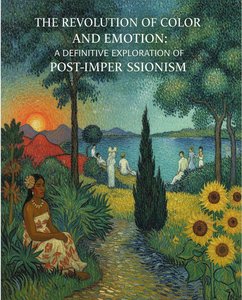 The Revolution of Color and Emotion: A Definitive Exploration of Post-Impressionism
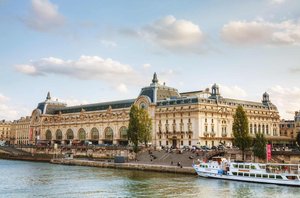 Musée d'Orsay


