

 Aperçu en situation
 Envoyer
 Partager
 Détails de l'œuvre

 Télécharger
 Articles similaires
 Radiographie
 Diaporama
 Statistiques
The reading girl


 Lire la suite
Reproduction à l'huile faite à la main
Huile sur toile peinte à la main, avec cadre et dimensions personnalisés, réalisée sur commande par nos artistes. ( Passer au format impression Passer à l'image numérique)




P118B $10

P118H $10

P118W $10

P438Z $10

P508JH $12

P508YH $12

P805H $10

P805Z $10

P919BZ $10

P919G $10

P919XJ $10

P959ZH $10

P968JZ $12

W106C $8

W218G $10

W218JH $8

W218Y $10

W307PJ $10

W316G $10

W316PJ $8

W316Y $10

W398PJ $8

W4111J $10

W500HY $15

W500JH $15

W692G $12

W849H $8

W940BG $15

W953PJ $8




Choisissez parmi nos formats prédéfinis qui respectent les proportions originales de l’œuvre.

Vous pouvez saisir vos propres dimensions pour l'adapter à un cadre ou à un espace spécifique. Si la taille sélectionnée ne correspond pas aux proportions de l'image d'origine, nous recadrerons l'œuvre ou prolongerons la peinture avec des éléments peints à la main supplémentaires. Une maquette numérique vous sera envoyée pour approbation avant le début de la production.
Veuillez noter que l'aperçu à l'écran ne reflète pas le recadrage ou l'extension réels. Seule la maquette montrera fidèlement la composition finale.
Bien que des tailles personnalisées soient disponibles, nous vous recommandons de sélectionner une dimension dans la liste prédéfinie afin de préserver les proportions d'origine.
Après la commande, l’équipe OriginalUniqueArt.com contactera le client par e-mail pour recueillir ses instructions et lui fournira une maquette d’aperçu
Livraison dans le monde entier () en 3 à 4 semaines au lieu des 5 semaines habituelles. (11 septembre). Aucun compromis sur la qualité.

Livraison express gratuite dans le monde entier

Toile de lin de haute qualité

Assurance transport complète

Garantie de remboursement des droits de douane

Garantie de fidélité des couleurs

Garantie de retour de 100 jours (uniquement en cas de défaut)

Garantie de remboursement à 100%

Tarifs dégressifs sur quantité
 L'option verre n'est disponible que pour les dimensions inférieures à 110 cm.

The reading girl
Technique de reproduction
Format de la reproduction
-


Prix total final
$ 300
A Moment of Quiet Introspection
In the soft, amber glow of a world captured in 1886, Théodore Roussel invites us into a sanctuary of profound stillness. The Reading Girl is not merely a portrait; it is an immersive experience of solitude and intellectual pursuit. At the heart of the composition sits a nude woman, her form rendered with a delicate balance of classical grace and raw vulnerability. She is lost in the pages of a book, her concentration so absolute that the surrounding world seems to fade into a mere whisper. This singular focus creates a magnetic pull for the viewer, drawing us into her private orbit where time itself appears to have paused.
The scene is rich with an atmospheric depth that speaks to the mastery of Roussel’s technique. While the central figure commands our attention, the artist subtly populates the periphery with life. A shadowy figure stands behind her, acting as a silent sentinel to her privacy, while another presence lingers in the distance, adding a layer of narrative mystery. The placement of everyday objects—the wooden backrest of her chair and the scattered handbags resting on the floor—grounds this ethereal moment in a tangible, domestic reality. These details suggest a lived-in space, a room where the echoes of daily movement have settled into a peaceful, scholarly quietude.
The Mastery of Light and Realism
Roussel, a self-taught artist who found his true voice later in life, utilizes light not just to illuminate, but to sculpt. In The Reading Girl, the dramatic interplay of light and shadow—often referred to as chiaroscuro—serves to emphasize the soft contours of the subject's skin against the darker, more textured elements of the room. The technique is a beautiful marriage of classical realism and a burgeoning interest in the symbolic depth found in late 19th-century works. Every brushstroke contributes to a sense of weight and texture, from the grain of the wooden chair to the heavy, silent air of the chamber.
For the discerning collector or interior designer, this piece offers an unparalleled emotional resonance. It possesses a quiet authority that can anchor a room, providing a focal point that encourages contemplation rather than mere observation. The painting’s palette, rich with earthy tones and warm highlights, makes it a versatile masterpiece for sophisticated spaces. Whether placed in a sunlit library or a moody, contemporary study, the artwork brings with it an aura of timeless elegance and a profound respect for the beauty found in life's most quiet, unobserved moments.
Biographie de l'artiste
A Late Bloomer’s Journey: The Life and Art of Théodore Roussel
Théodore Casimir Roussel, a name perhaps less instantly recognizable than some of his contemporaries, occupies a fascinating niche in the landscape of late 19th and early 20th-century art. Born in Orléans, France, in 1847, his path to becoming a painter was decidedly unconventional. Unlike artists who demonstrated precocious talent from youth, Roussel embarked on his artistic journey relatively late, around 1872, after fulfilling his military service. Entirely self-taught, he initially explored scenes of everyday life, grounding himself in the techniques of the Old Masters—a foundation that would later be brilliantly transformed by a unique and deeply personal vision. This early work, while skillful, lacked the distinctive voice that would eventually set him apart, hinting at the potential within but not yet revealing the artist he was destined to become.Early Influences and Artistic Foundations
Roussel’s formative years were marked by an unwavering fascination with the artistic heritage of Europe—particularly the landscapes of Claude Lorrain and Nicolas Poussin. These masters instilled in him a profound appreciation for idealized beauty, compositional balance, and the expressive power of light and shadow. Rejecting the prevailing trends of Impressionism, which prioritized fleeting impressions over meticulous observation, Roussel deliberately sought inspiration from the more contemplative traditions of Academic painting. This conscious decision to eschew the immediacy of Impressionism would prove crucial in shaping his distinctive artistic style—a style characterized by a deliberate restraint and an unwavering commitment to capturing the essence of nature with remarkable accuracy. He meticulously studied the brushstrokes and tonal gradations of the Old Masters, absorbing their techniques and mastering their expressive vocabulary.London’s Embrace: Whistler and Artistic Transformation
A pivotal moment arrived in 1878 when Roussel relocated to London—a move that irrevocably altered the trajectory of his artistic career. This cosmopolitan environment exposed him to new ideas and influences, fostering a dialogue with fellow artists who challenged his preconceptions. Among these encounters was arguably the most significant: his friendship with James McNeill Whistler. The Scottish painter’s aesthetic philosophy—centered on “harmony” and “suggestion”—deepened Roussel's understanding of art as an emotional experience rather than merely a visual representation. Whistler encouraged him to experiment with etching, advocating for a revolutionary technique that involved transferring images directly onto copper plates from nature—a method that prioritized spontaneity and luminosity while preserving the integrity of the original subject matter. This collaboration profoundly impacted Roussel’s artistic sensibilities, propelling him toward a “free etching” style—a stylistic hallmark that would define his oeuvre.“The Reading Girl”: Controversy and Critical Recognition
Roussel’s debut at the New English Art Club exhibition in 1887 with his monumental nude sculpture, *“The Reading Girl,”* immediately ignited controversy within London's artistic circles. Critics vehemently denounced it as “realism of the worst kind,” accusing Roussel of vulgarity and crudeness—a judgment that seemed to contradict the idealized beauty championed by Whistler and other prominent artists of the time. However, this initial backlash ultimately served as a catalyst for his career, attracting considerable attention from the press and bolstering his reputation within the art community. Sir William Orpen famously declared *“The Reading Girl”* the finest nude painting of its era—a testament to Roussel’s artistic prowess and an acknowledgement of the enduring power of his vision. The model for this daring work was Hetty Pettigrew, alongside her sisters Rose and Lily—all celebrated figures in London's art world who had posed for artists like Whistler, Holman Hunt, and Millais. This audacious undertaking demonstrated Roussel’s willingness to confront societal norms and push the boundaries of artistic expression.Landscapes of Tranquility: Etching and Atmospheric Impressionism
Following the success of *“The Reading Girl,”* Roussel devoted himself primarily to painting atmospheric landscapes—often depicting scenes along the River Thames—characterized by muted tones, loose brushwork, and an almost poetic sensitivity to light and mood. Simultaneously, he became a pioneer of color etching in England, skillfully blending Impressionistic techniques with his own distinctive style. He meticulously studied the interplay between light and shadow, capturing the subtle nuances of weather conditions and seasonal changes—a stylistic hallmark that reflected his profound connection to the natural world. Roussel’s etchings were distinguished by their remarkable precision and tonal subtlety, demonstrating a mastery of printmaking that rivaled the achievements of Rembrandt and Turner. He regularly exhibited at prestigious venues such as the Royal Society of British Artists and the Royal Scottish Academy—solidifying his position within the artistic establishment and securing recognition for his enduring contribution to landscape painting and etching technique. Roussel passed away in 1926, leaving behind a body of work that represents a compelling intersection of French and English artistic traditions—a legacy increasingly recognized for its originality, technical innovation, and enduring beauty.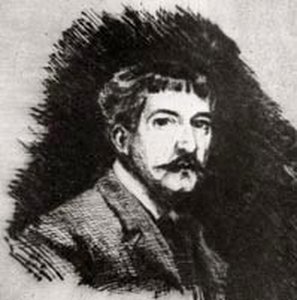
Théodore Roussel
1847 - 1926 , France
En bref
- Artistic Movement Or Style: Impressionnisme, Gravure en couleurs
- Artists Who Influenced This Artist: ['James McNeill Whistler']
- Date Of Birth: 1847
- Date Of Death: 1926
- Full Name: Théodore Casimir Roussel
- Nationality: Français-Anglais
- Notable Artworks:
- La Lecture
- Les Bois de Royat
- Le Puy de Dôme
- Place Of Birth: Lorient
Articles similaires

The Enduring Allure of the Nude: A Historical & Artistic Exploration of the Human Form
Explore the captivating history of nude art! Discover iconic paintings & artists from classical to modern eras. Uncover symbolism, techniques & find museum-quality reproductions at OriginalUniqueArt.

L'Huile sur Toile : Exploration Historique et Technique d'un Médium Artistique Intemporel
Explorez l'histoire fascinante de la peinture à l'huile, des techniques ancestrales aux maîtres flamands comme Van Eyck. Découvrez les secrets des pigments, liants et glacis pour comprendre cet art intemporel.

The Enduring Power of Painting: A Historical & Contemporary Exploration of Form and Emotion
Explore the rich history & enduring techniques of oil painting with OriginalUniqueArt. Discover masterpieces, learn about art collecting, and find authentic handmade reproductions crafted by skilled artists.

The Enduring Legacy of Oil on Canvas: Technique, History & Aesthetic Impact
Explore the rich history & techniques of oil painting – from Renaissance masters to Impressionism. Discover pigments, layering methods, and why this timeless medium endures. Expert insights for artists & art enthusiasts.

10 chefs-d'œuvre du Réalisme Romantique qui capturent l'âme humaine
Plongez dans l'émotion du Réalisme Romantique. Explorez 10 chefs-d'œuvre iconiques, de Constable à Homer, mêlant vérité et passion. Trouvez l'inspiration pour votre décor avec nos reproductions de qualité musée sur OriginalUniqueArt.com. Découvrez toute la collection en ligne.