
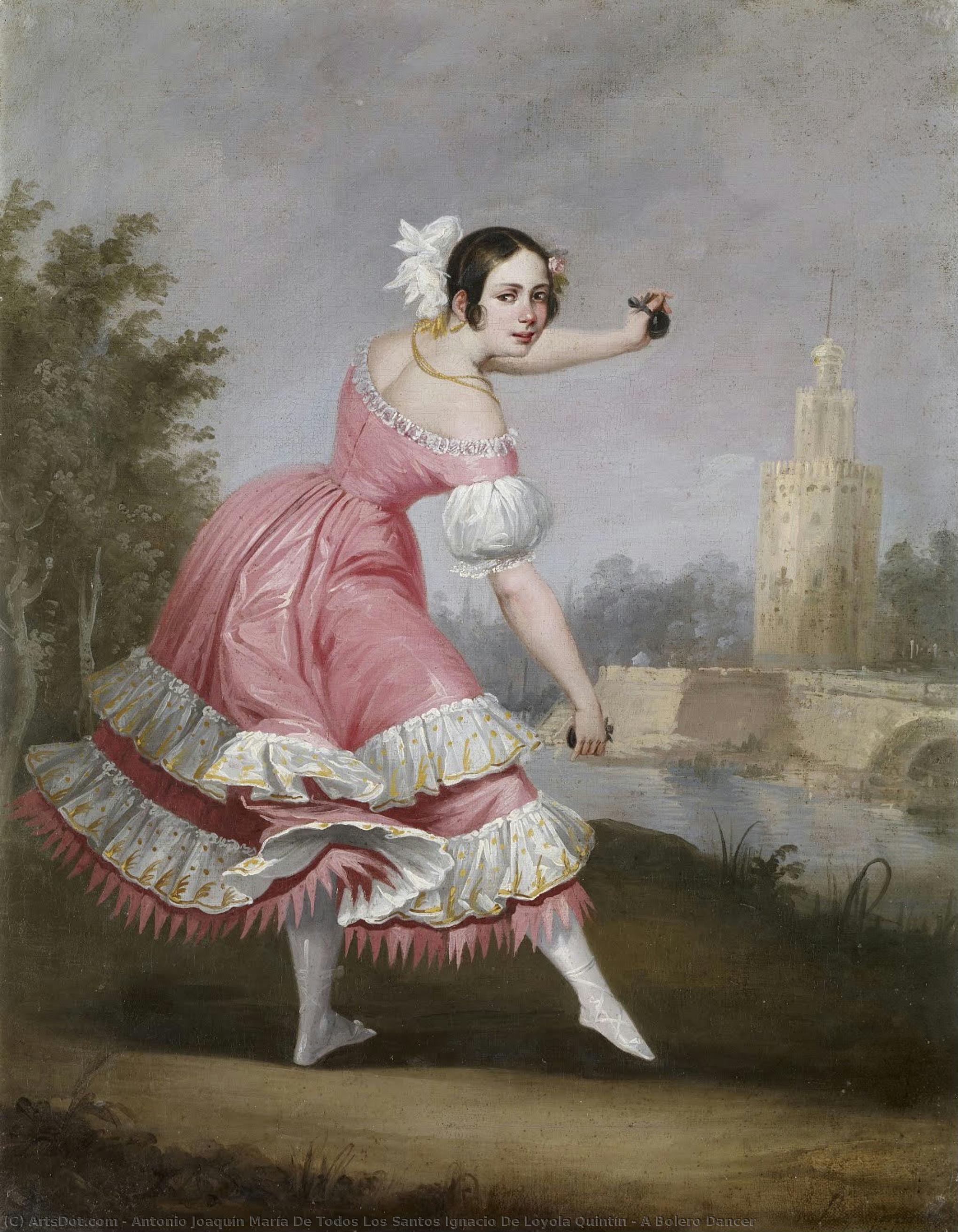
 Aperçu en situation
 Envoyer
 Partager
 Détails de l'œuvre

 Télécharger
 Articles similaires
 Radiographie
 Diaporama
A Bolero Dancer
 42.0 x 53.0 cm
 Musée Carmen Thyssen de Málaga
 Lire la suite
Reproduction à l'huile faite à la main
Huile sur toile peinte à la main, avec cadre et dimensions personnalisés, réalisée sur commande par nos artistes. ( Commander l'impression Télécharger l'image haute résolution)




































Choisissez parmi nos formats prédéfinis qui respectent les proportions originales de l’œuvre.

Vous pouvez saisir vos propres dimensions pour l'adapter à un cadre ou à un espace spécifique. Si la taille sélectionnée ne correspond pas aux proportions de l'image d'origine, nous recadrerons l'œuvre ou prolongerons la peinture avec des éléments peints à la main supplémentaires. Une maquette numérique vous sera envoyée pour approbation avant le début de la production.
Veuillez noter que l'aperçu à l'écran ne reflète pas le recadrage ou l'extension réels. Seule la maquette montrera fidèlement la composition finale.
Bien que des tailles personnalisées soient disponibles, nous vous recommandons de sélectionner une dimension dans la liste prédéfinie afin de préserver les proportions d'origine.
Après la commande, l’équipe OriginalUniqueArt.com contactera le client par e-mail pour recueillir ses instructions et lui fournira une maquette d’aperçu
Livraison dans le monde entier () en 3 à 4 semaines au lieu des 5 semaines habituelles. (15 août). Aucun compromis sur la qualité.

Livraison express gratuite dans le monde entier

Toile de lin de qualité supérieure

Assurance transport complète

Garantie de remboursement des droits de douane

Garantie de fidélité des couleurs

Politique de retour de 60 jours (uniquement en cas de défaut)

Garantie de remboursement à 100%

Offre de tarifs dégressifs
 L'option verre n'est disponible que pour les dimensions inférieures à 110 cm.

A Bolero Dancer
Technique de reproduction
Format de la reproduction
-


Prix total
$ 300
Description de l'œuvre
Biographie de l'artiste
Antonio Cabral Bejarano (1798–1861): Andalusian Romanticism Embodied
Antonio Joaquín María de Todos los Santos Ignacio de Loyola Quintín, commonly known as Antonio Cabral Bejarano, was a pivotal figure in Spanish art during the Romantic era. Born in Seville in 1798, he descended from a lineage of painters—his great-grandfather Diego Bejarano—establishing him within a tradition deeply rooted in artistic heritage. This familial connection profoundly shaped his formative years and instilled an early passion for visual expression. Initially trained by his father, Joaquín Cabral Bejarano, Antonio’s artistic journey commenced under the tutelage of a master who would instill in him the foundational principles of neoclassical painting—a grounding that would prove invaluable as he navigated the turbulent currents of Romanticism.Early Life & Family Background
Antonio's upbringing was characterized by familial ties to prominent artists, notably Joaquin Cabral Bejarano, whose influence extended beyond mere instruction; it fostered an appreciation for artistic legacy and a commitment to upholding established stylistic conventions. His marriage to Escolástica Pérez Junquitu Fernández produced Maria Bejarano, who subsequently married Pedro Cabral, resulting in the birth of Joaquín Cabral Bejarano II, continuing the family’s artistic tradition—a lineage dedicated to preserving and innovating upon artistic excellence. The familial connection to Diego Bejarano ensured that Antonio absorbed from a young age the values of meticulous observation and disciplined technique—elements that would permeate his entire oeuvre.Formal Training & Artistic Influences
Antonio's formal education at La Escuela de Tres Nobles Artes (School of Three Noble Arts) provided him with invaluable exposure to contemporary artistic trends and techniques, propelling him beyond the confines of neoclassical formalism. The resurgence of Romanticism—characterized by emotional intensity, dramatic narratives, and an embrace of imagination—became a dominant force shaping his creative vision. Artists like Eugène Delacroix and Francisco Goya served as crucial inspirations, informing his stylistic choices and thematic preoccupations. Delacroix’s dynamic compositions and expressive brushwork instilled in Antonio a desire to convey emotion through visual form—a pursuit that would define his artistic endeavors. Similarly, Goya's unflinching realism and psychological depth encouraged him to explore the complexities of human experience within his paintings.Career Highlights & Artistic Output
Antonio Cabral Bejarano’s artistic career unfolded against the backdrop of significant historical events—the Napoleonic invasion of Spain and subsequent restoration—influencing his subject matter and artistic endeavors. He actively participated in the decoration of prominent landmarks, including the Convent of the Trinity and the General Archive of the Indies, demonstrating his versatility as a painter and his dedication to serving public commissions. These projects showcased not only technical skill but also an understanding of architectural grandeur and historical commemoration—a testament to his ability to capture both beauty and solemnity within a single canvas. The decoration of the Archive of the Indies, commemorating the passage through Seville of Portuguese royal families—Maria Isabel de Braganza and Francisca de Braganza—on their way to Madrid for their marriage ceremonies—represented a masterful blend of historical accuracy and aesthetic elegance.- Monumental Decoration Projects: His involvement in decorating the Convent of the Trinity and the General Archive of the Indies exemplifies his commitment to artistic excellence and his responsiveness to societal demands.
- Municipal Commissions & Artistic Patronage: Antonio received numerous commissions from Seville's city council, reflecting his reputation as a respected artist and his ability to capture the spirit of Andalusian life.
Antonio Cabral Bejarano
1798 - 1861 , Espagne
L'essentiel de l'artiste
- Artistic Movement Or Style: Romantic Painting & Costumbrismo
- Artists Or Movements Influenced By This Artist: ['Neoclassic']
- Artists Who Influenced This Artist: ['Diego Bejarano']
- Date Of Birth: October 31, 1798
- Date Of Death: August 1, 1861
- Full Name: Antonio Joaquín María de Todos los Santos Ignacio de Loyola Quintín
- Nationality: Spanish
- Notable Artworks: ['A Bolero Dancer']
- Place Of Birth: Seville, Spain

