

 Aperçu en situation
 Partager
 Partager
 Détails
 Guide imprimable

 Télécharger
 Articles similaires
 Radiographie
 Voir le diaporama
 Statistiques
Gipsies


 Afficher la suite
Giclées et impressions d'art
Impressions giclées ou sur toile de qualité musée, avec une production rapide et des finitions au choix. ( Acheter la peinture faite à la main Passer au format image numérique)




P118B €10

P118H €10

P118W €10

P438Z €10

P508JH €12

P508YH €12

P805H €10

P805Z €10

P919BZ €10

P919G €10

P919XJ €10

P959ZH €10

P968JZ €12

W106C €8

W218G €10

W218JH €8

W218Y €10

W307PJ €10

W316G €10

W316PJ €8

W316Y €10

W398PJ €8

W4111J €10

W500HY €15

W500JH €15

W692G €12

W849H €8

W940BG €15

W953PJ €8




Choisissez parmi nos formats prédéfinis qui respectent les proportions originales de l’œuvre.

Saisissez la largeur et la hauteur souhaitées pour qu'elles s'adaptent à votre cadre ou à votre mur. Une impression ne peut être que découpée, elle ne peut jamais être agrandie au-delà de l'image originale ; ainsi, un format de forme différente entraînera la perte d'une partie de l'image. Nous vous envoyons une maquette numérique pour approbation avant toute impression. L'image présentée sur cette page ne montre pas le recadrage réel — seule la maquette le permet.
Livraison dans le monde entier () en 2 semaines au lieu des 4/5 semaines habituelles. (16 octobre)

Livraison express gratuite dans le monde entier

Toile de lin de haute qualité

Assurance transport complète

Garantie de remboursement des droits de douane

Garantie de fidélité des couleurs

Garantie de retour de 100 jours (uniquement en cas de défaut)

Garantie de remboursement à 100%

Tarifs dégressifs sur quantité
 L'option verre n'est disponible que pour les dimensions inférieures à 110 cm.

Gipsies
Giclées et impressions d'art
Format de la reproduction
-


Prix total final
€ 70
Une Énigme Venitienne Capturée : Analyse de « Gipsies » de John Gilbert
« Gipsies », peinturé par John Gilbert en 1882-1884 et exposé au Manchester Art Gallery, est bien plus qu'une simple représentation d'une scène rurale anglaise. Il incarne une véritable obsession pour la beauté classique italienne et une maîtrise technique remarquable qui témoignent de l’esprit artistique du peintre britannique. Cette œuvre fascinante offre un aperçu précieux des préoccupations esthétiques et intellectuelles de son époque, tout en suscitant une émotion profonde chez celui qui la contemple.Le Style Venitien : Une Recherche Idéale
Gilbert était profondément influencé par les peintres italiens du XVIe siècle, notamment Raphaël et Giorgione, dont les œuvres étaient admirées pour leur harmonie équilibrée et leur souci de détails subtils. Cette esthétique vénitienne se traduit dans « Gipsies » par une lumière douce et diffuse qui enveloppe la scène, créant une atmosphère chaleureuse et contemplative. Les couleurs sont utilisées avec parcimonie mais avec précision, privilégiant les tons terreux pour évoquer la richesse du paysage britannique et l’authenticité des personnages représentés. L'artiste adopte une approche proche de celle des peintres classiques italiens, cherchant à capturer l'essence même d'une scène quotidienne avec une élégance raffinée.La Technique au Service de la Réalisation
Gilbert maîtrisait parfaitement la peinture à l’huile et à l’eau-forte, deux médiums qu’il utilisait avec une grande habileté pour donner vie à ses tableaux. L’utilisation de l’huile permettait d'obtenir des effets lumineux complexes et une profondeur remarquable, tandis que l'eau-forte apportait une précision exceptionnelle aux détails et une richesse texturale particulière. Cette combinaison de techniques témoigne du talent artistique du peintre et souligne son souci du réalisme sans sacrifier la beauté esthétique. Les coups de pinceau sont doux et précis, créant une texture riche et organique qui invite à l'observation attentive.Un Contexte Historique Riche en Symbolisme
« Gipsies » fut peint au cœur du XIXe siècle, une période marquée par les bouleversements sociaux et économiques liés à la révolution industrielle et à l’essor de la bourgeoisie. Cependant, Gilbert était avant tout préoccupé par la beauté et l'idéalisation artistique, cherchant à exprimer une vision spécifique du monde à travers ses œuvres. La scène représente un groupe de personnes rassemblées autour d'un arbre dans les bois, symbole de communauté et de connexion avec la nature. Cette image évoque également des références littéraires classiques, notamment les œuvres de Shakespeare et Milton, dont Gilbert était un fervent admirateur. L’artiste utilisait son art pour transmettre une certaine philosophie morale et esthétique, reflétant les valeurs intellectuelles et spirituelles de son temps.L'Impact Émotionnel : Une Invitation à la Réflexion
« Gipsies » possède une puissance émotionnelle remarquable qui continue d'inspirer les artistes et les amateurs d’art aujourd’hui. La lumière douce et chaleureuse, les couleurs subtiles et les détails précis créent une atmosphère paisible et contemplative qui invite à la réflexion sur la beauté de la nature et la richesse des relations humaines. Cette œuvre est un témoignage de l'esprit artistique du peintre britannique et une véritable invitation à découvrir les profondeurs de l’âme humaine à travers le langage visuel. Elle demeure une magnifique illustration de la capacité de l’art à émouvoir et à transformer notre perception du monde.Questions et réponses
Quand et avec quels matériaux Gipsies a-t-il été réalisé ?
La technique de «Gipsies» de John Gilbert est Huile sur toile, et l'œuvre date de 1884.
À quel artiste est attribuée l'œuvre "Gipsies" ?
« Gipsies » a été créé par John Gilbert. Les informations présentes sur cette page décrivent l'œuvre originale de John Gilbert.
Où puis-je voir un aperçu de « Gipsies » ?
Un aperçu de «Gipsies» de John Gilbert est disponible sur la page Aperçu de l'œuvre.
Biographie de l'artiste
Sir John Gilbert RA: The Sculptor of Victorian Imagination
John Gilbert (July 21, 1817 – October 5, 1897), born in Blackheath, Surrey, was a British artist whose prolific output cemented his reputation as “the Scott of painting,” an accolade reflecting his unparalleled skill in capturing the spirit and grandeur of literary classics. Unlike many artists of his era who pursued formal training, Gilbert honed his craft through self-discipline and meticulous observation—primarily copying prints—establishing himself as a master of watercolour, oils, and crucially, wood engraving. His artistic journey began with an apprenticeship at a firm of estate agents but quickly transitioned towards a passion for visual storytelling that would define his career.Early Life and Artistic Beginnings
Gilbert’s formative years instilled in him a profound appreciation for detail and precision—qualities he would later translate into breathtaking illustrations. George Lance, his sole instructor, nurtured Gilbert's talent, encouraging him to experiment with various mediums and fostering an unwavering dedication to artistic excellence. Despite being denied admission to the Royal Academy Schools, Gilbert’s determination propelled him forward, mastering techniques that allowed him to produce works of remarkable beauty and complexity. His initial exposure to art came through printmaking, a practice he embraced wholeheartedly, recognizing its ability to convey emotion and narrative with striking effectiveness. This early fascination with visual representation would become the cornerstone of his artistic philosophy—a conviction that art possessed the power to illuminate the human experience and inspire contemplation.The Illustrated London News and Shakespeare
Gilbert’s breakthrough arrived in 1856 when he accepted an invitation from William Mulready and Thomas Sheepshanks to contribute woodcuts for *The Illustrated London News*. This collaboration marked the beginning of a prolific partnership that would yield over 2000 engravings—a staggering achievement for the time—demonstrating Gilbert’s mastery of this demanding medium. The meticulous attention to detail characteristic of his printmaking style mirrored his approach to painting, where he sought to recreate landscapes with breathtaking accuracy and evoke profound emotional responses. However, his most enduring legacy resides in his monumental undertaking: the illustrated Shakespeare folio (1862–63). With nearly 750 drawings meticulously crafted to capture the essence of Shakespeare’s plays—a project considered impossible by many contemporaries—Gilbert achieved a feat considered impossible by many contemporaries and established himself as the foremost interpreter of Shakespeare’s dramatic vision. The sheer scale and ambition of this endeavour underscored his belief in the transformative power of art—specifically its capacity to explore universal themes of love, loss, and heroism.Technique and Style
Gilbert’s artistic style was characterized by a masterful command of chiaroscuro, employing dramatic contrasts between light and shadow to heighten emotional impact and convey depth of feeling. He favored meticulous detail, painstakingly rendering textures and surfaces with remarkable accuracy—a hallmark of his oeuvre that distinguishes him from many other artists of the Victorian period. His paintings often depicted landscapes imbued with atmospheric grandeur, reflecting a fascination with Romantic ideals and an unwavering commitment to capturing sublime beauty. Furthermore, Gilbert’s artistic explorations extended beyond painting into sculpture, where he created evocative figures that embodied both strength and grace—a testament to his versatility as an artist and his ability to translate complex ideas into tangible forms. His technique was honed through tireless practice and observation—primarily copying prints—resulting in works of unparalleled beauty and sophistication.Legacy and Recognition
Gilbert's influence on Victorian art and illustration is undeniable. He served as president of the Royal Watercolour Society from 1871, solidifying his position as a leading figure in British artistic circles. In recognition of his contributions to the visual arts, he was knighted in 1872 and subsequently elected into the Royal Academy in 1876—a testament to his enduring reputation for excellence and innovation. His work continues to inspire artists today, serving as an exemplar of artistic discipline, technical virtuosity, and imaginative storytelling. The Gilbert-Garret Competition for Sketching Clubs established in 1870 at St. Martins School of Art stands as a lasting tribute to his pioneering spirit and unwavering belief in the importance of artistic education. John Gilbert’s legacy extends beyond his artistic achievements; he is remembered as a champion of humanist values—a man who sought to elevate the human spirit through beauty and contemplation. He rests peacefully at Brockley and Ladywell Cemeteries, Surrey.
John Gilbert
1817 - 1897 , Angleterre
En bref
- Artistic Movement Or Style: Romantique
- Artists Or Movements Influenced By This Artist: ['William Mulready']
- Artists Who Influenced This Artist: ['George Lance']
- Date Of Birth: Juillet 21, 1817
- Date Of Death: Octobre 5, 1897
- Full Name: John Gilbert RA
- Nationality: Britannique
- Notable Artworks:
- Le Ford
- Roi Jean
- Paysage avec chasse
- Place Of Birth: Londres, Angleterre
Articles similaires

John Gilbert: A Comprehensive Exploration of Technique, Context, and Enduring Legacy in Victorian Genre Painting
Explore the life & art of John Gilbert, a prolific Victorian painter renowned for his captivating genre scenes and Venetian-inspired style. Discover his legacy with OriginalUniqueArt.

Les 10 Chefs-d'œuvre du Paysage Romantique : Artistes et Décor d'Intérieur
Plongez dans l'émotion du Romantisme avec les 10 plus beaux paysages de Friedrich, Turner & Delacroix. Découvrez leur histoire et trouvez l'inspiration déco idéale sur OriginalUniqueArt.com !

Constable : Les 25 Chefs-d'Œuvre du Maître Anglais | OriginalUniqueArt
Plongez dans l'univers de John Constable avec les 25 œuvres incontournables du maître anglais. Découvrez l'histoire, la technique et l'émotion derrière ses paysages romantiques. Reproductions de qualité muséale sur OriginalUniqueArt.com.
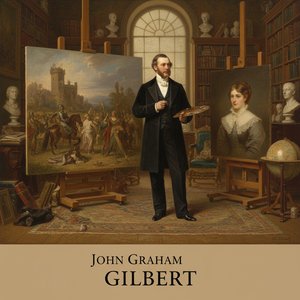
John Graham Gilbert: Rediscovering a Victorian Master of Narrative & Portraiture
Discover the captivating world of John Graham Gilbert, a Victorian master! Explore his portraits, genre scenes & illustrations. Learn about his influences, legacy & find high-quality reproductions at OriginalUniqueArt.

John Singer Sargent : Les 25 Œuvres Maîtresses d'un Portraitiste Éminent | OriginalUniqueArt
Plongez dans l'univers de John Singer Sargent : découvrez les 25 œuvres qui ont marqué l'histoire de l'art. Portraits impressionnants, réalisme exquis et couleurs vibrantes. Retrouvez ces chefs-d'œuvre en reproduction haute définition sur OriginalUniqueArt.com.
