Cubism
The Old Bridge (André Derain)
André Derain (1880–1954) a réalisé The Old Bridge. Il appartient au mouvement Cubism. Réalisée en Oil On Canvas.
- Oil On Canvas

 Aperçu en situation

 Peinture à l'huile faite main
 Envoyer
 Partager
 Fiche pédagogique


 Télécharger l'image
 Articles similaires
 Radiographie
 Diaporama
 Questions et réponses

 Statistiques
The Old Bridge, en bref
- Titre
- The Old Bridge
- Artiste
- André Derain (1880–1954)
- Lieu de naissance de l'artiste
- Chatou, France
- Technique
- Oil On Canvas
- Mouvement
- Cubism
- Période
- Modern
- Sujet
- landscape, bridge, townscape, mediterranean, cubism, geometric
Que représente The Old Bridge ?
Identification of The Old Bridge
In this work, titled The Old Bridge, André Derain presents a view of a Mediterranean townscape. The composition focuses on a town nestled beneath a bridge, a scene likely inspired by the vistas of Nice, France. It captures a specific sense of place through a structured, almost architectural arrangement of the landscape.
The subject matter centers on the relationship between the built environment and the natural surroundings. A solitary figure stands near the bridge, providing a sense of scale to the buildings and the water in the foreground. This quiet observation of a coastal setting reflects the artist's interest in the interplay between human presence and the permanence of the landscape.
Composition and Visual Elements
The composition is anchored by the bridge, which functions as a central axis for the entire scene. This structure directs the eye through a landscape that has been distilled into a series of Cubist-influenced forms. Rather than following traditional rules of depth, the perspective is deliberately distorted, creating an unusual spatial arrangement where the relationship between the foreground and the distant cityscape feels compressed and rearranged. This abstraction prioritizes the intellectual deconstruction of the view over a literal representation of the Mediterranean townscape.
Throughout the work, lines are angular and broken, contributing to a sense of rhythmic fragmentation. The buildings and the surrounding landscape are constructed from predominantly geometric shapes, specifically rectangles, squares, and triangles. These forms overlap in multiple planes to build a sense of depth through layering rather than through standard vanishing points. A solitary figure stands near the bridge, rendered in a similarly stylized manner that integrates the human presence into the geometric logic of the environment. The resulting arrangement offers a quiet, detached observation of the scene, where the architecture and the landscape are unified by this shared, structural language.
Technique and Artistic Materials
This work is executed in oil on canvas, utilizing a method of layering paint to build up the various forms within the composition. The application of the medium creates a surface that appears somewhat smooth, yet it retains a tactile quality through visible brushstrokes. These marks provide a subtle texture that defines the geometric planes of the architecture and the surrounding landscape.
The color palette is grounded in earthy tones, which are punctuated by delicate hints of blue and green. This choice of pigment contributes to the muted atmosphere of the scene. Lighting is handled with a diffused quality, which allows for the creation of soft shadows across the townscape and the water in the foreground.
Related Works by André Derain
To understand the evolution of this artist, one might look toward his earlier explorations of the French countryside. Around 1904, he produced Landscape near Chatou, a work that reflects his developing eye for the Île-de-France region. This period of experimentation led directly into the radical shifts seen in his 1905 work, Drying the Sails. In that piece, the coastal light of the Mediterranean is captured through a departure from naturalistic color, favoring a more direct expression of the scene's essence.
His interest in urban structures and the movement of a metropolis is further evidenced by his 1906 painting, London Bridge. This work demonstrates how he adapted his approach to the heavy architecture and shifting light of the Thames. It shows a move toward capturing the energy of a city through structural weight and unconventional palettes.
In his later years, the artist's style shifted toward a more restrained aesthetic. This is evident in Sorrowful Landscape, painted in 1946. The work reflects a more controlled and disciplined approach to form, a significant departure from the experimental impulses of his youth.
Images haute résolution de The Old Bridge
Domaine public : l'artiste est décédé en 1954.
André Derain, The Old Bridge. Domaine public
Questions sur The Old Bridge, réponses
Quelle est la technique utilisée pour « The Old Bridge » ?
«The Old Bridge» de André Derain est réalisé en Oil On Canvas. Les reproductions visent à restituer l'aspect de cette technique.
Que représente «The Old Bridge» de André Derain ?
«The Old Bridge» de André Derain représente : landscape, bridge, townscape, mediterranean, cubism, geometric, reflection, figure.
L'image de «The Old Bridge» de André Derain peut-elle être librement reproduite ?
«The Old Bridge» de André Derain est dans le dans le domaine public - ses droits d'auteur sont tombés dans le domaine public. Ce statut régit les modalités de reproduction de l'image de l'œuvre.
Qui est l'artiste derrière « The Old Bridge » ?
L'artiste à l'origine de « The Old Bridge » est André Derain. L'œuvre est répertoriée sous le nom de André Derain.
À quel mouvement artistique appartient «The Old Bridge» de André Derain ?
Le mouvement associé à «The Old Bridge» de André Derain est Cubism. Cette classification situe l'œuvre parmi des artistes et des œuvres d'art apparentés.
À quelle période de la carrière de André Derain se situe « The Old Bridge » ?
«The Old Bridge» appartient à la période Mature Period de la carrière de André Derain. Cette classification relie l'œuvre à l'évolution de l'artiste.
Pourquoi le statut du droit d'auteur de « The Old Bridge » est-il tel qu'il est ?
«The Old Bridge» de André Derain est dans le dans le domaine public - ses droits d'auteur sont tombés dans le domaine public. Les droits d'auteur sont calculés à partir de l'année du décès de l'artiste, et André Derain est décédé en 1954.
Comment « The Old Bridge » s'inscrit-il dans les thèmes et le style de André Derain ?
«The Old Bridge» partage avec les autres œuvres de André Derain son style Cubism ainsi que ses thèmes récurrents : fauvist color palette, cubist spatial deconstruction, mediterranean inspiration, london city portraiture, transition & connection, early modern landscape, exploring perspective, derain's artistic evolution.
Quel est le rapport entre le sujet de « The Old Bridge » et les thèmes habituels de André Derain ?
Les thèmes récurrents de André Derain incluent fauvist color palette, cubist spatial deconstruction, mediterranean inspiration, london city portraiture, transition & connection, early modern landscape, exploring perspective, derain's artistic evolution ; « The Old Bridge » se concentre sur landscape, bridge, townscape, mediterranean, cubism, geometric, reflection, figure.
À propos de l'artiste, André Derain
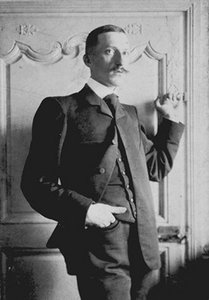
1880–1954, France
André Derain
Jeunesse, Famille et Formation En l'an 1880, André Derain entrait au monde à Chatou, un village niché au cœur de la région des Yvelines, en France. Ses premières années furent façonnées par les paysages paisibles de l'Île-de-France, où une curiosité naturelle pour son environnement commença à prendre racine. Dès 1895, il avait déjà entamé un apprentissage autodidacte, cherchant à comprendre le monde visuel par son propre regard plutôt que par l'enseignement formel. Cette période d'exploration solitaire lui permit de développer une manière personnelle de voir, avant que la rigueur d'une académie ne puisse lui imposer sa volonté.
Autres œuvres de André Derain
 Baigneuses1907
 London Bridge1906
 Charing Cross depuis le sud-ouest1906
 Landscape at L'Estaque1906
Essais sur The Old Bridge
 Guide du Cubisme : L'Art Fragmenté pour l'Aménagement d'Hôtels et d'Espaces CommerciauxMaîtrisez l'usage du cubisme pour vos projets hôteliers et commerciaux. Optimisez vos espaces avec l'art fragmenté dès maintenant.
 Œuvres françaises des années 1900Plongez dans l'art français des années 1900 avec Matisse et Monet. Découvrez ces chefs-d'œuvre sur OriginalUniqueArt.com.
 André Derain : 25 œuvres entre paysages fauves et portraits structurésDécouvrez 25 œuvres clés d'André Derain, du fauvisme au classicisme. Explorez sa collection sur OriginalUniqueArt.com.