 Aperçu en situation
 Envoyer
 Partager
 Détails de l'œuvre
 Guide
Guide

 Télécharger l'image
 Articles similaires
 Radiographie
 Diaporama
 Q&A
Q&A Statistiques
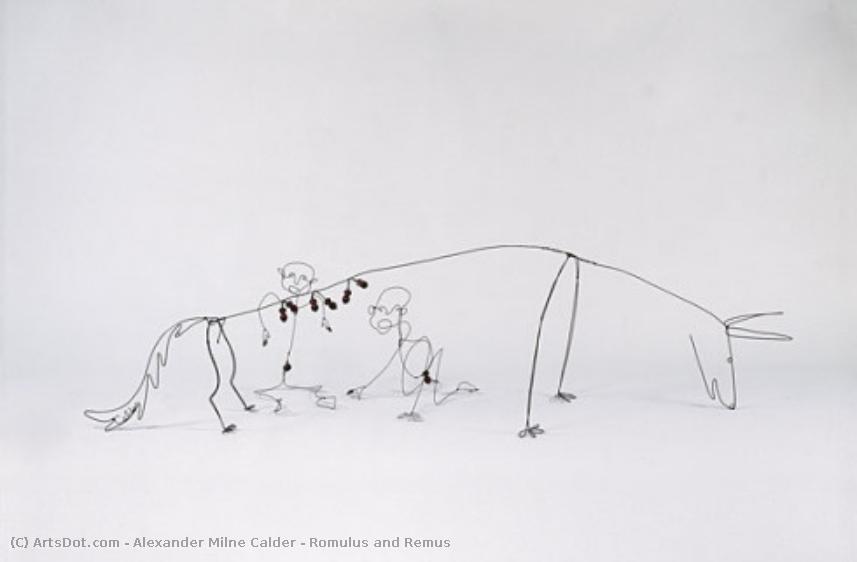
Romulus and Remus


 Lire la suite
L’œuvre d'art présentée sur cette page est protégée par le droit d'auteur, ce qui signifie que nous ne pouvons légalement créer ou vendre de reproduction identique. Cette protection est appliquée en vertu d'accords internationaux tels que la Convention de Berne et par les lois nationales, notamment celles énoncées par le Loi américaine sur le droit d'auteur - Titre 17.
Cette méthode est pleinement conforme aux réglementations sur le droit d'auteur car elle ne repose pas sur la copie ou la duplication de l'œuvre protégée. Il s'agit plutôt d'une réinterprétation créative — une nouvelle peinture qui s'inspire de l'original sans pour autant lui être identique.
Giclées et impressions d'art
Impressions giclées ou sur toile de qualité musée, avec une production rapide et des finitions au choix. ( Commander la reproduction peinte à la main Passer au format numérique)




P118B €10

P118H €10

P118W €10

P438Z €10

P508JH €12

P508YH €12

P805H €10

P805Z €10

P919BZ €10

P919G €10

P919XJ €10

P959ZH €10

P968JZ €12

W106C €8

W218G €10

W218JH €8

W218Y €10

W307PJ €10

W316G €10

W316PJ €8

W316Y €10

W398PJ €8

W4111J €10

W500HY €15

W500JH €15

W692G €12

W849H €8

W940BG €15

W953PJ €8




Choisissez parmi nos formats prédéfinis qui respectent les proportions originales de l’œuvre.

Saisissez la largeur et la hauteur souhaitées pour qu'elles s'adaptent à votre cadre ou à votre mur. Une impression peut être recadrée, mais jamais agrandie au-delà de l'image originale ; ainsi, un format de forme différente entraînera la perte d'une partie de l'image. Nous vous envoyons une maquette numérique pour approbation avant toute impression. L'image présentée sur cette page ne montre pas le recadrage réel — seule la maquette le permet.
Livraison dans le monde entier () en 2 semaines au lieu des 4/5 semaines habituelles. (3 novembre)

Livraison express gratuite dans le monde entier

Toile de lin de qualité supérieure

Assurance transport complète

Garantie de remboursement des droits de douane

Garantie de fidélité des couleurs

Politique de retour de 100 jours (uniquement en cas de défaut)

Garantie de remboursement à 100%

Offre de tarifs dégressifs
 L'option verre n'est disponible que pour les dimensions inférieures à 110 cm.

Romulus and Remus
Giclées et impressions d'art
Format de la reproduction
-


Prix total
€ 71
A Moment Frozen in Steel: Exploring Calder’s “Romulus and Remus”
Alexander Milne Calder's "Romulus and Remus," crafted in 1928, isn’t merely a sculpture; it’s a distilled essence of myth rendered in delicate wire. This piece, a testament to the artist’s pioneering approach to three-dimensional form, transcends its subject matter – the legendary founders of Rome – to become a profound meditation on beginnings, brotherhood, and the very act of creation itself. Calder, deeply influenced by Constructivism and early Modernism, sought to liberate sculpture from the constraints of traditional materials, embracing the inherent qualities of industrial wire as both medium and metaphor.
The sculpture’s stark simplicity is its most arresting feature. Two figures, rendered with astonishing grace despite their skeletal construction, stand beneath a subtly arching structure that evokes a horizon line or perhaps a stylized landscape. The color palette – a resolute black and white punctuated by subtle grays – amplifies the work's austerity, forcing the viewer to focus entirely on form and movement. The lines themselves are paramount; thin, almost impossibly delicate wires define every contour, creating an illusion of both fragility and strength. This deliberate reductionist approach mirrors Calder’s broader philosophy: to strip away the superfluous and reveal the fundamental elements of a subject.
The Poetics of Chance and Kinetic Form
Calder's work in this period – particularly his “Cirque Calder” series – exemplifies his fascination with chance and spontaneity. He didn’t meticulously plan every curve or angle; instead, he allowed the wire to guide him, embracing the unpredictable nature of the material. This process is vividly captured in "Romulus and Remus," where the figures appear to be caught mid-action, poised on the precipice of a narrative yet undefined. The slight wobble inherent in the sculpture’s construction – a subtle consequence of its wire composition – hints at a kinetic energy, suggesting that even stillness can hold a dynamic potential.
The technique itself is deceptively complex. Calder skillfully bent and assembled hundreds of individual wires, creating a surprisingly robust structure despite its delicate appearance. The varying thicknesses of the wire contribute to the sculpture’s textural richness, offering subtle shifts in sheen as light catches the metal. This careful manipulation of material speaks to Calder's mastery of his chosen medium – a testament to his ability to transform industrial components into objects of profound beauty and intellectual resonance.
Myth, Brotherhood, and the Dawn of Rome
The subject matter—the story of Romulus and Remus—is deeply rooted in Roman mythology. The legend of the twins suckled by a she-wolf is an enduring symbol of resilience, survival, and the founding of civilization. Calder’s sculpture doesn't simply depict this narrative; it captures its essence – the primal struggle for existence, the bond between brothers, and the birth of a new order. The wire itself can be interpreted as representing the threads that connect us to our past, shaping our present and influencing our future.
Created in 1928, “Romulus and Remus” stands as a pivotal work in Calder’s oeuvre, marking a significant shift towards abstraction while retaining a powerful connection to his artistic roots. It's a sculpture that invites contemplation, prompting viewers to consider the interplay of form, material, and narrative – a timeless meditation on the foundations of human experience.
Questions et réponses
L'œuvre «Romulus and Remus» de Alexander Milne Calder est-elle conservée dans le pays d'origine de l'artiste ?
Non - l'œuvre est conservée à l'étranger. Alexander Milne Calder est né(e) en Royaume-Uni, tandis que le musée qui conserve l'original de « Romulus and Remus » se situe en États-Unis d'Amérique.
Qui est l'auteur de « Romulus and Remus » et en quelle année a-t-elle été créée ?
L'œuvre « Romulus and Remus » est signée Alexander Milne Calder et date de 1928.
Où puis-je trouver des statistiques concernant «Romulus and Remus» de Alexander Milne Calder ?
La page Statistiques de «Romulus and Remus» de Alexander Milne Calder présente les statistiques de visites publiques : le nombre de visites mensuelles de cette œuvre, une comparaison avec les œuvres les plus consultées de l'artiste, ainsi que la provenance des visiteurs.
Biographie de l'artiste
Introduction à Alexander Milne Calder
Alexander Milne Calder était un sculpteur américano-écossais né à Aberdeen, en Écosse, en 1846. Il est surtout connu pour ses sculptures architecturales du Philadelphia City Hall, et tant son fils, Alexander Stirling Calder, que son petit-fils, Alexander 'Sandy' Calder, sont devenus des sculpteurs importants au XXe siècle.Jeunesse et carrière
Alexander Milne Calder a commencé sa carrière en Écosse, travaillant pour le sculpteur John Rhind tout en étudiant à la Royal Academy d'Édimbourg. Il a déménagé à Londres et travaillé sur le mémorial Albert. Calder a immigré aux États-Unis en 1868 et s’est installé à Philadelphie, où il a étudié avec Joseph A. Bailly et a suivi des cours avec Thomas Eakins à la Pennsylvania Academy of the Fine Arts.Œuvres notables
Voici quelques-unes des œuvres notables d’Alexander Milne Calder :- Philadelphia City Hall : une commande impliquant plus de 250 pièces en marbre et en bronze, qui a pris à Calder 20 ans pour être achevée.
- William Penn : une statue en bronze colossale qui devait couronner la tour de l’hôtel de ville.
- Figure indienne : une sculpture avant son installation sur l'hôtel de ville.
- Portail sud et portail ouest : illuminés de lumières colorées, mettant en valeur l’attention aux détails de Calder.
Héritage et influence familiale
L'héritage d’Alexander Milne Calder s’étend au-delà de son propre travail, car tant son fils que son petit-fils sont devenus des sculpteurs renommés. Son influence est visible dans divers musées, notamment le Smithsonian American Art Museum et la Galleria Civica di Arte Moderna e Contemporanea Torino. Son œuvre a jeté les bases pour l'innovation artistique de ses descendants, contribuant à une lignée familiale d’artistes sculpturaux reconnus.Signification historique
Alexander Milne Calder a laissé une marque durable sur l’histoire de l’art américain, en particulier grâce à son travail monumental sur le Philadelphia City Hall. Son attention aux détails et sa maîtrise des matériaux ont fait de lui un sculpteur respecté de son époque. Son héritage continue d'inspirer les artistes et les amateurs d'art aujourd'hui, témoignant de l’importance durable de ses contributions au monde de la sculpture.
Alexander Milne Calder
1898 - 1976 , Royaume-Uni
L'essentiel de l'artiste
- Artists Or Movements Influenced By This Artist:
- Alexander Stirling Calder
- Alexander 'Sandy' Calder
- Artists Who Influenced This Artist: ['John Rhind']
- Date Of Birth: 23 août 1846
- Date Of Death: 4 juin 1923
- Full Name: Alexander Milne Calder
- Nationality: Écossais-Américain
- Notable Artworks:
- Philadelphia City Hall
- Statue de William Penn
- Figure Indienne
- Portail Sud et Portail Ouest
- Place Of Birth (City And Country): Aberdeen, Royaume-Uni
Articles connexes

Les 10 Chefs-d'œuvre en Bronze qui ont Révolutionné l'Art : Collection OriginalUniqueArt
Plongez dans l'univers fascinant des 10 chefs-d'œuvre en bronze qui ont marqué l'histoire de l'art. Découvrez Rodin, Degas et les secrets de ces sculptures iconiques. Reproductions d'art exceptionnelles sur OriginalUniqueArt.com – Explorez la collection !
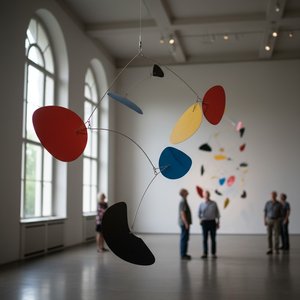
Alexander Calder: Kinetic Sculpture, Mobile Art & the Poetics of Chance
Explore the revolutionary world of Alexander Calder's kinetic sculptures & mobiles. Discover insights for collectors, acquisition advice, and the enduring legacy of this modern master. Expert analysis & art valuation.

The Enduring Form: Exploring Themes & Techniques in Sculpture Across Historical Periods
Explore the rich history of sculpture from ancient masterpieces to contemporary innovations. Discover key techniques, influential artists & investment potential for discerning art collectors.

L'Évolution du Volume : Analyse des Procédés et de l'Histoire de la Sculpture
Explorez l'évolution technique de la sculpture, du marbre classique à l'art cinétique. Maîtrisez l'histoire du volume dès maintenant.

Les 10 Chefs-d'œuvre Bronzes Qui Ont Révolutionné la Sculpture | OriginalUniqueArt
Plongez dans l'univers fascinant des 10 sculptures en bronze les plus emblématiques de l'histoire de l'art. Rodin, Degas et autres maîtres révélés ! Découvrez leur histoire, leurs techniques et trouvez l'œuvre parfaite pour sublimer votre intérieur sur OriginalUniqueArt.com.


